Adaptive utensils for one-handed eating
Cutting food needs two hands. A rocker knife needs one, and that is the whole difference.
By Selena H. · Last checked October 13, 2026 · How we keep pages current
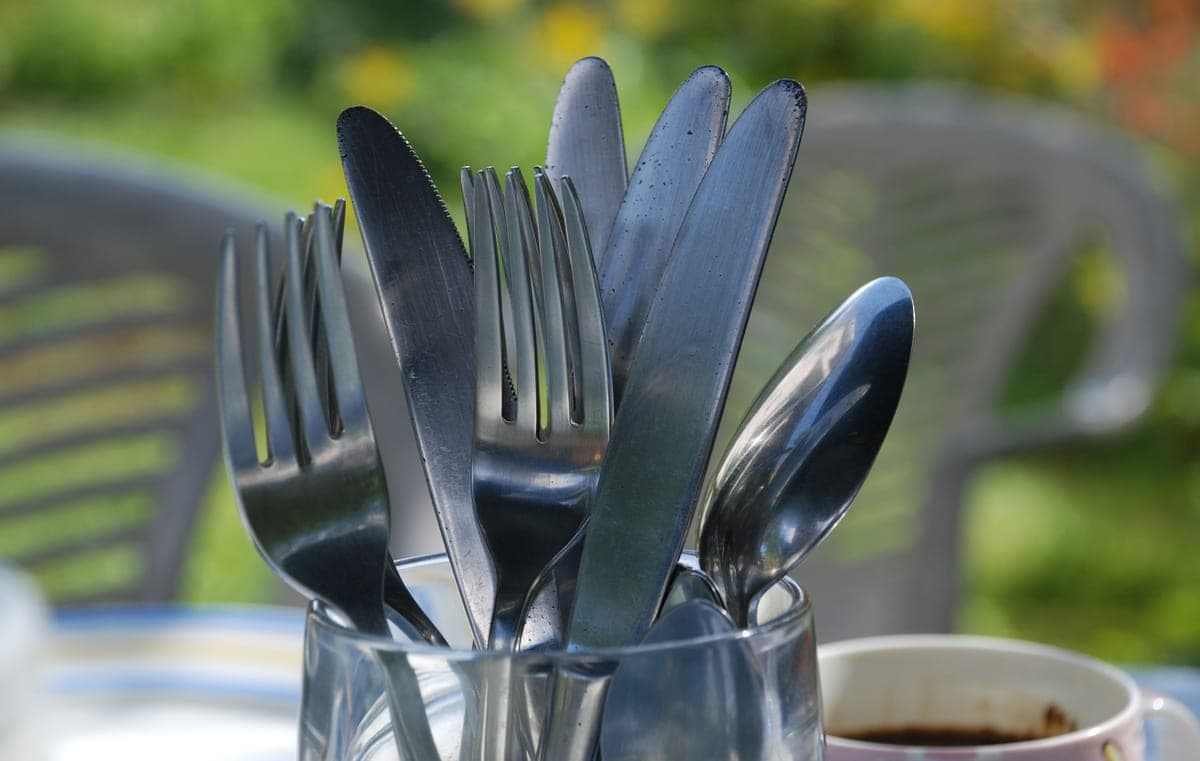
After a stroke, eating is one of the first things that becomes publicly difficult. Cutting requires a fork to hold and a knife to saw; with one usable hand neither half works, and the usual outcome is food cut up by somebody else — which is practical and quietly diminishing.
Four items between them restore most of it. A rocker knife cuts with a rolling motion from one hand. A plate guard or scoop dish gives food something to be pushed against. A non-slip mat stops the plate traveling. And a combined fork-knife handles most meals in one implement.
Order matters: buy the non-slip mat and the rocker knife first, because together they cover the majority of meals for very little money.
This is general information about products, not medical advice. Talk to your doctor or occupational therapist about your own situation.
Some links on this page go to Amazon. If you buy something, we may earn a small commission at no extra cost to you — it never changes which products we pick or the order they appear in. Full disclosure.
Quick picks
Ranked for how little strength, eyesight or patience they need — not for how much they cost.
| # | Product | Best for | Score | Price |
|---|---|---|---|---|
| 1 | Rocker Knife (one-handed)A curved blade that cuts by rocking, so no sawing and no second hand to hold the food. | Cutting with one hand | 9.2 | Check price on Amazon #ad Prices change daily, so we send you to check today's. How we earn |
| 2 | Scoop Dish with Suction BaseOne high curved side to push against, and a suction base so the dish stays put. | Loading the fork without chasing food | 8.4 | Check price on Amazon #ad Prices change daily, so we send you to check today's. How we earn |
| 3 | Plate Guard (clip-on)Clips onto the family's own plates, so the table does not look like a hospital tray. | Keeping the ordinary plates | 8.2 | Check price on Amazon #ad Prices change daily, so we send you to check today's. How we earn |
| 4 | Dycem Non-Slip MatStops the plate sliding, which is half of what the second hand was doing. | The cheapest thing that helps most | 8.0 | Check price on Amazon #ad Prices change daily, so we send you to check today's. How we earn |
Tap any row to jump to the full write-up. The price button goes to Amazon.
Pick by what’s hard
Most lists sort by price. That is not how this decision actually gets made, so here it is sorted by the thing that is getting in the way.
- Cutting meat is impossible
- Rocker Knife (one-handed) — a rocker knife is the single item that restores this. It takes a few meals to learn the rocking motion.
- Food goes off the edge of the plate
- Scoop Dish with Suction Base — a scoop dish or a plate guard gives something to push against. The dish is more stable; the guard keeps the ordinary crockery.
- The plate slides away when pushed
- Dycem Non-Slip Mat — buy the mat first. It is the cheapest thing here and it solves the most common frustration.
- Minds how the table looks
- Plate Guard (clip-on) — a clip-on guard comes off before guests arrive. Dignity is a real consideration, not a vanity.
How we picked
We don’t run a product lab. Every pick here is chosen by reading the things that actually tell you whether something works for weak hands, poor eyesight or shaky fingers: the manufacturer’s own specifications, the retailer listing, the measurements and weights, and what owners report in their reviews — especially the one-star ones. We read the complaints before the praise.
Prices change constantly, so we send you to Amazon to see today’s price rather than printing a number that goes stale. More about how we choose.
The picks in full
1. Best for cutting with one hand
Rocker Knife (one-handed)
Vive Health · 9.2/10 on our rubric
#ad Prices change daily, so we send you to check today's. How we earn
A curved blade that cuts by rocking, so no sawing and no second hand to hold the food.
The curved blade is the entire idea: press down and rock, and the curve does the cutting that a straight blade needs a back-and-forth motion for. Meat, vegetables and bread all give way to it.
Look for a model with a wide handle and a blade guard. The guard matters because the natural one-handed technique puts a thumb close to the top of the blade.
Good
- Cuts with a rocking motion, one hand only
- Wide handle suits weak grip as well
- Handles meat and firm vegetables
Watch out for
- It is a sharp knife — store it safely
- Takes a few meals to learn the motion
| Type | Curved rocker blade |
|---|---|
| Hands needed | One |
| Handle | Wide, non-slip |
| Care | Check dishwasher suitability on the listing |
How it scores
- Works one-handed9.6
- Cuts properly9.0
- Comfortable grip8.8
- Value9.2
2. Best for loading the fork without chasing food
Scoop Dish with Suction Base
Vive Health · 8.4/10 on our rubric
#ad Prices change daily, so we send you to check today's. How we earn
One high curved side to push against, and a suction base so the dish stays put.
A flat plate gives food nowhere to go but off the edge. A scoop dish has one side raised into a curve, so food can be pushed up against it and onto the fork in a single movement.
The suction base is what makes it work one-handed: the dish does not move when pushed against, which a plate on a mat still slightly does.
Good
- High side gives something to push against
- Suction base holds it firm
- Looks less clinical than a plate guard
Watch out for
- Suction needs a smooth clean table or tray
- Not microwave safe on all models — check
| Type | Scoop dish |
|---|---|
| Base | Suction |
| Use | One-handed loading |
| Care | Check microwave and dishwasher suitability |
How it scores
- Works one-handed9.2
- Cuts properly3.0
- Comfortable grip8.0
- Value8.8
3. Best for keeping the ordinary plates
Plate Guard (clip-on)
Special Supplies · 8.2/10 on our rubric
#ad Prices change daily, so we send you to check today's. How we earn
Clips onto the family's own plates, so the table does not look like a hospital tray.
A plate guard does the scoop dish's job without replacing the crockery. It clips to the rim of an ordinary plate and provides a wall to push food against, and it comes off for washing.
For someone who minds how the table looks — and plenty of people do, strongly — this is the better option even though it is slightly less stable.
Good
- Works with existing plates
- Removable, so the table looks normal to guests
- Cheap and packs for travel
Watch out for
- Fits only plates within a rim-size range
- Slightly less secure than a scoop dish
| Type | Clip-on guard |
|---|---|
| Fits | Plates within a rim range — check the listing |
| Removable | Yes |
| Travel | Packs flat |
How it scores
- Works one-handed8.6
- Cuts properly3.0
- Comfortable grip8.0
- Value9.4
4. Best for the cheapest thing that helps most
Dycem Non-Slip Mat
Dycem · 8.0/10 on our rubric
#ad Prices change daily, so we send you to check today's. How we earn
Stops the plate sliding, which is half of what the second hand was doing.
Buy this first. Most of what a second hand does at the table is hold things still, and a non-slip mat does the same job for a fraction of the cost of anything else here.
It also works under a chopping board, a mixing bowl and a jar, so it earns its place across the whole kitchen rather than just the table.
Good
- Cheapest item that makes a real difference
- Works around the kitchen too
- Washable and reusable
Watch out for
- Needs a clean dry surface
- Loses grip with age
| Type | Non-slip matting |
|---|---|
| Uses | Plates, boards, bowls, jars |
| Care | Washable |
| Replace | When tack is lost |
How it scores
- Works one-handed8.8
- Cuts properly2.0
- Comfortable grip8.0
- Value9.8
Setting the table so one hand is enough
- Non-slip mat down first, under the plate.
- Scoop dish, or an ordinary plate with a clip-on guard.
- Rocker knife and a wide-handled fork on the working side.
- A cup with two handles and a lid, or a weighted wide-based mug.
- Everything within reach of the working arm — nothing requiring a stretch across the body.
After a stroke, an occupational therapist can assess which equipment fits the person's specific movement and whether there are swallowing precautions to observe. That assessment matters more than any product choice here.
Beyond the table
The same principles apply to food preparation. A spiked cutting board holds a vegetable while one hand works on it; a bowl with a suction base stays put while being stirred; a kettle tipper means the kettle does not have to be held.
Our easy-grip kitchen tools page covers the preparation side, and our kettle page covers the single most dangerous one-handed task in a kitchen.
Questions people ask
▸What utensils help someone eat with one hand?
A rocker knife for cutting, a scoop dish or plate guard so food can be pushed against something, and a non-slip mat so the plate stays put. Those three cover most meals.
▸What is a rocker knife?
A knife with a curved blade that cuts by rocking back and forth with downward pressure, rather than sawing. It needs one hand, so it does not require a fork to hold the food steady.
▸What is a scoop dish?
A bowl or plate with one side curved up high, so food can be pushed against it and onto the fork. Most have a suction base so the dish does not move when pushed.
▸Is adaptive cutlery covered by insurance?
Usually not — Medicare generally classes adaptive eating utensils as convenience items. Hospital occupational therapy departments sometimes supply basics on discharge, so ask before leaving.
Sources
Read next
Best for tremor
Best weighted utensils for tremors
Weighted cutlery compared by weight, handle diameter and whether they are dishwasher safe.
Read the guide →

Best grip-friendly tools
Easy-grip kitchen tools for arthritic hands
The small tools that make cooking possible again, chosen for grip rather than brand.
Read the guide →
Best kettle
Best kettles for arthritic hands
Tipping kettles, light small-capacity kettles and tippers for the kettle you already have.
Read the guide →
Guide
Setting up a kitchen for arthritic hands
The free rearranging first, then the handful of tools worth buying.
Read the guide →
Best reacher
Best reacher grabbers for elderly adults
Reachers compared on grip strength required, jaw type and the right length for the job.
Read the guide →