Setting up a kitchen for arthritic hands
Most of this costs nothing. Moving the everyday plates to waist height does more than any gadget.
By Selena H. · Last checked October 13, 2026 · How we keep pages current

Move everything used daily to between hip and shoulder height, put a chair or a perching stool at the main work surface, and replace the three or four tools whose handles are too thin. In that order — the free changes do more than the purchases, and they tell you which purchases are actually needed.
Two principles run through all of it. Slide rather than lift, so a full pan travels along a countertop instead of being carried. And sit rather than stand, because standing is what runs the energy out before the meal is made.
Some links on this page go to Amazon. If you buy something, we may earn a small commission at no extra cost to you — it never changes which products we pick or the order they appear in. Full disclosure.
The rearranging, in order
- Everyday plates, mugs and pans to between hip and shoulder height. Nothing used daily should need a stool or a deep bend.
- Heavy items low and close — a cast-iron pan at waist height near the stovetop, never above shoulder level.
- Group by task: everything for tea in one place, everything for breakfast in another. Fewer trips across the kitchen.
- A chair or perching stool at the main work surface, so preparation is done sitting down.
- Clear a straight run of countertop between the sink and the stovetop, so a full pan can be slid rather than carried.
- Put frequently used tools on a rail at eye level instead of in a deep drawer.
Quick picks
| # | Product | Best for | Score | Price |
|---|---|---|---|---|
| 1 | Dycem Non-Slip Matting (roll)Cut pieces for under the board, the bowl and the plate — one roll, a dozen problems solved. | The first thing to buy | 9.0 | Check price on Amazon #ad Prices change daily, so we send you to check today's. How we earn |
| 2 | OXO Good Grips Swivel PeelerA thick soft handle held without closing the hand fully, with a sharp blade so no force is needed. | The handle diameter that matters | 9.0 | Check price on Amazon #ad Prices change daily, so we send you to check today's. How we earn |
| 3 | 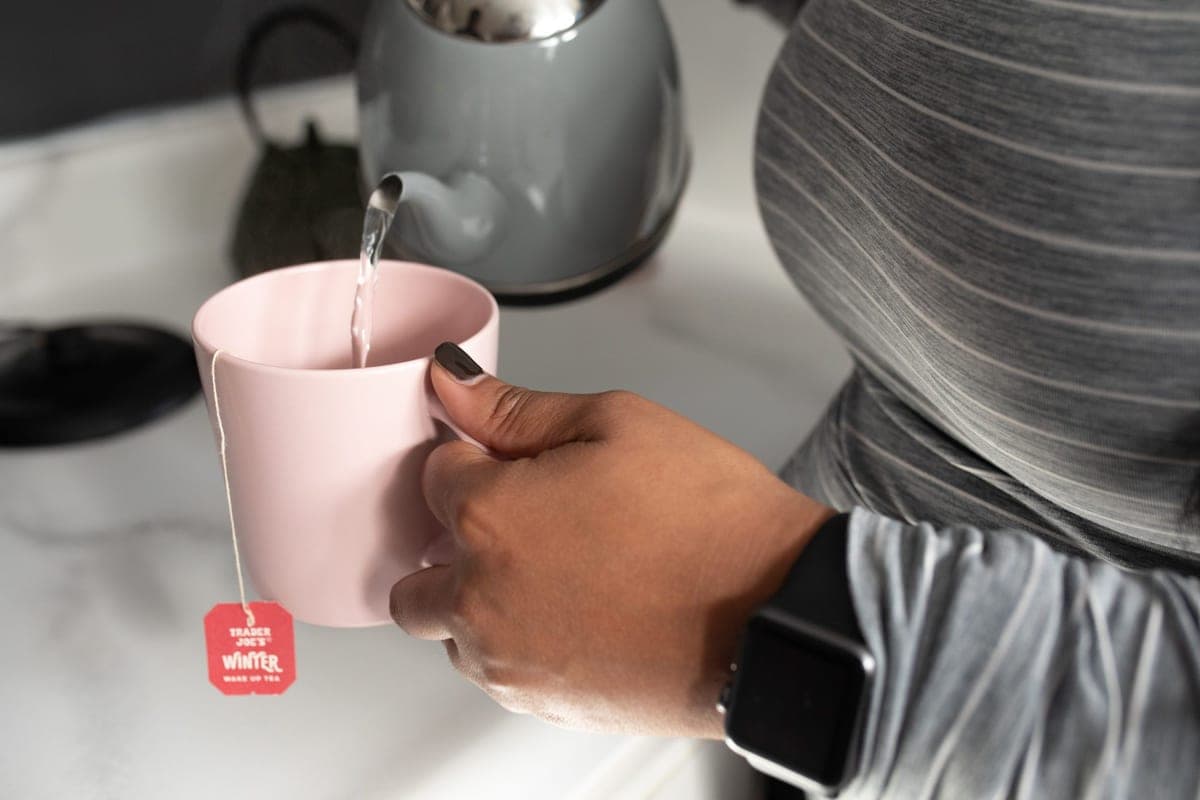 Kettle Tipper StandMakes the existing kettle tip instead of lift, which removes the kitchen's main scald risk. | Never carrying boiling water | 8.8 | Check price on Amazon #ad Prices change daily, so we send you to check today's. How we earn |
Tap any row to jump to the full write-up. The price button goes to Amazon.
How we picked
We don’t run a product lab. Every pick here is chosen by reading the things that actually tell you whether something works for weak hands, poor eyesight or shaky fingers: the manufacturer’s own specifications, the retailer listing, the measurements and weights, and what owners report in their reviews — especially the one-star ones. We read the complaints before the praise.
Prices change constantly, so we send you to Amazon to see today’s price rather than printing a number that goes stale. More about how we choose.
The picks in full
1. Best for the first thing to buy
Dycem Non-Slip Matting (roll)
Dycem · 9.0/10 on our rubric
#ad Prices change daily, so we send you to check today's. How we earn
Cut pieces for under the board, the bowl and the plate — one roll, a dozen problems solved.
Nothing else in the kitchen does this much for this little.
Good
- Many uses from one roll
- Washable
- Works one-handed
Watch out for
- Needs clean dry surfaces
- Perishes eventually
| Form | Roll |
|---|---|
| Uses | Boards, bowls, jars, plates |
| Care | Washable |
| Cost | Low |
2. Best for the handle diameter that matters
OXO Good Grips Swivel Peeler
OXO · 9.0/10 on our rubric
#ad Prices change daily, so we send you to check today's. How we earn
A thick soft handle held without closing the hand fully, with a sharp blade so no force is needed.
If only one tool is replaced, make it this one — peeling is the task that hurts most often.
Good
- Thick cushioned handle
- Sharp blade needs little pressure
- Dishwasher safe
Watch out for
- Blade dulls — replace rather than push harder
- Swivel takes getting used to
| Handle | Oversized cushioned |
|---|---|
| Blade | Swivel |
| Care | Dishwasher safe |
| Replace | When it drags |
3. Best for never carrying boiling water
Kettle Tipper Stand
Vive Health · 8.8/10 on our rubric
#ad Prices change daily, so we send you to check today's. How we earn
Makes the existing kettle tip instead of lift, which removes the kitchen's main scald risk.
Check the kettle's base size and height against the tipper, and test it cold before using hot water.
Good
- Uses the kettle you own
- No lifting
- Cheap
Watch out for
- Not every kettle fits
- Test the fit cold first
| Type | Tipping cradle |
|---|---|
| Lifting | None |
| Check | Kettle base diameter and height |
| Cost | Low |
The things worth buying
- Non-slip matting, cut into pieces for under the board, the bowl and the plate. Cheapest useful thing in the kitchen.
- A peeler, a chopping board and a multi-opener with thick soft handles.
- A kettle tipper, or a one-liter kettle, so boiling water is never carried.
- A lever or electric jar opener matched to how much grip is left.
- A pan with two handles rather than one long one, so weight is shared across both hands.
- A pasta pot with a strainer insert, so a heavy pan of boiling water never has to be lifted to a sink.
Technique changes that cost nothing
- Slide pans along the countertop instead of lifting them. Plan the layout so this is possible.
- Fill the kettle with a jug at the sink rather than carrying the kettle to the tap.
- Use both hands for everything you can, even things you used to do one-handed.
- Sit to chop, sit to peel, sit to wash the dishes on a perching stool.
- Buy pre-chopped vegetables when hands are bad. This is sensible, not defeat.
- Cook double and freeze half, so a bad hands day needs only a microwave.
Safety details that matter more with age
- Turn pan handles inward so they are not caught by a sleeve.
- Use the back burners of the stovetop for anything heavy, so a pan is not reached across.
- Keep a fire blanket within reach of the stovetop, not in a cupboard across the room.
- Check that oven gloves are long enough to protect the forearm — thin skin burns quickly.
- Consider an induction stovetop or a stovetop cut-off timer if the stovetop is ever left on. Both are worth asking an occupational therapist about.
- Keep a flashlight in the kitchen for a power cut, so nobody moves around a kitchen in the dark.
If cooking has become genuinely unsafe rather than merely difficult — burns, forgotten hobs, repeated falls in the kitchen — that is worth raising with a doctor or an occupational therapist rather than solving with equipment.
Questions people ask
▸How do you make a kitchen easier for arthritis?
Move everything used daily to between hip and shoulder height, sit at the work surface instead of standing, slide pans rather than lifting them, and replace thin-handled tools with thick soft-handled ones.
▸What height should everyday items be stored at?
Between hip and shoulder. Below that means bending, above means reaching or standing on something — and reaching for a heavy pan above shoulder height is how kitchen accidents happen.
▸Should you sit down to cook?
If standing is tiring, yes. A perching stool at the main work surface lets preparation happen sitting down, which conserves the energy people usually run out of before the meal is finished.
▸What is the cheapest change that helps most?
Non-slip matting under boards, bowls and plates, and rearranging cupboards so nothing daily needs a stool or a deep bend. Neither costs much and both help every single day.
Sources
Read next
Best grip-friendly tools
Easy-grip kitchen tools for arthritic hands
The small tools that make cooking possible again, chosen for grip rather than brand.
Read the guide →
Best jar opener
Best jar openers for arthritis and weak hands
Jar openers grouped by grip strength, including one-handed and fully electric options.
Read the guide →
Best kettle
Best kettles for arthritic hands
Tipping kettles, light small-capacity kettles and tippers for the kettle you already have.
Read the guide →
Best one-handed set
Adaptive utensils for one-handed eating
The four items that make one-handed eating workable, in the order to buy them.
Read the guide →
Best reacher
Best reacher grabbers for elderly adults
Reachers compared on grip strength required, jaw type and the right length for the job.
Read the guide →