Every guide on this site, sorted by the thing that is actually getting in the way rather than by aisle or price. Pick the problem; the shortlist gets small fast.
Most product sites sort by category and then by price, which is a useful way to shop for a television and a useless way to shop for a can opener. The question is never whether to spend thirty dollars or sixty. It is whether the thing can be worked by the hands, eyes and balance of the person who has to use it every day, and that question has a different answer for every household.
So the eight headings below are limitations, not departments. Each one explains what changes about shopping once it applies, then lists every page on the site written around it — roundups, head-to-heads and the how-to guides. Pages show up under more than one heading where they answer more than one problem, which most of the good ones do.
Some links on this page go to Amazon. If you buy something, we may earn a small commission at no extra cost to you — it never changes which products we pick or the order they appear in. Full disclosure.
Weak hands, arthritis, no squeeze left
The lid will not turn, the key will not grip, the handle is too thin to hold.
Grip strength goes before almost anything else, and it changes what a product has to do rather than how much it should cost. The useful features are a fat handle instead of a thin one, a lever instead of a twist, a clamp that holds the thing so hands do not have to, and a power button big enough to press with a knuckle.
The trap is buying the premium version of the same shape. A better-made jar lid still has to be twisted. Look for the tool that removes the twisting, not the one that makes it feel nicer.
After a stroke, with an arm in a sling, or with one side that simply will not help.
Almost every kitchen and dressing tool quietly assumes a second hand is holding something steady. Once that assumption breaks, the question for every product becomes the same one: what is holding it still while the good hand works?
The answers are suction feet, clamps, weighted bases, rocker shapes that cut by pressing down, and anything that can be operated by leaning rather than squeezing. Tools sold for one-handed use say so; tools that merely happen to work one-handed usually do it because of a suction base.
The hand gets there; it just will not hold still once it arrives.
Tremor is a different problem from weakness and wants different equipment. Weight helps — a heavier handle damps small movements the way a heavy camera is easier to hold steady than a light one. Width helps too, because a wide grip gives the hand less room to wobble inside.
What does not help is precision. Small buttons, narrow spouts, thin stems and tiny latches all demand the one thing a tremor cannot give. Pick the version with the biggest target.
Macular degeneration, cataracts, or print that has simply gotten too small.
Screen size is the feature people shop for and it is rarely the one that matters. A big screen showing small text is still small text. The specification worth checking is whether the device has a large-text mode that applies everywhere, including the parts nobody demonstrates in the store.
Away from screens, the two things that reliably help are contrast and light. Black-on-white beats gray-on-white at any size, and a bright, properly aimed lamp does more for reading than a stronger pair of glasses.
The television is too loud for everyone else and still not clear enough.
Volume and clarity are not the same thing, and most hearing loss takes the consonants first. That is why turning the television up makes it louder without making it easier to follow — the speech is louder, but it is still mush.
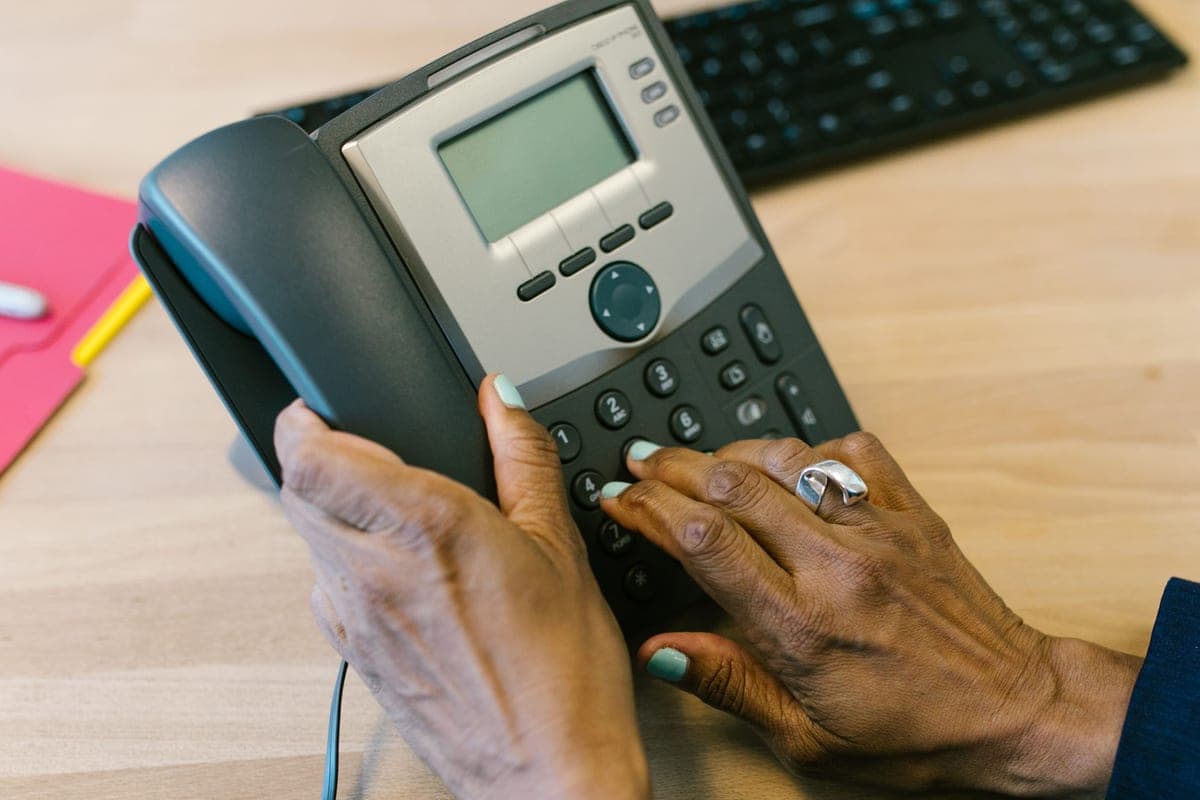
Equipment that actually helps either sends the sound straight to the ears, bypassing the room, or boosts speech frequencies specifically. On phones, the specification to look for is hearing-aid compatibility (an M3/T3 or M4/T4 rating) and a stated earpiece boost in decibels, not a claim that it is 'loud'.
Anything that needs to be learned, remembered or set up again is a problem.
The rule that holds across every category: fewer choices beat more features. A device that can be changed by accident will be changed by accident, and then someone has to drive over and change it back. A device that cannot be reconfigured is not a limitation, it is the point.
Favor things that work the same way every single time, that cannot be put into a strange mode by a long press, and that keep working if nobody updates them. Be realistic too — in the later stages a screen can confuse rather than comfort, and swapping it for a photo frame and a simple music player is the right adjustment, not a failure.
Unsteady on the stairs, nervous in the shower, living alone.
Two separate jobs hide inside this one worry: stopping the fall, and getting help after one. Grab bars, shower seats, bed rails and the right walking aid do the first. An alert device does the second, and only the second.
Fitting matters more than brand here. A grab bar screwed into drywall instead of a stud is worse than no grab bar, because it will be trusted. A rollator set at the wrong height pushes the user forward rather than supporting them.
Standing up from the chair is the hard part; so is standing at the counter.
When stamina is the constraint, the thing to shop for is somewhere to sit and something to push against. A seat in the shower, a seat on the walker, a chair that does the standing up — each one removes a fixed cost from the day rather than making an activity marginally easier.
Exercise equipment follows the same logic. The machine that gets used is the one already in the room the person sits in, not the better machine in the spare bedroom.
Because a price tier tells you nothing about whether you can open the jar. The expensive opener and the cheap one are both twisted the same way. Once you know the actual limitation, most of the catalog rules itself out and the choice gets small.
▸What if more than one of these applies?
That is the normal case, and pages appear under every constraint they answer, so you will see the same guide in two or three places. Start with whichever problem stops the task first — usually grip or balance — and check that whatever you buy does not fail a second one.
▸Is any of this medical advice?
No. This is general information about products. An occupational therapist can assess a specific person in their own home and will spot things a website cannot, and a referral is often free through a doctor.
▸Do you test these products?
No, and we will not pretend otherwise. We read specifications, published measurements and owner reviews — the one-star ones first, because that is where the failure patterns are. Every pick says what to watch out for.