Best rollators under $200
Two hundred dollars buys a rollator that does everything most people need. What it does not buy is ten-inch wheels, and that is the one trade worth understanding.
By Selena H. · Last checked November 22, 2026 · How we keep pages current
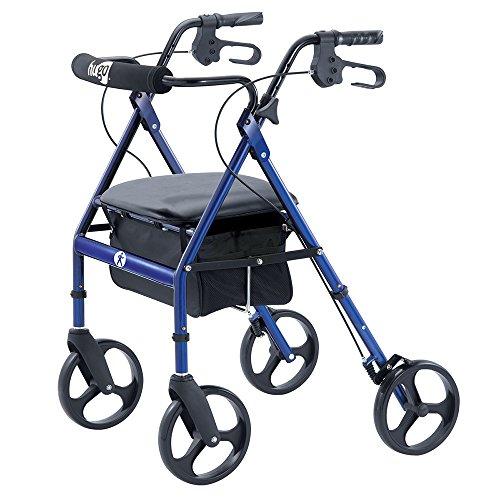
The rollator to buy under two hundred dollars is the Hugo Mobility Portable Rollator with Backrest. It is the only pick in this price band with a padded seat and a proper backrest, and the backrest is the feature that decides whether the seat gets used at all - without one, sitting on a rollator means balancing on a bench with nothing behind you, which a lot of people simply will not do. The budget pick is the Drive Medical Aluminum Rollator, the cheapest frame here that is still a sound product rather than a hazard.
Four frames are below and they answer four different questions: a seat with a back, the lowest sound price, a tight turning circle for an older house, and a higher weight rating. None of them is the best rollator in general, because there is no such thing - the right one depends on where it will be pushed and who has to lift it into a car.
What two hundred dollars will not buy is a ten-inch front wheel. That is the single feature that decides whether a rollator is usable on a sidewalk, over a curb lip or on a gravel driveway, and the frames that have it start above this band. If the person walks outdoors every day, read our main rollator roundup instead and plan to spend more; if the rollator is mostly for moving around the house with a rest halfway, everything you need is on this page.
Prices below come from the live Amazon listing for each frame and carry the date they were checked. We have not used these ourselves; the descriptions come from the manufacturers published specifications and what owners report. A rollator is also the one purchase on this site where a physical therapist watching the person walk for two minutes is worth more than any amount of reading.
This is general information about products, not medical advice. Talk to your doctor or occupational therapist about your own situation.
Some links on this page go to Amazon. If you buy something, we may earn a small commission at no extra cost to you — it never changes which products we pick or the order they appear in. Full disclosure.
What to check before you buy
- Frame weight, against whoever lifts it into the car. Around 15 lb travels; above 20 lb usually needs two hands
- Handle height range, against the crease of the wrist when standing upright in normal shoes
- Wheel size: 6 inch is indoors, 8 inch is mixed, 10 inch is proper outdoor use and costs more than $200
- Whether the seat has a backrest - a seat with nothing behind it often goes unused
- Brake type, and whether those hands can work it. Loop levers pushed with the palm beat levers that need a finger squeeze
- Folded width against the narrowest doorway in the house, and against the trunk
A rollator rolls away if leaned on heavily. Where balance genuinely fails rather than stamina, a standard walker is the safer tool - the two are not interchangeable.
Quick picks
Ranked for how little strength, eyesight or patience they need — not for how much they cost.
| # | Product | Best for | Score | Price |
|---|---|---|---|---|
| 1 | Hugo Mobility Portable Rollator with BackrestThe top pick under $200: a padded seat and, unusually at this price, a proper backrest on a frame compact enough for a hallway. | A seat with a back to rest on | 8.7 | $111.57 · View on Amazon #ad Price as of November 28, 2026. How we earn |
| 2 | 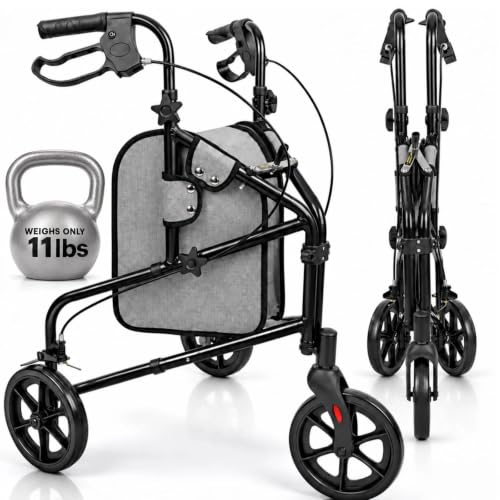 Vive Three Wheel RollatorTurns where a four-wheel frame jams, folds smaller than anything else here - and has no seat at all. | Narrow hallways and tight corners | 8.4 | $119.99 · View on Amazon #ad Price as of November 28, 2026. How we earn |
| 3 | 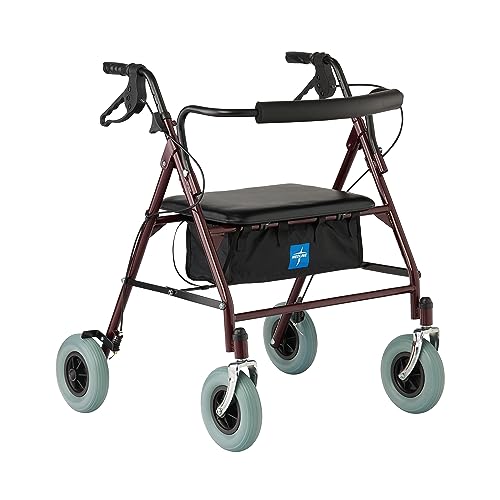 Medline Heavy Duty Bariatric RollatorA reinforced frame and a wider seat inside this price band - a different product from a standard rollator, not a bigger version of one. | Above a standard weight rating, still under $200 | 8.0 | Check price on Amazon #ad Prices change daily, so we send you to check today's. How we earn |
| 4 | 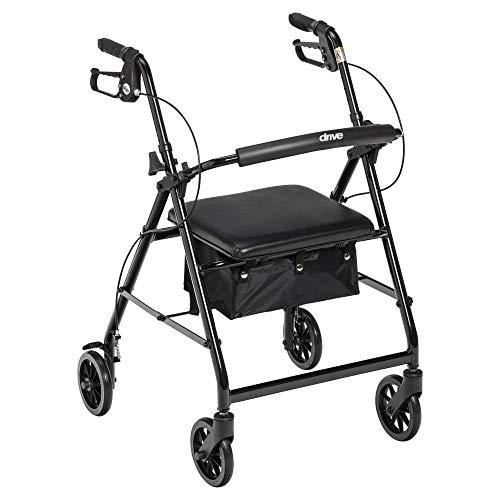 Drive Medical Aluminum RollatorThe budget pick: light aluminum, a seat, a basket and nothing clever - the cheapest frame here that is still safe rather than merely cheap. | The lowest sound price | 8.1 | $74.87 · View on Amazon #ad Price as of November 28, 2026. How we earn |
Tap any row to jump to the full write-up. The price button goes to Amazon.
Pick by what’s hard
Most lists sort by price. That is not how this decision actually gets made, so here it is sorted by the thing that is getting in the way.
- Can walk a short distance but needs to sit down halfway
- Hugo Mobility Portable Rollator with Backrest — buy the frame with a backrest. A seat with nothing behind it gets used once and then avoided, which means the rollator is doing half its job.
- Narrow doorways in an older house
- Vive Three Wheel Rollator — a three-wheel frame turns where a four-wheel one jams. Measure the narrowest doorway in the house before deciding, including the bathroom.
- Somebody has to lift it into a car every day
- Drive Medical Aluminum Rollator — weight beats every other feature here, because a frame too heavy to load stays at home. Lift the frame before buying if you possibly can.
- Above a standard 300 lb rating
- Medline Heavy Duty Bariatric Rollator — buy the bariatric frame on the published rating. Exceeding a weight limit is how frames fail, and they fail suddenly rather than gradually.
- Arthritic hands cannot squeeze brake levers
- Hugo Mobility Portable Rollator with Backrest — try the levers before committing. Loop-style brakes that can be pushed down with the flat of the palm are far easier than levers needing a finger squeeze, and the difference is not something a listing tells you.
How we picked
We don’t run a product lab. Every pick here is chosen by reading the things that actually tell you whether something works for weak hands, poor eyesight or shaky fingers: the manufacturer’s own specifications, the retailer listing, the measurements and weights, and what owners report in their reviews — especially the one-star ones. We read the complaints before the praise.
Prices change constantly, so we send you to Amazon to see today’s price rather than printing a number that goes stale. More about how we choose.
The picks in full
1. Best for a seat with a back to rest on
Hugo Mobility Portable Rollator with Backrest
Hugo Mobility · 8.7/10 on our rubric
#ad Price as of November 28, 2026. How we earn
The top pick under $200: a padded seat and, unusually at this price, a proper backrest on a frame compact enough for a hallway.
Hugo builds this one around the seat rather than the stride, and under two hundred dollars that is the right priority. Eight-inch wheels, a padded seat and a backrest sit on a frame compact enough to live in a hallway without blocking it.
The backrest is more useful than it looks on a photograph. Without one, resting on a rollator means perching on a bench with nothing behind you, and anyone whose balance is unreliable while seated will not do it twice. With one, the rollator becomes a chair that happens to travel - which is the whole point for somebody who can walk two hundred yards but not four hundred.
Eight-inch wheels will roll over a door threshold and handle a smooth sidewalk. They struggle more than ten-inch wheels on broken paving, gravel and curb lips, and that is the honest limit of this price band. Hugo does not publish a frame weight on this listing, so if the deciding factor is who lifts it into a car, check that figure before ordering.
Good
- Padded backrest makes the seat genuinely usable
- Eight-inch wheels clear a door threshold
- Compact frame for indoor turns
- Folds for a trunk
Watch out for
- Eight-inch wheels struggle outdoors compared with ten-inch ones
- No frame weight published - check it if somebody has to lift it
| Seat | Padded, with a backrest |
|---|---|
| Wheels | 8 inch |
| Frame | Folding |
| Best for | Indoors with a rest, and smooth sidewalks |
How it scores
- Rolls over obstacles7.6
- Light enough to lift9.6
- Brake feel8.6
- Folded size8.8
2. Best for narrow hallways and tight corners
Vive Three Wheel Rollator
Vive Health · 8.4/10 on our rubric
#ad Price as of November 28, 2026. How we earn
Turns where a four-wheel frame jams, folds smaller than anything else here - and has no seat at all.
A three-wheeled frame has a far tighter turning circle than a four-wheeled one, which is the deciding feature in an older house with narrow doorways, a tight bathroom and a corner between the kitchen and the hall that nothing goes round. It is also lighter and folds smaller, so it is the easiest frame here to get into a small car.
There is no seat, and that is the trade rather than an oversight. If part of the reason for buying a rollator is that the person needs to stop and sit halfway down the street, this is the wrong shape and the Hugo above is the right one. If the rollator is there for steadiness indoors, the seat was never going to be used and its absence buys you the turning circle.
Three wheels is slightly less planted than four on rough ground, because the single front wheel has to find its own line. On carpet and smooth floors that is invisible; on a gravel path it is noticeable.
Good
- Turns in spaces a four-wheel frame cannot
- Lighter and smaller folded than anything else here
- Good for cluttered older houses
Watch out for
- No seat to rest on
- Slightly less stable than four wheels on rough ground
| Wheels | Three |
|---|---|
| Seat | None |
| Folding | Compact |
| Best for | Narrow indoor spaces |
How it scores
- Rolls over obstacles7.4
- Light enough to lift9.2
- Brake feel8.2
- Folded size9.4
3. Best for above a standard weight rating, still under $200
Medline Heavy Duty Bariatric Rollator
Medline · 8.0/10 on our rubric
#ad Prices change daily, so we send you to check today's. How we earn
A reinforced frame and a wider seat inside this price band - a different product from a standard rollator, not a bigger version of one.
Standard rollators are commonly rated to 300 lb. Above that the right purchase is a bariatric frame, and the difference is structural rather than cosmetic: reinforced tubing, a wider wheelbase so the load sits inside the footprint, and a seat broad enough to be comfortable rather than merely to hold.
It is worth being strict about the rating because frames do not fail gradually. A rollator used above its limit is fine for months and then is not, usually while somebody is sitting on it. Finding a bariatric frame under two hundred dollars is the useful thing here - they are normally the expensive corner of the category.
The wheels are typically eight inch, which is better than most budget frames, and the honest costs are width and weight. Measure every doorway it has to pass through, and expect it to be the heaviest frame on this page to lift into a car.
Good
- Higher weight rating than a standard rollator
- Wider, genuinely usable seat
- Larger wheels than most budget frames
Watch out for
- Wider - measure doorways and hallways first
- The heaviest frame here to lift
| Type | Bariatric rollator |
|---|---|
| Weight capacity | Higher than standard - check the listing |
| Seat | Extra wide |
| Wheels | 8 inch typically |
How it scores
- Rolls over obstacles8.4
- Light enough to lift6.0
- Brake feel8.4
- Folded size7.0
4. Best for the lowest sound price
Drive Medical Aluminum Rollator
Drive Medical · 8.1/10 on our rubric
#ad Price as of November 28, 2026. How we earn
The budget pick: light aluminum, a seat, a basket and nothing clever - the cheapest frame here that is still safe rather than merely cheap.
There is a floor below which rollators stop being equipment and become a hazard: frames that flex under weight, brakes that do not hold on a slope, wheels that wobble out of true in a month. This sits just above that floor, and for indoor use with the occasional trip out it is genuinely enough.
What you get is a folding aluminum frame light enough to lift one-handed, a seat, and an under-seat basket. What you get less of is wheel size and seat quality - six to eight inch wheels depending on the version, and a plain seat with no back. The brakes are basic and will need adjusting every few months as the cables settle, which is a five-minute job with a screwdriver and worth putting in the calendar.
Buy this one when the budget is the binding constraint and the use is a bungalow, an apartment or a single floor with a rest halfway. Do not buy it for daily outdoor walking - the small wheels catch on broken paving and that is where the money above this price goes.
Good
- The lowest price here on a frame that is still sound
- Light aluminum - liftable one-handed
- Seat and under-seat basket included
- Folds flat for a trunk
Watch out for
- Small wheels catch on outdoor surfaces
- Basic brakes need adjusting every few months
- No backrest on the seat
| Frame | Aluminum, folding |
|---|---|
| Wheels | 6 to 8 inch depending on version |
| Weight capacity | 300 lb (manufacturer listing) |
| Best for | Indoors and light outdoor use |
How it scores
- Rolls over obstacles7.0
- Light enough to lift9.0
- Brake feel7.8
- Folded size8.6
What the money above $200 buys
Three things, in order of how much they matter. First, ten-inch front wheels. This is the real dividing line in the category: ten-inch wheels roll over a curb lip, a tree root and broken paving, where eight-inch wheels stop dead and tip the frame. If somebody walks outdoors daily, that is worth the extra money and nothing on this page substitutes for it.
Second, frame weight. Premium rollators use thinner-walled aluminum or carbon and shave several pounds, which matters only if the frame is lifted into a car every day - and if it is, it matters a great deal. Third, brake quality and seat comfort: better cables that hold their adjustment longer, and a seat that is padded rather than molded plastic.
What the extra money does not buy is stability or safety. A two-hundred-dollar frame correctly sized, with its handles at the crease of the wrist and its brakes working, is as safe as a six-hundred-dollar one. Height and fit do more for safety than price ever does, which is the argument for spending the savings on a physical therapist session instead.
Set the handle height before the first walk
- Have the person stand upright in the shoes they normally wear, arms hanging relaxed by their sides.
- Measure from the floor to the crease of the wrist. That is the handle height.
- Set both handles to that height and check the pins or clamps are fully engaged on both sides. Count the holes rather than eyeballing it.
- Check the elbow bends about 15 to 20 degrees when gripping the handles while standing straight.
- Walk a few steps. If the shoulders rise, the handles are too high; if the person leans forward over the frame, they are too low.
After a stroke, a hip replacement or repeated falls, have the fitting checked by a physical or occupational therapist. We can explain what the measurements mean; only a clinician can watch the person use it.
Will insurance pay for it?
Medicare Part B can cover a rollator as durable medical equipment where a doctor documents medical necessity, usually with twenty percent coinsurance after the deductible, and only through a supplier that accepts assignment. In practice that route often produces a basic frame chosen by the supplier rather than the one that fits the house, and the paperwork takes weeks.
That is the quiet argument for the price band on this page. A two-hundred-dollar rollator bought this week, correctly sized, is frequently a better outcome than a free one in six weeks that turns out to be too wide for the bathroom door. Households often do both: buy a cheap frame now and start the Medicare paperwork for a better outdoor frame later.
If cost is the obstacle rather than the preference, our guide to free grab bars and safety equipment covers the Area Agency on Aging, local loan closets and durable medical equipment reuse programs, several of which stock rollators and ask for nothing back.
Questions people ask
▸What is the best rollator under $200?
The Hugo Mobility Portable Rollator with Backrest, because it is the only frame in this band with a padded seat and a proper backrest - and the backrest is what makes the seat usable. For the lowest sound price, the Drive Medical Aluminum Rollator; for narrow doorways, the three-wheel Vive; and above a 300 lb rating, the Medline bariatric frame.
▸Is a cheap rollator safe?
At this price, yes, provided it is a known medical equipment brand and it is sized correctly. Frames at two hundred dollars from Drive Medical, Hugo, Medline and Vive are the same basic engineering as the expensive ones with smaller wheels and plainer seats. What makes a rollator unsafe is the wrong handle height, worn brakes, or using one when balance genuinely fails and a walker was needed.
▸What size wheels do I need on a rollator?
Six-inch wheels are for indoors, eight-inch for indoors plus smooth sidewalks, and ten-inch for genuine outdoor use over curbs and broken paving. Ten-inch wheels are the main thing you cannot get under two hundred dollars, so if somebody walks outside every day, plan to spend more.
▸Does Medicare cover a rollator?
Medicare Part B can cover rollators as durable medical equipment with a doctor's order establishing medical necessity, typically with twenty percent coinsurance after the deductible, through a supplier that accepts assignment. The process takes weeks and the supplier usually picks the frame, which is why many families buy an inexpensive one immediately and pursue coverage separately.
▸Should I buy a rollator or a walker?
A rollator if the problem is stamina - it rolls with you and has a seat. A standard walker if the problem is balance, because a walker takes full body weight and does not roll away when leaned on. Buying a rollator for a balance problem increases fall risk rather than reducing it, and a physical therapist can tell you which it is in about two minutes.
▸How heavy is too heavy for a rollator?
If the person who loads the car cannot lift it comfortably with one hand, it is too heavy, because then it stays at home. Around 15 lb travels easily; above 20 lb usually needs two hands and a proper lift. The bariatric frame on this page is the heaviest here and is worth it only when the weight rating requires it.
Sources
Read next
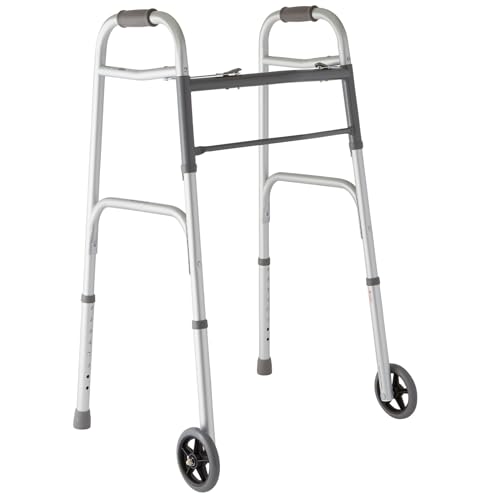
Best walker under $100
Best walkers under $100
Folding walkers under a hundred dollars - standard, wheeled, bariatric, junior height and one-handed - with the sizing step most people skip.
Read the guide →
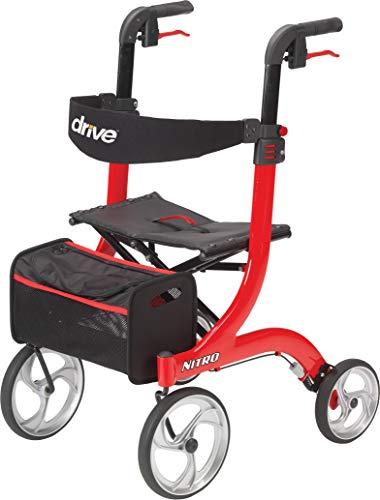
Best rollator
Best rollators for seniors
Rollators ranked by weight, brake feel, wheel size and how small they fold.
Read the guide →
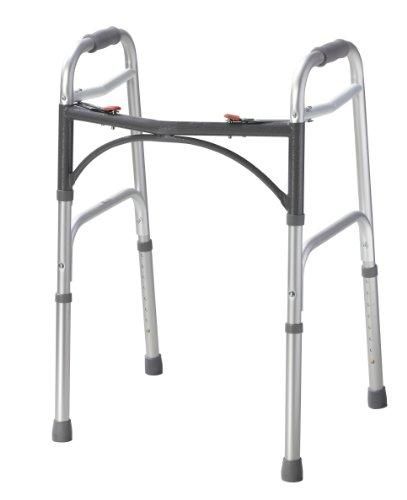
Best walker
Best walkers for seniors
Standard, two-wheel and hemi walkers for real instability, with sizing notes.
Read the guide →
Head to head
Rollator vs walker: which one do you need?
The decision table, the safety difference, and what to do when you need both.
Read the guide →
Guide
How to size a walker or rollator
The measurement, the check, and the three signs a frame is set wrong.
Read the guide →
Guide
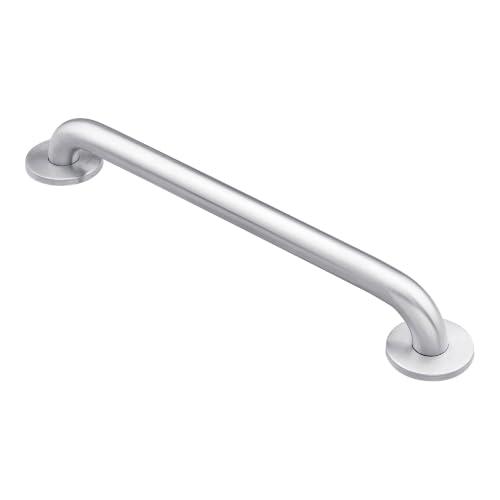
How to get free grab bars and safety equipment
Who actually pays for home safety equipment, and the phone calls that find out.
Read the guide →