Best big-digit clocks for seniors
A clock stops being decoration the moment somebody cannot read it from their chair. These are the ones chosen for eyesight, for hearing, and for a day that has lost its shape.
By Selena H. · Last checked October 15, 2026 · How we keep pages current
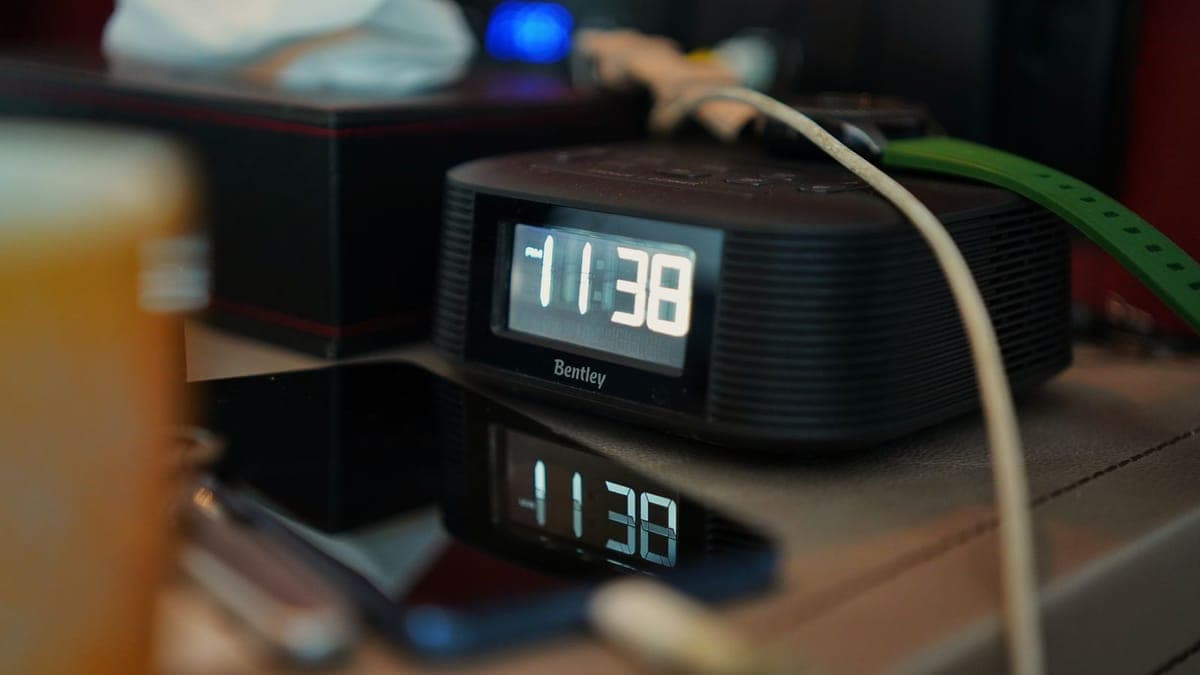
The clock is the piece of equipment nobody puts on the list. Then a parent starts calling at four in the morning convinced it is the afternoon, or squints at the microwave from six feet away, or sleeps through an alarm that used to work, and it turns out the cheapest useful thing you can buy for a house is a clock that answers the question from across the room.
There are really four different products hiding under the words senior clock, and buying the wrong one is the usual mistake. A big-digit clock solves eyesight. A day clock, which spells out the day of the week and sometimes the part of the day, solves orientation and is the one that matters in dementia. A talking clock solves vision loss that magnification can no longer fix. A shaker alarm solves deafness, which no amount of volume will.
We have not bench-tested clocks. What we have done is check that every pick below is still sold by its maker today, read what owners complain about, and sort the picks by the problem each one actually solves rather than by price. Two of these cost less than a takeout dinner, which makes a clock the highest-return purchase on this entire site.
A practical note before the picks: digit height is the specification that matters, not the size of the clock. A big plastic case with modest numerals is the standard disappointment. As a rule of thumb, a display needs roughly an inch of digit height for every ten feet of viewing distance to be comfortably legible, and eyes that have lost contrast sensitivity want considerably more than that.
Some links on this page go to Amazon. If you buy something, we may earn a small commission at no extra cost to you — it never changes which products we pick or the order they appear in. Full disclosure.
Quick picks
Ranked for how little strength, eyesight or patience they need — not for how much they cost.
| # | Product | Best for | Score | Price |
|---|---|---|---|---|
| 1 | American Lifetime Day ClockSpells out the day, date and part of the day in full sentences, with no abbreviations to decode. | Memory loss, and a day that has lost its shape | 9.2 | Check price on Amazon #ad Prices change daily, so we send you to check today's. How we earn |
| 2 | La Crosse Technology 513-1419 Atomic Digital ClockDigits over two inches tall, an adjustable backlight, and it sets itself from the radio time signal. | Eyesight, on a wall or a dresser | 8.8 | Check price on Amazon #ad Prices change daily, so we send you to check today's. How we earn |
| 3 | Sonic Alert Sonic Bomb SBB500SSAn extremely loud alarm plus a vibrating disc that goes under the mattress - the alarm that works when hearing has gone. | Sleeping through every alarm you have tried | 8.6 | Check price on Amazon #ad Prices change daily, so we send you to check today's. How we earn |
| 4 | Reizen Talking Atomic Alarm ClockPress one button and it says the time and date out loud, and it sets itself so nobody has to see the buttons. | Eyesight past the point where bigger digits help | 8.4 | Check price on Amazon #ad Prices change daily, so we send you to check today's. How we earn |
| 5 | DayClocks Classic Day ClockAn analog wall clock whose single hand points at the day of the week - no screen, no plug, no settings. | A house where a digital screen reads as clutter | 7.8 | Check price on Amazon #ad Prices change daily, so we send you to check today's. How we earn |
Tap any row to jump to the full write-up. The price button goes to Amazon.
Pick by what’s hard
Most lists sort by price. That is not how this decision actually gets made, so here it is sorted by the thing that is getting in the way.
- They keep getting the day wrong, or phoning at odd hours
- American Lifetime Day Clock — buy a day clock, not a bigger clock. The missing information is the day and the part of the day, and spelling it out in full words removes the step that has become unreliable.
- They can see, but not from their chair
- La Crosse Technology 513-1419 Atomic Digital Clock — measure from the chair to the wall and buy roughly an inch of digit for every ten feet, then go one size up. Digit height, not case size, is the specification.
- Alarms get slept through
- Sonic Alert Sonic Bomb SBB500SS — a bed shaker, every time. High-frequency hearing goes first, which is exactly where alarm tones live - more volume does not solve it.
- Reading is finished, even with a magnifier
- Reizen Talking Atomic Alarm Clock — a talking clock. Check the voice is clear enough if hearing is also going, and buy the self-setting version so nobody has to see the buttons twice a year.
- The bedroom is too bright to sleep in
- look for auto-dimming or a true off switch for the display. A clock bright enough to read across a room is bright enough to wreck sleep, and a backlight button beats a permanent glow.
- They will not have anything that looks medical in the house
- DayClocks Classic Day Clock — an analog day clock in a wood case reads as decor. Equipment that embarrasses someone ends up in a cupboard, and a clock in a cupboard helps nobody.
How we picked
We don’t run a product lab. Every pick here is chosen by reading the things that actually tell you whether something works for weak hands, poor eyesight or shaky fingers: the manufacturer’s own specifications, the retailer listing, the measurements and weights, and what owners report in their reviews — especially the one-star ones. We read the complaints before the praise.
Prices change constantly, so we send you to Amazon to see today’s price rather than printing a number that goes stale. More about how we choose.
The picks in full
1. Best for memory loss, and a day that has lost its shape
American Lifetime Day Clock
American Lifetime · 9.2/10 on our rubric
#ad Prices change daily, so we send you to check today's. How we earn
Spells out the day, date and part of the day in full sentences, with no abbreviations to decode.
This is the clock that gets recommended in dementia caregiver groups, and the reason is the wording. It does not say TUE 14; it says the day of the week in full, with the date and the part of the day written out. Somebody waking disoriented at five does not have to decode anything or do arithmetic, which is exactly the cognitive step that has become unreliable.
It plugs in and sets up once, the display dims itself in the dark so it is not a lighthouse in a bedroom, and alarms can be set for medication times. The screen is large enough to read from a bed or an armchair, which is where this clock is almost always needed.
Be realistic about what a clock fixes. It answers the question is it morning, reliably and without anyone being woken to ask. It does not stop the question being asked, and in later-stage dementia it may stop being read at all. Bought early, it buys months of independence; bought late, it is sometimes just furniture.
Good
- Day, date and part of day spelled out in full - no abbreviations
- Auto-dimming display, so it does not light up a bedroom at night
- Alarms that can be set for medication times
- Still sold and supported directly by the manufacturer
Watch out for
- Needs a wall outlet - it is not a battery clock
- In later-stage dementia it may stop being read at all
- The case is plain plastic; this is a care product, not decor
| Shows | Day, date, part of day, time |
|---|---|
| Power | Mains adapter |
| Display | 8-inch screen (retailer listing) |
| Alarms | Yes, multiple reminder alarms |
How it scores
- Readable across a room8.8
- Understandable at 3am9.8
- Nothing to set up9.0
- Night-time glare9.0
2. Best for eyesight, on a wall or a dresser
La Crosse Technology 513-1419 Atomic Digital Clock
La Crosse Technology · 8.8/10 on our rubric
#ad Prices change daily, so we send you to check today's. How we earn
Digits over two inches tall, an adjustable backlight, and it sets itself from the radio time signal.
La Crosse makes the big-digit clock that behaves properly in a real house. Time digits above two inches read comfortably across an average room, the full calendar line underneath carries the day and date, and the backlight is adjustable rather than fixed, which is the difference between a clock you can read at night and one you throw a towel over.
The self-setting part matters more than it sounds. It syncs to the US radio time signal, so it corrects itself and handles daylight saving without anyone climbing on a chair with a manual in March and November. For a household where setting a clock has become a two-person job, that is the whole feature.
It can sit on a dresser or hang on a wall, and it is sold through the major home improvement chains as well as online, which makes it easy to see in person before buying - worth doing, because legibility is personal.
Good
- Time digits over two inches tall
- Sets itself from the radio time signal, including daylight saving
- Adjustable backlight rather than one fixed brightness
- Wall or tabletop, so it works in any room
Watch out for
- Date and day text is much smaller than the time digits
- The backlight is not the same as a glowing display - in a dark room you may want it on constantly
- Multiple similar model numbers exist; check digit height on the listing you are buying
| Shows | Time, day, date, indoor temperature |
|---|---|
| Digit height | Over 2 inches (manufacturer listing) |
| Time setting | Atomic radio sync, auto daylight saving |
| Mounting | Wall or tabletop |
How it scores
- Readable across a room9.4
- Understandable at 3am7.6
- Nothing to set up9.6
- Night-time glare8.4
3. Best for sleeping through every alarm you have tried
Sonic Alert Sonic Bomb SBB500SS
Sonic Alert · 8.6/10 on our rubric
#ad Prices change daily, so we send you to check today's. How we earn
An extremely loud alarm plus a vibrating disc that goes under the mattress - the alarm that works when hearing has gone.
If someone has slept through a phone alarm, a clock radio and a shouted name, the answer is not a louder beep. Age-related hearing loss takes the high frequencies first, which is precisely the range most alarms live in, so the sound can be objectively deafening and still not be heard.
The Sonic Bomb solves it with physics instead of volume: a wired puck that tucks under the pillow or mattress and shakes the bed. The loud alarm and flashing indicator are there too, and you can run any combination of the three. For a person who has to be up for dialysis or an early appointment, it is the only category of alarm clock that reliably works.
It is an ugly, utilitarian object and the shaker is wired rather than wireless, which means the cable crosses the bed. Nobody buys this for the bedside aesthetic; they buy it because the alternative is missed appointments.
Good
- Bed shaker works when sound alone does not
- Extremely loud alarm with adjustable tone and volume
- Shaker, sound and flashing alert can be used in any combination
- Battery backup keeps the alarm through a power cut
Watch out for
- The shaker is wired, so a cable runs under the bedding
- Loud enough to startle - set it lower than you think
- Utilitarian looks, and the display is not the biggest here
| Alarm | Loud tone, bed shaker, flashing alert |
|---|---|
| Shaker | Wired puck for pillow or mattress |
| Backup | Battery backup for power cuts |
| Best for | Hearing loss, heavy sleepers |
How it scores
- Readable across a room7.0
- Understandable at 3am7.4
- Nothing to set up7.8
- Night-time glare7.6
4. Best for eyesight past the point where bigger digits help
Reizen Talking Atomic Alarm Clock
Reizen · 8.4/10 on our rubric
#ad Prices change daily, so we send you to check today's. How we earn
Press one button and it says the time and date out loud, and it sets itself so nobody has to see the buttons.
There is a point in macular degeneration where no digit is big enough, and the honest answer stops being a bigger display and becomes a voice. Press the button, hear the time and the date. That is the whole product, and for somebody whose central vision has gone it restores a small piece of independence that magnifiers cannot.
The atomic version is the one to buy. A talking clock that has to be set by a sighted helper every spring and fall defeats half the point; this one picks up the radio time signal and corrects itself. Reizen clocks are staples of the low-vision retailers, which is a good sign in this category - these are tools, sold to people who depend on them.
Check the voice before you commit if you can. Speech clarity varies between talking clocks, and a synthetic voice that is hard to make out is worse than no clock at all for someone who is also hard of hearing.
Good
- Announces time and date at the press of one button
- Sets itself from the radio time signal
- Sold through low-vision specialists, so support is knowledgeable
- Cheap enough to put one in the bedroom and one in the kitchen
Watch out for
- Synthetic voice quality varies - a problem if hearing is also poor
- Talking clocks announce at a fixed volume; check it suits the room
- Plain styling, like most low-vision equipment
| Shows | Spoken time and date, plus display |
|---|---|
| Time setting | Atomic radio sync |
| Alarm | Yes |
| Best for | Low vision, blindness |
How it scores
- Readable across a room6.0
- Understandable at 3am9.0
- Nothing to set up9.4
- Night-time glare9.4
5. Best for a house where a digital screen reads as clutter
DayClocks Classic Day Clock
DayClocks · 7.8/10 on our rubric
#ad Prices change daily, so we send you to check today's. How we earn
An analog wall clock whose single hand points at the day of the week - no screen, no plug, no settings.
Some houses reject digital displays. The clock looks wrong on the wall, the glow annoys, or the person reading it has used an analog face for eighty years and a row of glowing numerals genuinely does not register as a time. DayClocks makes the analog answer: a wall clock whose hand sweeps once a week and points at the day.
Pair it with an ordinary big-faced clock for the time and you have covered both questions in a way that looks like a home rather than a hospital room. That matters more than people admit - equipment that embarrasses the person it was bought for ends up in a cupboard.
It is the least informative pick here: no date, no part of day, no alarms. Buy it for the room it will live in, not for the amount of information it carries.
Good
- Analog face for people who never got on with digital displays
- Looks like decor, not like medical equipment
- No plug, no glow in a bedroom
- Wood finishes that suit a living room wall
Watch out for
- Day of the week only - no date, no time on the day-only models
- Battery powered, so somebody has to change it
- No alarms and nothing spoken
| Shows | Day of the week (model dependent) |
|---|---|
| Power | Battery |
| Mounting | Wall |
| Style | Analog, wood finishes |
How it scores
- Readable across a room8.2
- Understandable at 3am6.4
- Nothing to set up8.6
- Night-time glare10.0
What to check before you buy
- Digit height, not clock size. Roughly an inch per ten feet of viewing distance as a starting point, more if contrast sensitivity has dropped.
- Day spelled out or abbreviated. MON and TUE are harder to read than Monday and Tuesday, and much harder for someone confused on waking.
- Night brightness. Auto-dimming or a real off switch. A glowing clock in a bedroom costs sleep.
- Who sets it. Radio-synced clocks correct themselves twice a year; everything else needs somebody with good eyes and a manual.
- Power. Mains clocks go dark in an outage unless they have battery backup; battery clocks need somebody to change the battery.
- Alarm type. Sound, light, vibration, or all three. If sound alone has already failed, do not buy a louder version of what failed.
If the clock is going in a bedroom for someone who gets up at night, think about the light as well as the clock. A dim clock plus a motion-sensor night light on the route to the bathroom is a better night-time setup than a bright clock alone.
Why day clocks matter in dementia
Dementia disrupts the body's internal clock, and late-day confusion - sundowning - is one of its most common patterns. Guidance for caregivers consistently points the same way: keep daylight and routine as reliable as possible, keep the evening calm, and remove the small ambiguities that make the late afternoon harder than it needs to be.
A day clock removes one of those ambiguities completely. The question is it morning or evening becomes something a person can answer alone, at any hour, without waking anybody or feeling tested. That is worth more than its price suggests, both for the person and for whoever would otherwise have been woken to answer.
What it will not do is restore orientation in later stages, or stop a question being asked repeatedly. Set expectations accordingly: it is a tool that extends independence in the early and middle stages, and it works best when it is bought before it is desperately needed, so reading it becomes a habit rather than a new thing to learn.
Put the clock where the person already looks: beside the chair they sit in, or facing the bed. A clock on a wall nobody faces is a clock nobody reads.
Hearing, not volume, decides which alarm works
Age-related hearing loss takes the high frequencies first. Alarm tones are mostly high-frequency, which is why a person can genuinely sleep through a sound that makes visitors wince. Buying a louder clock repeats the mistake with more decibels.
The alternatives that work are vibration and light. A bed shaker transmits through the mattress, which bypasses hearing entirely, and a flashing alert catches an eye that is already half open. If hearing is becoming the broader issue rather than just the morning alarm, our guide to over-the-counter hearing aids covers what has changed in that market since 2022, and our TV sound page handles the complaint that usually comes first.
The difference between a clock and a reminder
Several clocks here can sound alarms for medication times, and families often try to use them as a pill reminder. It works for one or two doses a day for somebody who is otherwise organized. It stops working as soon as there are four doses, varying days, or any confusion about whether a dose was taken - because a clock cannot tell you whether you already took it.
At that point the right product is not a clock at all, it is a locked dispenser that only opens at the right time and makes it obvious when a dose was missed. Our pill dispenser roundup covers those, and the comparison with a plain weekly organizer explains which situation needs which.
Where to put it
- In the bedroom, facing the bed and visible without sitting up. This is the clock that stops 4am phone calls.
- In the chair's line of sight in the living room - the chair they actually use, not the one facing the television.
- In the kitchen, where meals and medications are timed.
- Not above head height. Looking up at a clock is uncomfortable with a stiff neck and harder to read through bifocals, which focus close vision at the bottom of the lens.
Questions people ask
▸What is the best clock for someone with dementia?
A day clock that spells out the day and the part of the day in full words, placed where the person already looks. Abbreviations like MON and 24-hour time both add a decoding step, which is the step dementia makes unreliable. Buy it early, so reading it becomes habit.
▸How big should the digits be on a clock for poor eyesight?
As a rule of thumb, allow about an inch of digit height for every ten feet of viewing distance, then go a size larger if contrast sensitivity has dropped - which it does with cataracts and macular degeneration. Measure from the chair, not from the doorway.
▸What kind of alarm clock works for someone who is hard of hearing?
One with a bed shaker. Age-related hearing loss affects high frequencies first, exactly where alarm tones sit, so a louder beep usually fails. A vibrating puck under the mattress works through touch and is the standard answer in deaf and hard-of-hearing households.
▸Are talking clocks worth it?
For vision loss past the point where magnification helps, yes - a spoken time restores a small piece of independence. Choose a self-setting atomic model so nobody has to see the buttons twice a year, and check the voice is clear if hearing is also affected.
▸Should a bedroom clock stay lit all night?
Not brightly. A clock bright enough to read across a room will interfere with sleep, so look for auto-dimming or a backlight button that lights the display only when pressed. Pair it with a low night light on the route to the bathroom rather than relying on the clock to light the room.
Sources
Read next

Best magnifier
Best magnifiers for low vision
Optical and electronic magnifiers compared for reading, labels and close work.
Read the guide →
Guide
Reading light setup for low vision
Lamp position, brightness, color temperature and glare — the setup that makes print readable.
Read the guide →

Best OTC hearing aids
Best over-the-counter hearing aids for seniors
OTC hearing aids compared on published lab measurements, fitting method and who helps when the settings are wrong.
Read the guide →

Best pill dispenser
Best automatic pill dispensers for seniors
Locked dispensers compared on capacity, alarms, family alerts and monthly costs.
Read the guide →

Best for memory loss
Best gifts for someone living with dementia
Comforting, low-choice gifts that work as memory changes, with what to avoid.
Read the guide →