Best shoes for seniors with swollen feet
Swelling changes through the day, so the shoe has to change with it. Adjustability beats size every time.
By Selena H. · Last checked October 17, 2026 · How we keep pages current
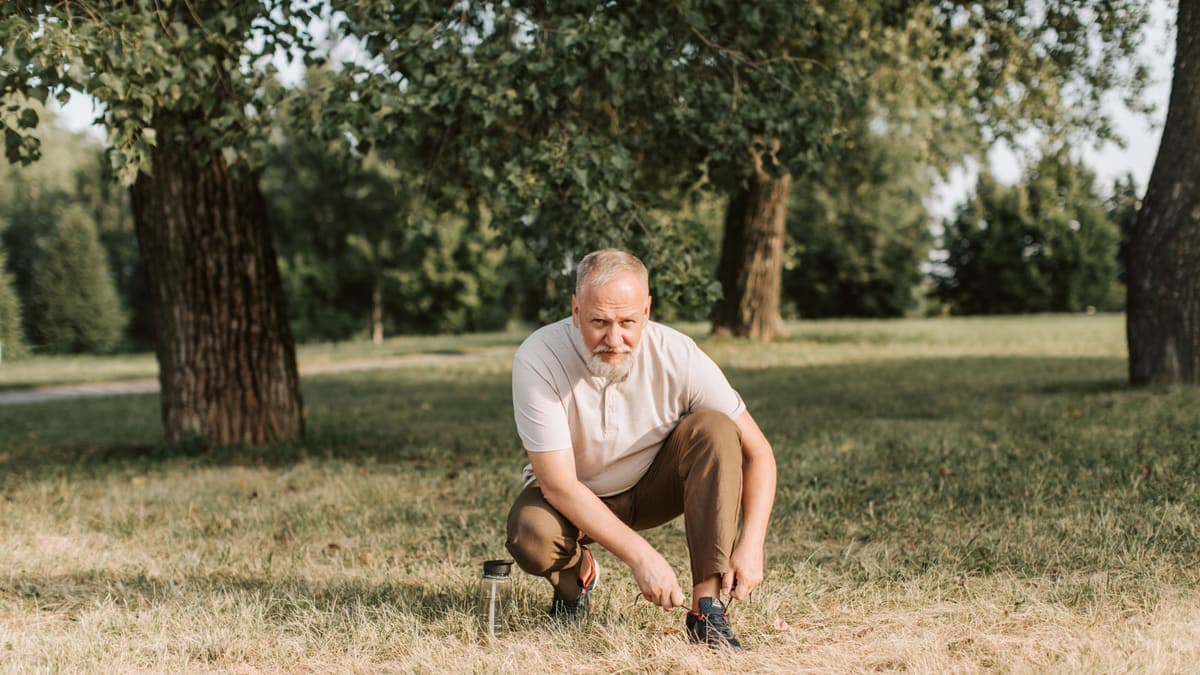
For most people with swollen feet the right shoe is an extra-depth walking shoe with two adjustable straps rather than laces - Orthofeet's stretch-knit range is the clearest example. It opens wide enough to get the foot in, closes to wherever the foot is today, and has the depth to take a swollen forefoot without pressing on it.
Buying a bigger size is the mistake almost everyone makes first. A longer shoe is still the same shape: too shallow over the top of the foot, too narrow across the ball, and now also too long, so the heel slips and the toe catches on the carpet. Length is not the problem. Volume is.
Swelling also moves. Feet are usually smallest first thing and largest by evening, which is why a shoe that fits perfectly at 9am can be unbearable at 6pm. Everything below is picked for adjustment range, depth, and whether the shoe can be put on sitting in a chair without reaching the toes.
This is general information about products, not medical advice. Talk to your doctor or occupational therapist about your own situation.
Some links on this page go to Amazon. If you buy something, we may earn a small commission at no extra cost to you — it never changes which products we pick or the order they appear in. Full disclosure.
Quick picks
Ranked for how little strength, eyesight or patience they need — not for how much they cost.
| # | Product | Best for | Score | Price |
|---|---|---|---|---|
| 1 | Orthofeet Stretch Knit Walking ShoeA stretch upper plus two straps, so the shoe follows the foot instead of fighting it. | Swelling that changes through the day | 9.0 | Check price on Amazon #ad Prices change daily, so we send you to check today's. How we earn |
| 2 | Propet Stability WalkerA genuinely wide walking shoe with a firm heel counter, for someone whose balance matters as much as the swelling. | A wide, stable shoe with a real sole | 8.6 | Check price on Amazon #ad Prices change daily, so we send you to check today's. How we earn |
| 3 | Skechers Hands Free Slip-insA heel that springs back into shape, so the shoe goes on standing up without a hand or a shoehorn. | Nobody can reach their feet | 8.0 | Check price on Amazon #ad Prices change daily, so we send you to check today's. How we earn |
| 4 | Adjustable Edema Shoe (full-opening)Opens almost flat and closes with wide straps, which is the only thing that fits a bandaged foot. | Swelling, bandaging or a dressing | 8.6 | Check price on Amazon #ad Prices change daily, so we send you to check today's. How we earn |
Tap any row to jump to the full write-up. The price button goes to Amazon.
Pick by what’s hard
Most lists sort by price. That is not how this decision actually gets made, so here it is sorted by the thing that is getting in the way.
- Feet are far bigger by evening than by morning
- Orthofeet Stretch Knit Walking Shoe — a stretch upper plus two straps covers the whole day's range. A fixed-volume shoe can only fit one time of day.
- Cannot reach down to the feet at all
- Skechers Hands Free Slip-ins — a collapsible heel means the shoe goes on standing. Pair it with a long shoehorn if even that is awkward.
- A bandage or dressing on the foot
- Adjustable Edema Shoe (full-opening) — nothing else opens far enough. Buy a matched pair so both feet sit level.
- Balance is the bigger worry
- Propet Stability Walker — a firm heel counter and a grippy outsole matter more than extra softness. Soft everywhere is not stable anywhere.
- Stiff fingers cannot manage laces
- Propet Stability Walker — buy the hook-and-loop version of whatever shoe you like. A large pull tab on the strap helps more than it sounds.
How we picked
We don’t run a product lab. Every pick here is chosen by reading the things that actually tell you whether something works for weak hands, poor eyesight or shaky fingers: the manufacturer’s own specifications, the retailer listing, the measurements and weights, and what owners report in their reviews — especially the one-star ones. We read the complaints before the praise.
Prices change constantly, so we send you to Amazon to see today’s price rather than printing a number that goes stale. More about how we choose.
The picks in full
1. Best for swelling that changes through the day
Orthofeet Stretch Knit Walking Shoe
Orthofeet · 9.0/10 on our rubric
#ad Prices change daily, so we send you to check today's. How we earn
A stretch upper plus two straps, so the shoe follows the foot instead of fighting it.
The stretch-knit upper is the feature that matters: it gives where a leather or mesh panel would press, which means a bunion, a hammer toe or an evening's swelling does not create a hot spot.
Two adjustable straps rather than laces let you set the fit in a second, sitting down, without tying anything. That is the difference between a shoe someone puts on themselves and one they wait for help with.
The removable insole is the quiet second feature. Take it out and the shoe gains depth, which is how an extra-depth shoe accommodates a foot that no ordinary sneaker will take - or makes room for an orthotic prescribed by a podiatrist.
Good
- Stretch upper with no seams to press on toes
- Two straps, adjustable sitting down
- Removable insole adds depth or takes an orthotic
Watch out for
- Costs more than a high-street sneaker
- Sizing runs generous - measure before ordering
| Closure | Two adjustable straps |
|---|---|
| Upper | Stretch knit, seam-free |
| Depth | Extra depth, removable insole |
| Widths | Wide and extra wide offered |
How it scores
- Adjustment range9.4
- Depth for a swollen forefoot9.2
- Putting it on unaided9.0
- Grip and stability8.4
2. Best for a wide, stable shoe with a real sole
Propet Stability Walker
Propet · 8.6/10 on our rubric
#ad Prices change daily, so we send you to check today's. How we earn
A genuinely wide walking shoe with a firm heel counter, for someone whose balance matters as much as the swelling.
A lot of soft, accommodating shoes are soft everywhere, including the heel. That is the wrong trade for an unsteady walker: a collapsing heel counter lets the ankle roll, and the shoe becomes a fall risk dressed as comfort.
The Stability Walker keeps a firm heel and a proper outsole while still being available in widths that fit a swollen foot. For someone using a cane or a rollator, that combination is worth more than another millimeter of cushioning.
The hook-and-loop strap version is the one to buy if fingers are stiff. The laced version fits a little more precisely but needs hands that can work a bow.
Good
- Available in extra-wide fittings
- Firm heel counter supports the ankle
- Outsole with real grip, not a slipper sole
Watch out for
- Heavier than a knit shoe
- Styling is plainly orthopedic
| Closure | Hook-and-loop or lace versions |
|---|---|
| Upper | Leather or synthetic |
| Widths | Up to extra wide |
| Sole | Grippy walking outsole |
How it scores
- Adjustment range8.2
- Depth for a swollen forefoot8.4
- Putting it on unaided8.2
- Grip and stability9.4
3. Best for nobody can reach their feet
Skechers Hands Free Slip-ins
Skechers · 8.0/10 on our rubric
#ad Prices change daily, so we send you to check today's. How we earn
A heel that springs back into shape, so the shoe goes on standing up without a hand or a shoehorn.
The hinged heel panel collapses as the foot goes in and pops back up behind it. For someone who cannot bend to their feet - after a hip replacement, with a bad back, or with breathlessness on bending - it removes the whole problem.
It is available in wide fittings, which is what keeps it on this list. A standard-width slip-in will not take a swollen foot however clever the heel is, so check the width on the specific listing.
It gives less adjustment than a strapped shoe, so it suits mild to moderate swelling that stays roughly the same rather than feet that balloon by evening.
Good
- Goes on without bending or using hands
- Available in wide fittings
- Light and comfortable for indoor wear
Watch out for
- Little adjustment once it is on
- Not enough room for severe swelling
| Closure | Hands-free collapsible heel |
|---|---|
| Upper | Knit or mesh |
| Widths | Standard and wide on many models |
| Best for | Mild to moderate, steady swelling |
How it scores
- Adjustment range6.0
- Depth for a swollen forefoot7.2
- Putting it on unaided9.8
- Grip and stability8.0
4. Best for swelling, bandaging or a dressing
Adjustable Edema Shoe (full-opening)
Various · 8.6/10 on our rubric
#ad Prices change daily, so we send you to check today's. How we earn
Opens almost flat and closes with wide straps, which is the only thing that fits a bandaged foot.
When a foot is bandaged, or when swelling is severe enough that no regular shoe closes, the answer is a shoe that opens out flat. The foot is placed on it rather than pushed into it, and the straps are then pulled over the top.
These are plain and nobody loves how they look. They are also the difference between walking safely to the bathroom and shuffling there in socks, which is the single most common way people slip on a hard floor at home.
Buy a pair rather than one. Wearing a thick orthopedic shoe on one foot and a thin slipper on the other tilts the pelvis and makes an unsteady person less steady.
Good
- Opens flat for a bandaged or very swollen foot
- Wide hook-and-loop straps with a large adjustment range
- Non-slip sole, unlike a sock or slipper
Watch out for
- Bulky and plainly medical in appearance
- Buy two, so both feet sit at the same height
| Closure | Wide hook-and-loop straps |
|---|---|
| Opening | Opens near flat |
| Best for | Severe swelling, dressings, bandages |
| Sole | Non-slip |
How it scores
- Adjustment range9.8
- Depth for a swollen forefoot9.6
- Putting it on unaided8.6
- Grip and stability7.4
How to buy shoes for a swollen foot
- Measure late in the day, when the foot is at its largest, with the sock you will actually wear.
- Measure width as well as length. Most people buying a bigger size needed a wider one.
- Look for the words extra depth, and for a removable insole - that is how a shoe makes room over the top of the foot.
- Choose straps over laces unless fingers are strong and nimble.
- Check the heel counter. Squeeze the back of the shoe: if it folds flat, it will not support an unsteady ankle.
- Try both feet. Swelling is often worse on one side, and you fit the larger foot.
New or one-sided swelling, swelling with pain, redness or breathlessness, or a sore that is not healing all need a doctor rather than a shoe. Ask about diabetic footwear coverage too - it may be funded.
Why a bigger size does not work
Shoe sizing scales length far faster than it scales girth. Going up two sizes to fit a swollen forefoot gains you a little width, a lot of unwanted length, and no extra depth at all - the part of the shoe that sits over the top of the foot barely changes.
The consequences are predictable. The heel slips, which rubs; the toe overhangs, which catches on carpet edges and door thresholds; and the pressure over the instep is unchanged, which is where the ache was in the first place.
A wide, extra-depth shoe in the correct length fixes all three. It is the single most useful thing to know when shopping for feet that swell.
Socks matter more than people expect
- Seamless socks avoid the ridge across the toes that creates pressure marks on a swollen foot.
- Avoid tight elastic tops - they leave a band and can make ankle swelling worse by evening.
- Compression socks are a medical item: helpful for some causes of swelling, wrong for others. Ask a doctor first.
- If compression is prescribed, a sock aid makes it possible to put them on without help.
- Change socks if they get damp. Skin that stays wet breaks down quickly on a swollen foot.
Questions people ask
▸What kind of shoes are best for swollen feet?
Extra-depth shoes with adjustable straps and a wide fitting. The depth makes room over the top of the foot, the straps let you change the fit as swelling rises through the day, and the width fits the ball of the foot without pressing.
▸Should I buy a bigger shoe size for swollen feet?
No. A longer shoe does not add depth or width where you need it, and the extra length makes the heel slip and the toe catch. Buy the same length in a wider, deeper fitting instead.
▸What time of day should I measure my feet?
Late afternoon or evening, when feet are at their largest, wearing the socks you will wear with the shoes. Measuring first thing in the morning is how people end up with shoes that hurt by dinner.
▸Are slippers acceptable around the house with swollen feet?
Soft backless slippers are a common cause of falls at home. If swelling makes shoes hard to wear indoors, use an adjustable shoe with a back and a non-slip sole rather than a mule.
Sources
Read next
Best dressing aid
Best sock aids for seniors
Rigid and flexible sock aids, including the type that handles compression stockings.
Read the guide →
Best cane
Best canes for balance
Folding, quad and offset canes compared, with the sizing rule that most people get wrong.
Read the guide →
Best reacher
Best reacher grabbers for elderly adults
Reachers compared on grip strength required, jaw type and the right length for the job.
Read the guide →
Guide
Balance exercises to prevent falls
A four-week counter-based progression, and the non-exercise changes that matter as much.
Read the guide →
Guide
Home safety checklist for aging in place
Room by room: what to fix first, what it costs, and what to stop worrying about.
Read the guide →