Knee walker vs crutches
Crutches demand arm strength and balance. A knee walker demands space and a flat floor. Age usually decides it.
By Selena H. · Last checked October 17, 2026 · How we keep pages current
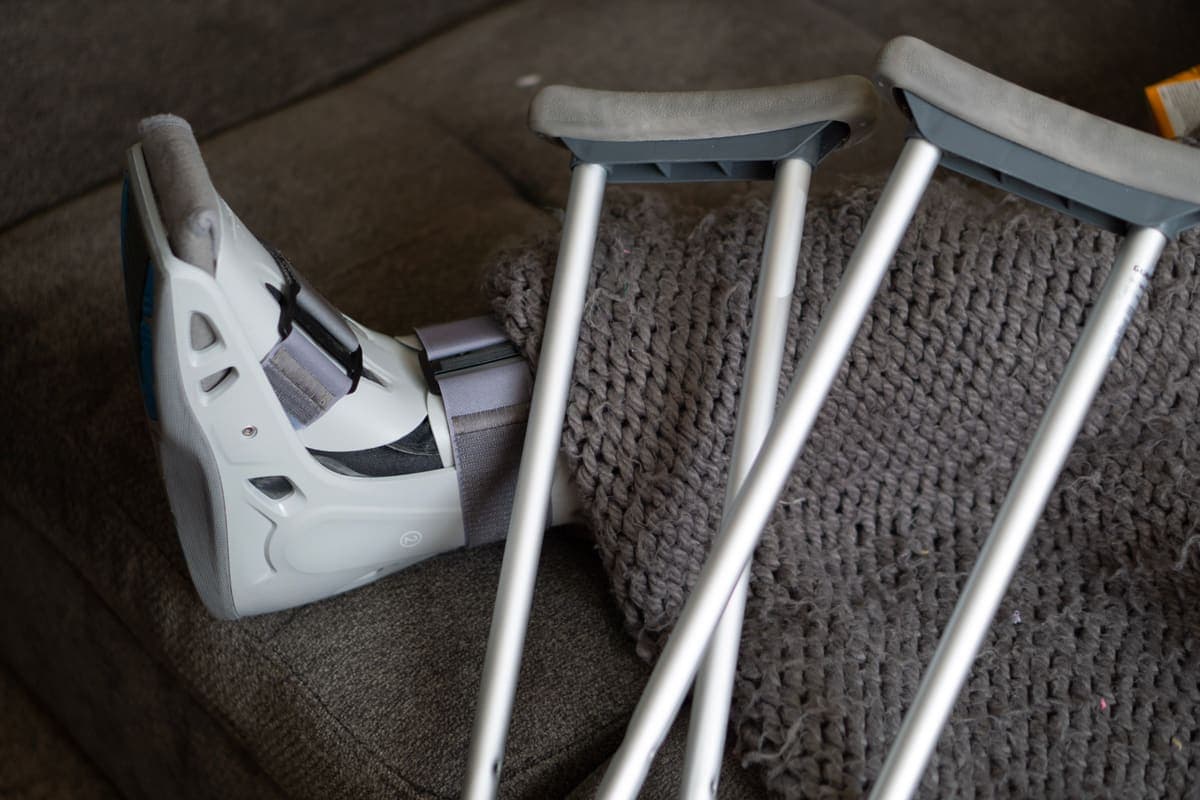
For most people over 65 with a non-weight-bearing foot or ankle injury, a knee walker is the safer choice. It takes the load through the shin rather than the armpits and hands, it does not demand upper-body strength, and it leaves both hands free. Crutches win only where there are stairs, narrow spaces or thresholds the scooter cannot cross.
The decision is usually framed as a comfort question. It is really a strength and balance question. Crutches ask you to hold your entire body weight on two hands and swing a leg through - a demand that is manageable at 25 and often not at 75, particularly with arthritic wrists or a previous shoulder problem.
Below is the comparison in full, then the circumstances where each one is clearly right, and the equipment to look at for either route. Your surgeon or physical therapist has the last word: some injuries rule out a knee walker because of how the leg has to be held.
This is general information about products, not medical advice. Talk to your doctor or occupational therapist about your own situation.
Some links on this page go to Amazon. If you buy something, we may earn a small commission at no extra cost to you — it never changes which products we pick or the order they appear in. Full disclosure.
Knee walker vs crutches at a glance
Quick picks
| # | Product | Best for | Score | Price |
|---|---|---|---|---|
| 1 | KneeRover Steerable Knee ScooterFour wheels, a steering column and a knee platform - the standard answer for a non-weight-bearing foot. | The main route for an older adult | 8.8 | Check price on Amazon #ad Prices change daily, so we send you to check today's. How we earn |
| 2 | Forearm Crutches (pair)Less pressure in the armpit than underarm crutches, and the only option that handles stairs. | Stairs and tight spaces | 6.8 | Check price on Amazon #ad Prices change daily, so we send you to check today's. How we earn |
| 3 | Knee Walker with SeatA knee platform plus a seat, so there is somewhere to rest without finding a chair. | Long days and low stamina | 8.4 | Check price on Amazon #ad Prices change daily, so we send you to check today's. How we earn |
Tap any row to jump to the full write-up. The price button goes to Amazon.
Pick by what’s hard
Most lists sort by price. That is not how this decision actually gets made, so here it is sorted by the thing that is getting in the way.
- Wrists, elbows or shoulders are arthritic
- KneeRover Steerable Knee Scooter — crutches put your whole body weight through exactly those joints. A knee platform takes the load through the shin instead.
- There are stairs every day
- Forearm Crutches (pair) — a knee walker cannot do stairs. Either learn crutch technique with a physical therapist, or set up to live on one floor for the duration.
- Low stamina - standing is tiring
- Knee Walker with Seat — a seat means you can stop where you are instead of planning each trip around the nearest chair.
- A small apartment with tight corners
- Forearm Crutches (pair) — a knee scooter needs turning room. Measure the narrowest point before buying, especially the bathroom doorway.
- Balance was already shaky before the injury
- KneeRover Steerable Knee Scooter — four wheels and a hand brake beat two points of contact. Crutches amplify an existing balance problem rather than compensating for it.
How we picked
We don’t run a product lab. Every pick here is chosen by reading the things that actually tell you whether something works for weak hands, poor eyesight or shaky fingers: the manufacturer’s own specifications, the retailer listing, the measurements and weights, and what owners report in their reviews — especially the one-star ones. We read the complaints before the praise.
Prices change constantly, so we send you to Amazon to see today’s price rather than printing a number that goes stale. More about how we choose.
The picks in full
1. Best for the main route for an older adult
KneeRover Steerable Knee Scooter
KneeRover · 8.8/10 on our rubric
#ad Prices change daily, so we send you to check today's. How we earn
Four wheels, a steering column and a knee platform - the standard answer for a non-weight-bearing foot.
Steering is the feature to insist on. A non-steerable scooter has to be lifted and repositioned at every turn, which in a normal-sized home means lifting it dozens of times a day.
The knee platform takes the weight through the shin, so there is nothing resting on the hands or armpits. That is the whole advantage over crutches for anyone with arthritic wrists or weak shoulders.
Set the platform height so the injured knee rests on it with the hips level. Too low and you lean; too high and you tip. Adjust it with someone watching from the side before the first trip across the room.
Good
- No upper-body strength required
- Steers around furniture without lifting
- Basket carries things between rooms
Watch out for
- Will not do stairs at all
- Catches on thick rugs and high thresholds
| Steering | Steerable front wheels |
|---|---|
| Capacity | Around 300 lb |
| Brakes | Hand brakes with locking park brake |
| Folds | Yes, for car transport |
How it scores
- Arm strength needed9.6
- Stability9.0
- Works in small spaces6.4
- Stairs1.0
2. Best for stairs and tight spaces
Forearm Crutches (pair)
Various · 6.8/10 on our rubric
#ad Prices change daily, so we send you to check today's. How we earn
Less pressure in the armpit than underarm crutches, and the only option that handles stairs.
Forearm crutches put the load through a cuff on the forearm and a handgrip rather than jamming into the armpit, which avoids the nerve irritation underarm crutches can cause over weeks of use.
They still require real arm strength and reasonable balance. If a flight of stairs has to be managed daily and a stairlift is not an option, this is often the only workable route - but ask a physical therapist to teach the technique rather than working it out alone.
Set the handgrip so the elbow bends about 15 to 20 degrees when standing straight. Most people have them set too low, which rounds the shoulders and tires the arms faster.
Good
- Handles stairs and narrow doorways
- Less armpit pressure than underarm crutches
- Cheap and easy to store
Watch out for
- Needs genuine arm and shoulder strength
- Hands are not free while moving
| Load path | Forearm cuff and handgrip |
|---|---|
| Adjustment | Height adjustable |
| Stairs | Yes, with training |
| Storage | Stands in a corner |
How it scores
- Arm strength needed3.4
- Stability5.6
- Works in small spaces9.4
- Stairs8.8
3. Best for long days and low stamina
Knee Walker with Seat
Various · 8.4/10 on our rubric
#ad Prices change daily, so we send you to check today's. How we earn
A knee platform plus a seat, so there is somewhere to rest without finding a chair.
Kneeling on one leg for hours is tiring in a way nobody warns you about. A model with a seat lets you stop where you are, which for someone with low stamina turns a trip to the kitchen into something manageable.
It is bigger and heavier than a plain knee scooter, so measure the hallway and the gap between the kitchen counters before buying.
Where the injury is expected to last more than a few weeks, the seat is usually worth the extra bulk.
Good
- Somewhere to rest mid-task
- Same no-arm-strength advantage as a knee scooter
- Suits longer recovery periods
Watch out for
- Bulkier in corridors and bathrooms
- Heavier to lift into a car
| Seat | Yes |
|---|---|
| Steering | Steerable |
| Brakes | Hand brakes with park lock |
| Best for | Recoveries over a few weeks |
How it scores
- Arm strength needed9.6
- Stability9.2
- Works in small spaces5.4
- Stairs1.0
When crutches are the right answer
- There are stairs that have to be managed every day and no alternative route.
- The home is small, with narrow doorways or tight bathroom turns a scooter cannot make.
- The injury or surgery means the knee cannot be bent to rest on a platform - ask the surgeon.
- The recovery is expected to be short, and arm strength is good.
- Cost is the deciding factor and the arms can take it.
When a knee walker is the right answer
- Arm, wrist or shoulder strength is limited, which covers most people over 70.
- Balance was already a concern before the injury.
- Everything needed is on one floor.
- The recovery will run for several weeks, so comfort and fatigue compound.
- The person needs their hands free to carry things, or they will simply stop doing them.
Both options assume the leg genuinely has to stay off the ground. Follow the weight-bearing instruction you were given exactly - it is the one thing that determines how the injury heals.
Setting either one up correctly
On a knee walker, set the platform so the injured knee rests with the hips level and the back upright. If you are leaning to one side to reach it, it is too low, and a week of that produces a sore back on top of a sore foot.
On crutches, the handgrip should sit where the wrist falls naturally with the arm hanging, giving a slight bend at the elbow when standing. Weight goes through the hands, never the armpits - resting on the armpit crossbar is what causes nerve problems.
Clear the route either way. Loose rugs, trailing cords and raised thresholds are the hazards that turn a healing foot into a fall, and a home safety sweep is worth an hour before the first full day at home.
Rent or buy?
Knee walkers are commonly available to rent by the week from medical supply stores, and for a four-week recovery renting is often cheaper than buying. For anything longer, buying usually wins, and a used scooter resells easily because so many are bought for short recoveries.
Crutches are cheap enough that this question rarely arises. Buy forearm crutches rather than underarm ones if the recovery will run more than a couple of weeks.
Ask whether your insurance covers either as durable medical equipment with a prescription - the answer varies and is worth one phone call before paying out of pocket.
Questions people ask
▸Is a knee scooter better than crutches for seniors?
Usually yes. A knee scooter takes the load through the shin rather than the arms, needs far less upper-body strength and offers much better stability. Crutches remain the better answer where stairs or very tight spaces are unavoidable.
▸Can you use a knee walker on stairs?
No. A knee walker cannot be used on stairs at all. If stairs have to be managed daily, plan either crutch training with a physical therapist or a temporary setup on one floor.
▸Are knee walkers safe for older adults?
They are generally safer than crutches for this age group because of the four-wheel base and the low arm-strength demand. The main risks are thick rugs, raised thresholds and slopes, so clear the route and use the park brake every time you stop.
▸How long do you need a knee walker after foot surgery?
That depends entirely on the procedure and your surgeon's weight-bearing instruction - typically several weeks. Ask before you rent or buy, because it decides whether renting or buying is cheaper.
Sources
Read next

Best walker
Best walkers for seniors
Standard, two-wheel and hemi walkers for real instability, with sizing notes.
Read the guide →
Head to head
Rollator vs walker: which one do you need?
The decision table, the safety difference, and what to do when you need both.
Read the guide →
Best transport wheelchair
Best lightweight transport wheelchairs
Transport chairs ranked on lifted weight, folded size, brake type and seat width.
Read the guide →

Guide
Home safety checklist for aging in place
Room by room: what to fix first, what it costs, and what to stop worrying about.
Read the guide →
Guide
Getting up from a chair safely
The method, the chair features that help, and the equipment worth buying if it is still hard.
Read the guide →