What size lift chair do you need?
Four measurements decide it, and the one most people skip is the distance from the back of the knee to the heel.
By Selena H. · Last checked October 17, 2026 · How we keep pages current
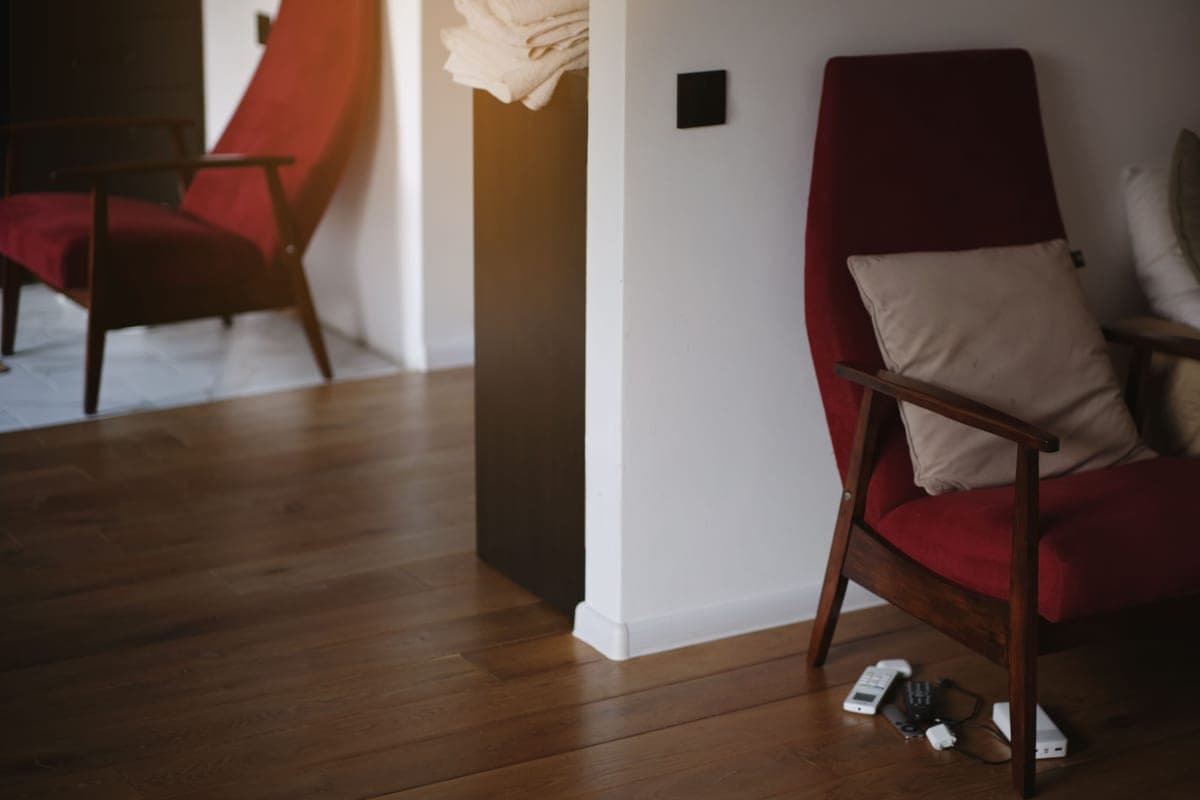
Lift chairs are sized by the user's height and weight, not by the room. As a rule of thumb, a petite chair suits roughly 5 ft 3 in and under, a standard or medium chair suits about 5 ft 4 in to 5 ft 10 in, and a tall or large chair suits 5 ft 11 in and above - with a separate heavy-duty range for higher weight capacities.
Those bands are a starting point, not an answer, because people are not scaled uniformly. The measurement that actually decides comfort is the seat depth against the length of the thigh, and it is the one almost nobody takes.
Below are the four measurements to take before ordering, what each one controls, and what goes wrong when it is off. Take them with the person sitting in a firm dining chair, shoes on, in about five minutes.
Some links on this page go to Amazon. If you buy something, we may earn a small commission at no extra cost to you — it never changes which products we pick or the order they appear in. Full disclosure.
The four measurements that size a lift chair
- Seat-to-floor height. Measure from the back of the knee to the floor with the feet flat and shoes on. The chair's seat height should match this within about an inch, so the feet rest flat rather than dangling or forcing the knees up.
- Seat depth. Measure from the back of the hips to the back of the knee while seated upright. The chair's seat depth should be one to two inches less, so there is a gap behind the knee and no pressure on the back of the calf.
- Seat width. Measure hip to hip at the widest point while seated, and add two inches for clothing and movement. Too wide and the armrests are out of reach when pushing up.
- Back height. Measure from the seat to the top of the shoulders. The backrest should reach at least to the shoulders, and to the top of the head if the chair will be slept in.
Quick picks
| # | Product | Best for | Score | Price |
|---|---|---|---|---|
| 1 | MCombo Dual Motor Power Lift ReclinerTwo motors, so the footrest can be raised with the back still upright. | Independent back and legs | -- | Check price on Amazon #ad Prices change daily, so we send you to check today's. How we earn |
| 2 | CANMOV Power Lift ReclinerOne motor, two positions, and a simpler control for someone who only wants up and down. | A straightforward single-motor chair | -- | Check price on Amazon #ad Prices change daily, so we send you to check today's. How we earn |
| 3 | Chair Risers (set of four)A cheap way to find out whether a higher seat is all that was needed. | Testing whether height is the real problem | -- | Check price on Amazon #ad Prices change daily, so we send you to check today's. How we earn |
Tap any row to jump to the full write-up. The price button goes to Amazon.
How we picked
We don’t run a product lab. Every pick here is chosen by reading the things that actually tell you whether something works for weak hands, poor eyesight or shaky fingers: the manufacturer’s own specifications, the retailer listing, the measurements and weights, and what owners report in their reviews — especially the one-star ones. We read the complaints before the praise.
Prices change constantly, so we send you to Amazon to see today’s price rather than printing a number that goes stale. More about how we choose.
The picks in full
1. Best for independent back and legs
MCombo Dual Motor Power Lift Recliner
MCombo
#ad Prices change daily, so we send you to check today's. How we earn
Two motors, so the footrest can be raised with the back still upright.
The second motor is what makes the infinite-position claim real: legs up, back upright is the position people want for swollen ankles and it is impossible on a single-motor chair.
Check the stated seat dimensions against your four measurements rather than the overall chair size, which includes the arms and is not what you sit on.
Good
- Independent back and footrest
- Wide range of positions
- Useful for leg elevation
Watch out for
- More expensive than single-motor
- Two motors is two things to fail
| Motors | Two |
|---|---|
| Recline | Infinite position |
| Check | Seat width, depth and height against your measurements |
2. Best for a straightforward single-motor chair
CANMOV Power Lift Recliner
CANMOV
#ad Prices change daily, so we send you to check today's. How we earn
One motor, two positions, and a simpler control for someone who only wants up and down.
A single-motor chair moves the back and footrest together. For someone who wants to sit, recline a little and stand up again, that is all the chair they need and the control is simpler.
Confirm the seat height suits a shorter or taller user before ordering - single-motor ranges often come in fewer size options.
Good
- Simple two-button control
- Fewer parts to fail
- Lower cost than dual motor
Watch out for
- Cannot raise legs with the back upright
- Fewer size options in some ranges
| Motors | One |
|---|---|
| Recline | Two position |
| Check | Seat-to-floor height for short or tall users |
3. Best for testing whether height is the real problem
Chair Risers (set of four)
Various
#ad Prices change daily, so we send you to check today's. How we earn
A cheap way to find out whether a higher seat is all that was needed.
Before spending on a lift chair, raise the existing armchair a couple of inches and see what changes. If standing up becomes easy, the problem was seat height, and risers may be the whole answer.
Use a set rated well above the chair's loaded weight, on a level floor, and check they are seated squarely before anyone sits down.
Good
- Cheap test of the real problem
- Reversible
- Works on an existing favorite chair
Watch out for
- Not for an unstable or wheeled chair
- Raises an already-tall chair too far
| Raises | Typically 2-5 in depending on set |
|---|---|
| Use on | Stable, level-footed chairs only |
| Check | Load rating against chair plus occupant |
What goes wrong at each size
Weight capacity is a hard limit, not a guideline. It covers the motor and the frame together, and exceeding it is how a lift mechanism fails under load.
Sizing for a shorter person
The common mistake for a shorter user is a chair whose seat is too high and too deep. The feet end up dangling, the front edge of the seat presses behind the knees, and standing up becomes harder rather than easier - which defeats the point of the chair.
Look specifically for a petite or small model rather than adjusting a standard chair with cushions. Padding the seat raises it further, which is the opposite of what is needed.
If a petite chair is not available in the style wanted, chair risers are the wrong fix here too. Keep looking for the right chair, or check whether the manufacturer offers a shorter-seat option in the same range.
Sizing for a taller or heavier person
For a taller user the critical measurements are back height and seat depth. A backrest that stops at mid-shoulder is uncomfortable immediately and useless for sleeping, and a shallow seat leaves the thighs unsupported with the knees hanging past the front edge.
For a heavier user, weight capacity governs everything else. Chairs are usually sold in bands - commonly around 300 lb for standard models and 375 to 500 lb or more for heavy-duty ranges - and the frame, motor and lift geometry are all built to that figure.
Heavy-duty chairs are also wider, which is good for comfort and can be bad for standing up: if the armrests are too far apart to push on, the lift does more of the work and the person does less, which gradually costs them strength. Width still needs to be measured rather than maximized.
Two-position, three-position or infinite recline?
- Two-position chairs recline to about 45 degrees. Fine for reading and television, not for sleeping.
- Three-position chairs recline close to flat, which is what most people want if the chair will be slept in occasionally.
- Infinite-position chairs have separate motors for the back and footrest, so the legs can be raised with the back upright - the setting that matters for swollen ankles.
- More motors means more cost and more to go wrong. Buy the configuration the person will actually use.
- Check that the hand control has large, distinguishable buttons. A small flat remote is a daily irritation for stiff fingers.
Before you order
- Measure the doorway and the turn into the room. Lift chairs are heavy and arrive in large boxes.
- Check how much clearance the chair needs behind it - many need several inches to recline, though wall-hugger designs need less.
- Confirm there is a power outlet within reach, and ask about a battery backup for power cuts.
- Ask whether delivery includes setup and removal of packaging. Assembly is not a one-person job.
- Ask your insurance whether any part of the cost is covered with a prescription - the lift mechanism is sometimes treated differently from the chair.
The details that decide whether the chair is lived with
Once the four measurements are settled, the remaining choices are about daily life rather than fit, and they are where regret usually comes from. The first is the hand control. A small flat wand with identical buttons is hard to use in a hurry and nearly impossible in the dark; a control with large, differently shaped buttons and a cord long enough to reach the floor is worth asking about by name.
The second is the fabric. Leather and vinyl wipe clean, which matters if there are any continence concerns, but they are cold in winter, warm in summer, and slippery, which makes staying put in the chair harder. A textured fabric grips better and is more forgiving to sit on for hours, at the cost of being harder to clean. Many ranges offer a performance fabric that splits the difference, and it is usually the right answer.
The third is the pocket. A side pocket deep enough for a remote control, a phone and a pair of glasses removes the main reason someone reaches over the side of a chair, which is one of the most common ways people end up on the floor. If the chair does not have one, an over-arm caddy costs very little and does the same job.
Finally, ask what happens in a power cut. Most lift chairs include a battery backup that will complete one cycle so nobody is stranded reclined, but the batteries are a consumable and are often flat by the time they are needed. Check they are present, and change them yearly on the same day the smoke alarm batteries are done.
Questions people ask
▸What size lift chair do I need for a 5 ft 2 in person?
A petite or small model, which generally suits users up to about 5 ft 3 in. The critical check is seat-to-floor height: measure from the back of the knee to the floor with shoes on, and match the chair's seat height within an inch so the feet rest flat.
▸What size lift chair is best for a tall person?
A tall or large model, usually recommended from about 5 ft 11 in. Pay closest attention to back height and seat depth - a backrest that stops below the shoulders is uncomfortable from the first day.
▸How do I measure for a lift chair?
Sit on a firm dining chair with shoes on and take four measurements: back of knee to floor, back of hips to back of knee, hip width plus two inches, and seat to top of shoulders. Those four numbers map directly onto the chair's seat height, seat depth, seat width and back height.
▸What happens if a lift chair is too big?
The user slides forward to get their feet down, which rounds the lower back and puts pressure behind the knees. Over weeks that causes aching calves, poor posture and more difficulty standing - the exact problems the chair was bought to solve.
Sources
Read next
Best lift chair
Best lift chairs for elderly adults
Lift recliners compared on fit, motor count and what the listings do not tell you.
Read the guide →
Head to head
Power recliner vs lift chair
What each actually does, what Medicare may cover, and when the cheaper one is enough.
Read the guide →
Guide
Getting up from a chair safely
The method, the chair features that help, and the equipment worth buying if it is still hard.
Read the guide →
Best seat cushion
Best seat cushions for seniors with back pain
Cushions ranked on hip lift, whether they bottom out, and which pain they actually help.
Read the guide →