Best easy-to-read blood glucose meters
The meter is cheap and the strips are not. Choose on whether the number can be read - or heard - and on what the next hundred tests will cost.
By Selena H. · Last checked November 12, 2026 · How we keep pages current
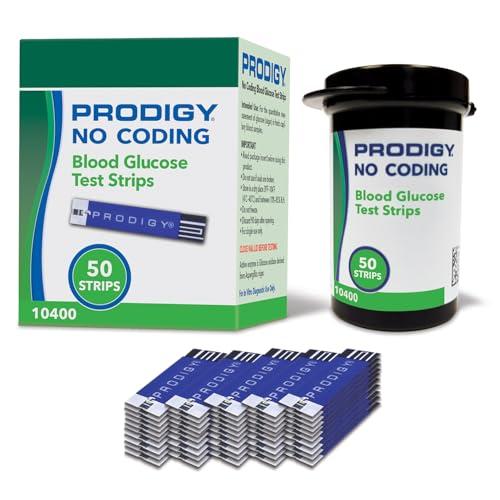
If sight has gone far enough that a screen is no longer readable, the Prodigy Voice is the meter to buy - it is audible from setup through to the result, and it was designed with the National Federation of the Blind rather than adapted afterwards. If the number can still be read but it is hard to interpret, the OneTouch Verio Reflect puts a colored range indicator beside it.
Testing blood sugar is a fiddly job at any age. It asks you to get a small strip out of a vial without dropping the rest, put it in a slot you cannot easily see, prick a fingertip that may have very little feeling left, aim a drop of blood at a target a couple of millimeters wide, and then read a number on a small gray screen.
Diabetic retinopathy means a large share of the people doing this every morning have reduced vision, often with exactly the kind of central-field damage that makes small screens hardest. Neuropathy means the same people frequently have reduced sensation in their fingertips. The design problem is obvious and the market mostly ignores it.
Five meters are below, ranked on reading the result, handling the strips, understanding the number and what it costs to keep testing. We have not tested any of them; the figures come from manufacturers and from the American Diabetes Association's consumer guide, attributed to the source that states them. Availability was checked before publishing.
This is general information about products, not medical advice. Talk to your doctor or occupational therapist about your own situation.
Some links on this page go to Amazon. If you buy something, we may earn a small commission at no extra cost to you — it never changes which products we pick or the order they appear in. Full disclosure.
Quick picks
Ranked for how little strength, eyesight or patience they need — not for how much they cost.
| # | Product | Best for | Score | Price |
|---|---|---|---|---|
| 1 | Prodigy VoiceThe one meter that speaks everything, not just the result - set up, menus, memory and averages, all audible, with raised buttons to navigate by touch. | No usable vision, and complete independence | 9.2 | $7.16 · View on Amazon$8.95(20% off) #ad Price as of November 28, 2026. How we earn |
| 2 | 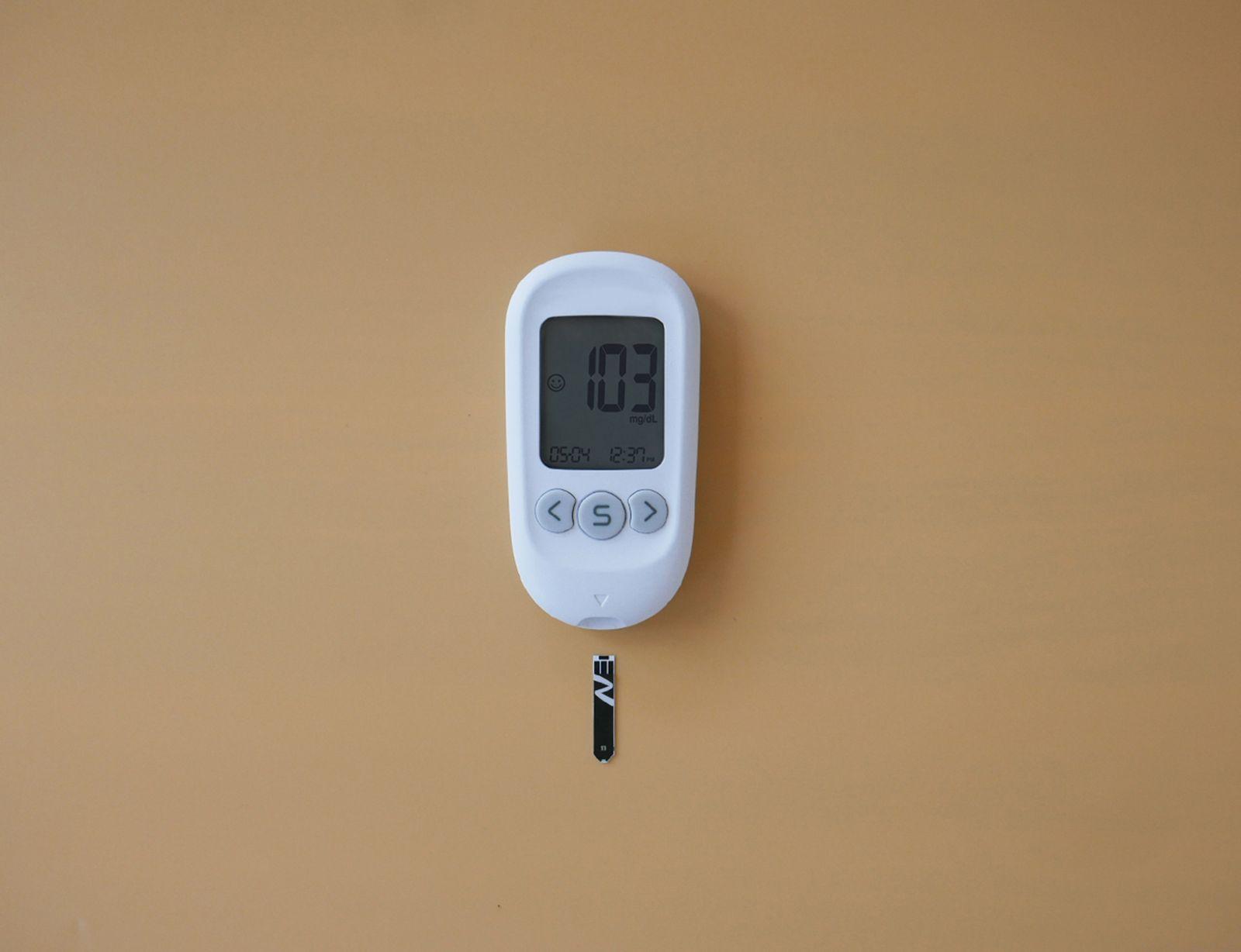 OneTouch Verio ReflectA backlit meter with a colored range indicator beside the result, so a number means something without any arithmetic. | Knowing what the number means, not just what it is | 8.8 | Check price on Amazon #ad Prices change daily, so we send you to check today's. How we earn |
| 3 | 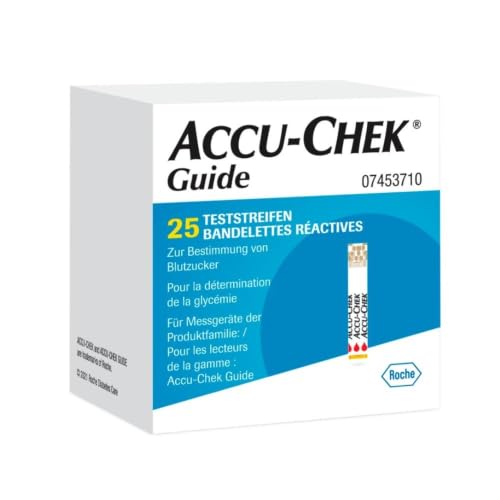 Accu-Chek Guide MeA spill-resistant vial that gives up one strip at a time, and a strip you can touch blood to anywhere along its end. | Fingers that drop things - the strip vial is the feature | 8.4 | $18.99 · View on Amazon$33.69(44% off) #ad Price as of November 28, 2026. How we earn |
| 4 | 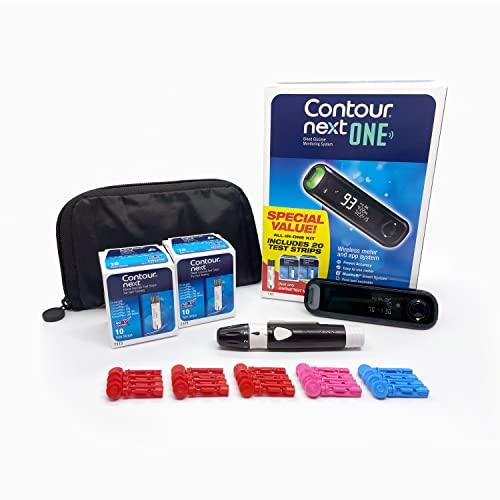 Contour Next ONESecond-Chance sampling lets you go back and add more blood to the same strip, which is the difference between one strip per test and three. | Wasting the fewest strips | 8.6 | $37.99 · View on Amazon #ad Price as of November 28, 2026. How we earn |
| 5 | 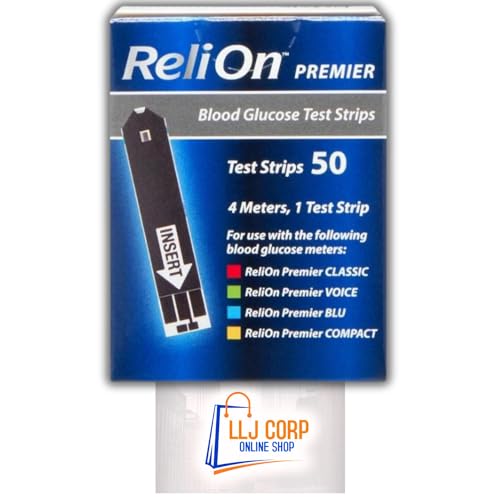 ReliOn Premier BLUWalmart's own meter and, far more importantly, Walmart's own strips at a fraction of the branded price. | The budget pick - by a very large margin, on the part that recurs | 8.0 | $19.30 · View on Amazon #ad Price as of November 28, 2026. How we earn |
Tap any row to jump to the full write-up. The price button goes to Amazon.
Pick by what’s hard
Most lists sort by price. That is not how this decision actually gets made, so here it is sorted by the thing that is getting in the way.
- Cannot read a screen at all
- Prodigy Voice — a meter that only speaks the result is not enough - you also have to set it up and read the history back. Buy the one that speaks everything.
- Can read the number but cannot remember what it should be
- OneTouch Verio Reflect — a colored range indicator turns interpretation into something you can see. Set the target range with whoever manages the diabetes, not by guesswork.
- Drops the strips, or scatters the vial
- Accu-Chek Guide Me — the spill-resistant vial is the whole product here. One strip comes out at a time, which with a tremor is the difference between testing and giving up.
- Cold hands, and the drop is never big enough
- Contour Next ONE — second-chance sampling lets you add more blood to the same strip instead of starting again. Warm the hand under the tap first as well.
- Paying for strips out of pocket
- ReliOn Premier BLU — the meter is almost irrelevant to lifetime cost; the strips are everything. At roughly eighteen cents each this is a different order of expense.
- Keeps forgetting whether the test was done
- Contour Next ONE — pick a meter whose app logs automatically over Bluetooth, so a family member can see the readings without anybody writing in a book.
How we picked
We don’t run a product lab. Every pick here is chosen by reading the things that actually tell you whether something works for weak hands, poor eyesight or shaky fingers: the manufacturer’s own specifications, the retailer listing, the measurements and weights, and what owners report in their reviews — especially the one-star ones. We read the complaints before the praise.
Prices change constantly, so we send you to Amazon to see today’s price rather than printing a number that goes stale. More about how we choose.
The picks in full
1. Best for no usable vision, and complete independence
Prodigy Voice
Prodigy Diabetes Care · 9.2/10 on our rubric
#ad Price as of November 28, 2026. How we earn
The one meter that speaks everything, not just the result - set up, menus, memory and averages, all audible, with raised buttons to navigate by touch.
Most talking meters speak the number and nothing else, which sounds like a small distinction until somebody has to set the date on one. Prodigy states that the Voice is fully audible from setup to testing, with a repeat button that replays the last message or result, and the design uses raised, imprinted buttons and tactile features so the meter can be navigated without being seen at all.
That is the difference between a meter a blind person can get a reading from and one they can own. Prodigy says it was designed with the National Federation of the Blind and certified diabetes educators, and that it is the only meter to have received both an Access Award from the American Foundation for the Blind and an Access Plus Award from the NFB - awards given, in the NFB's own description, to products that give blind patients the same convenience and features available to everybody else.
The practical specifications support it. Prodigy lists results in seven seconds, no coding required, the meter powering on automatically when a strip is inserted, 450 audible memory entries, and 7, 14, 21, 30, 60 and 90 day averages, with a USB port for downloading to free software. Audible memory is the part that matters - a talking meter that cannot read its own history back is useless for spotting a pattern.
Two honest cautions. Prodigy's page does not state battery type or the number of spoken languages, so check the current packaging if either matters. And availability moves around: it is listed as a current product on Prodigy's own site, but at least one specialist retailer shows it as not available for sale, so buy from a seller who shows live stock rather than assuming.
Good
- Fully audible from setup to result, per Prodigy - not just the number
- Raised, imprinted buttons and tactile features for navigation by touch
- 450 audible memory entries with 7 to 90 day averages, per Prodigy
- No coding, and the meter powers on when a strip goes in
- Developed with the National Federation of the Blind; holds AFB and NFB access awards
Watch out for
- Stock is inconsistent - at least one specialist retailer lists it as unavailable
- Prodigy does not publish the battery type or the language list
- Speaking the result out loud is a privacy problem in a shared room or a waiting room
- Strips are a Prodigy-specific line, so pharmacy substitution is not an option
| Spoken output | Fully audible, setup through result, per Prodigy |
|---|---|
| Result time | 7 seconds, per Prodigy |
| Memory | 450 audible entries |
| Averages | 7, 14, 21, 30, 60, 90 day |
| Coding | None required |
| Data | USB download, free software |
How it scores
- Can you read or hear the result10.0
- Handling the strips7.6
- Understanding the number8.0
- Cost of the next 100 tests6.5
2. Best for knowing what the number means, not just what it is
OneTouch Verio Reflect
LifeScan · 8.8/10 on our rubric
#ad Prices change daily, so we send you to check today's. How we earn
A backlit meter with a colored range indicator beside the result, so a number means something without any arithmetic.
A reading of 173 means nothing on its own to most people, and remembering your own target range at seven in the morning is harder than the industry assumes. This meter's answer is the ColorSure Dynamic Range Indicator, which the ADA consumer guide describes as alerting patients when they are near hyper- or hypoglycemic levels - the result appears against a colored scale showing whether it sits below, within or above the range that has been set.
For somebody managing diabetes alongside two or three other conditions, that is the single most useful feature on any meter here. It converts a number you have to interpret into a position you can see, and seeing is substantially easier than remembering when you are tired.
The specifications are good where they need to be. The ADA guide lists a backlight, a 0.4 blood sample - the smallest on this page - no coding required, Bluetooth with the OneTouch Reveal app, and two CR2032 batteries. A small sample size matters more for older fingers than people expect, because getting a large drop out of a cold, poorly circulated fingertip is often the step that fails.
Two reservations. The range indicator and the Blood Sugar Mentor messages are only as good as the target range somebody set up in the meter, so the setup has to be done properly with whoever manages the diabetes - a meter cheerfully reporting green against a wrong range is worse than no indicator. And while the backlight helps, the numerals are not exceptionally large: this is a meter for somebody whose sight is reduced, not for somebody whose sight has gone.
Good
- ColorSure Dynamic Range Indicator shows below, within or above range, per the ADA consumer guide
- Backlit display, per the ADA consumer guide
- 0.4 blood sample - the smallest here, which helps with cold fingers
- No coding, Bluetooth and the OneTouch Reveal app
- Runs on two common CR2032 batteries
Watch out for
- The range indicator is only as right as the target range somebody programmed
- Numerals are backlit but not unusually large - no help without usable sight
- No spoken output at all
- Strips are among the more expensive branded lines
| Range indicator | ColorSure Dynamic Range Indicator |
|---|---|
| Backlight | Yes, per the ADA consumer guide |
| Sample size | 0.4 |
| Coding | None required |
| Connectivity | Bluetooth, OneTouch Reveal app |
| Battery | 2 x CR2032 |
How it scores
- Can you read or hear the result7.8
- Handling the strips7.4
- Understanding the number9.6
- Cost of the next 100 tests6.0
3. Best for fingers that drop things - the strip vial is the feature
Accu-Chek Guide Me
Roche · 8.4/10 on our rubric
#ad Price as of November 28, 2026. How we earn
A spill-resistant vial that gives up one strip at a time, and a strip you can touch blood to anywhere along its end.
The part of testing that defeats arthritic hands is almost never the meter. It is tipping a vial of fifty tiny strips into a shaking palm at six in the morning and watching most of them go on the floor - where, because a strip is useless once it has been handled and damp, they are money gone.
Roche's answer is the SmartPack vial, which the ADA consumer guide describes with the phrase take one and spill none: the vial releases a single strip rather than letting the lot out. For somebody with a tremor or weak fingers, that one piece of packaging design is worth more than any screen feature on this page.
The second useful thing is the strip itself. The ADA guide notes you can apply blood anywhere along the end of the test strip rather than to a small target spot, which removes the aim problem - and aiming a bead of blood at a two-millimeter window is exactly what fails for somebody with reduced vision or a shaky hand. Between the vial and the wide strip edge, this is the easiest meter here to physically operate.
The guide lists a 0.6 sample, no coding, Bluetooth with the mySugr app, two CR2032 batteries and a body measuring 3 by 1.9 by 0.63 inches. The reservations: the ADA listing describes an easy-to-read display but gives no size and does not list a backlight, so this is a daylight meter rather than a low-vision one, and there is no spoken output. It is the pick for hands, not for eyes.
Good
- Spill-resistant SmartPack vial releases one strip at a time, per the ADA consumer guide
- Blood can be applied anywhere along the end of the strip - no small target
- No coding, and Bluetooth to the mySugr app
- Compact at 3 x 1.9 x 0.63 in, per the ADA consumer guide
- Roche strips are stocked by essentially every US pharmacy
Watch out for
- No spoken output
- The ADA listing does not state a backlight - treat it as a daylight meter
- 0.6 sample, larger than the Verio Reflect's 0.4
- No range indicator, so the number still has to be interpreted
| Strip vial | Spill-resistant SmartPack, one strip at a time |
|---|---|
| Blood application | Anywhere along the end of the strip |
| Sample size | 0.6 |
| Coding | None required |
| Connectivity | Bluetooth, mySugr app |
| Size | 3 x 1.9 x 0.63 in |
How it scores
- Can you read or hear the result6.6
- Handling the strips9.6
- Understanding the number6.4
- Cost of the next 100 tests6.4
4. Best for wasting the fewest strips
Contour Next ONE
Ascensia · 8.6/10 on our rubric
#ad Price as of November 28, 2026. How we earn
Second-Chance sampling lets you go back and add more blood to the same strip, which is the difference between one strip per test and three.
Every other meter here punishes a short blood drop by throwing the strip away. You prick a finger, squeeze out less than you hoped, touch it to the strip, get an error, and start again with a fresh strip and a fresh finger. For somebody with poor circulation in cold hands, that is not an occasional annoyance - it is most mornings.
Second-Chance sampling is Ascensia's answer: the ADA consumer guide lists it as yes and says it is designed to reduce wasted test strips. You can go back to the same strip and add more blood rather than starting over. Over a year of daily testing, the strips that saves are worth more than the price difference between any two meters on this page.
It also handles the interpretation problem. The guide lists smartLIGHT, a target range indicator showing whether a reading is above, below or within target range, plus a port light - a small illuminated strip slot, which is the kind of feature that only exists because somebody watched a real person try to insert a strip in a dim bedroom at five in the morning.
The guide lists a backlight, a 0.6 sample, no coding, Bluetooth with a companion app and two CR2032 batteries, in a body measuring 4.75 by 2.75 by 0.75 inches. That is the largest meter here, which cuts both ways: easier to hold with poor grip, less likely to go in a pocket. There is no spoken output, and the strips are a premium line.
Good
- Second-Chance sampling lets you re-apply blood to the same strip, per the ADA consumer guide
- smartLIGHT target range indicator - above, below or within range
- Illuminated strip port for testing in poor light
- Backlit display, no coding, Bluetooth and an app
- The largest body here at 4.75 x 2.75 in, which is easier to hold
Watch out for
- No spoken output
- Contour Next strips are a premium-priced line
- Too big for a pocket, unlike the Accu-Chek
- 0.6 sample rather than the Verio Reflect's 0.4
| Second-Chance sampling | Yes, per the ADA consumer guide |
|---|---|
| Range indicator | smartLIGHT - above, below or within target |
| Port light | Yes |
| Backlight | Yes |
| Sample size | 0.6 |
| Size | 4.75 x 2.75 x 0.75 in |
How it scores
- Can you read or hear the result7.6
- Handling the strips8.8
- Understanding the number9.0
- Cost of the next 100 tests5.5
5. Best for the budget pick - by a very large margin, on the part that recurs
ReliOn Premier BLU
ReliOn · 8.0/10 on our rubric
#ad Price as of November 28, 2026. How we earn
Walmart's own meter and, far more importantly, Walmart's own strips at a fraction of the branded price.
This is the budget pick, and on this page the budget question is not really about the meter. Meters are cheap, frequently free with a rebate, and sometimes given away by the manufacturer because the strips are where the money is. Somebody testing twice a day uses about 730 strips a year, and that is the number that decides what diabetes costs at home.
Walmart lists the Premier BLU system at about twenty dollars, with Premier strips in 50 and 100 counts working out at roughly eighteen cents a strip at the prices shown. Branded strips routinely cost several times that out of pocket. For somebody in the Medicare Part D coverage gap, uninsured, or testing more often than their plan will cover, that difference is the entire argument and no screen feature outweighs it.
ReliOn also sells a Premier VOICE model in the same strip family, which is worth knowing: it means a household can move to a talking meter later without changing strip brand, which is not true of most of the branded lines. The same Premier strips are listed as working across the Classic, Voice, BLU and Compact meters.
The honest reservations. Stock is inconsistent - some Walmart listings for the 100-count strips show out of stock, and a budget strip you cannot buy this week is not a budget strip. It is a Walmart-only product, which is a problem in a town without one and fine with delivery. And it has none of the interpretation features of the branded meters: no range indicator, no second-chance sampling, no app ecosystem. It gives you a number, cheaply, forever.
Good
- Strips at roughly 18 cents each at the listed prices - a fraction of branded lines
- Meter listed at about twenty dollars
- A talking Premier VOICE model uses the same strip family
- No prescription needed, and stocked alongside everything else on a Walmart run
- Good enough accuracy for routine self-monitoring, at a price that makes testing affordable
Watch out for
- Stock is inconsistent - some strip listings show out of stock
- Walmart-only, so there is no pharmacy fallback if a box runs out
- No range indicator, no second-chance sampling, no spoken output on the BLU
- Display is plain and unremarkable; this is a price pick, not a low-vision pick
| Strip cost | About 18 cents per strip at listed prices |
|---|---|
| Meter | Sold with the test strips as a kit |
| Strip family | Shared with Premier Classic, Voice and Compact meters |
| Talking version | ReliOn Premier VOICE, same strips |
| Where sold | Walmart only |
How it scores
- Can you read or hear the result5.5
- Handling the strips6.5
- Understanding the number4.5
- Cost of the next 100 tests9.8
How we ranked these
- Can the result be read, or heard? A spoken result is a different category from a large one. Backlighting matters more than digit height, because contrast is what age-related sight loss erodes first.
- How hard are the strips to handle? Getting one strip out of a vial, into the slot, and a drop of blood onto the right part of it is three fine-motor tasks before any reading happens, and it is where most people actually struggle.
- Does the meter help you understand the number? A colored range indicator does a job that a plain number does not, and for somebody managing several conditions at once it removes a daily piece of mental arithmetic.
- What will the next hundred tests cost? Strips are the real expense and they vary by a factor of five between brands. A meter chosen without checking its strip price is a decision about money made by accident.
Glucose meters are normally reviewed on accuracy against a lab reference, and we have deliberately not done that. All the meters here are cleared for sale in the US and accuracy differences between current branded meters are small and are properly measured in controlled studies, not in a shopping guide. What varies enormously, and what nobody measures, is whether a seventy-eight-year-old can actually operate the thing. That is what the four scores on each pick above cover.
What we did not rank on: app design, cloud dashboards or social features. For most people over seventy-five the phone app is used by a family member or by nobody at all.
The strips cost more than the meter, every year
This is the most important paragraph on the page. A meter is a one-time purchase of somewhere between nothing and a hundred dollars. Strips are forever. Testing twice a day is about 730 strips a year, and at branded prices that can run to several hundred dollars annually out of pocket, against well under two hundred at Walmart's listed ReliOn prices.
Three things follow. Check the strip price before you choose a meter, not after. Check what your plan actually covers, because Medicare Part B covers diabetes test supplies under specific conditions and quantities, and the allowance differs between people who use insulin and people who do not. And if you are paying out of pocket, the cheaper strip line is not a compromise - it is the thing that lets somebody test as often as they were told to.
The related trap is a meter given away free. Manufacturers hand out meters because they sell the strips, and a free meter tied to an expensive strip line is the costliest option on this page over five years. It is a perfectly fair business model, and it is worth recognizing before accepting one.
Ask the pharmacist what a box of 100 strips costs for each meter you are considering, in your plan, this month. That single question answers more than any review.
Talking meters: what they actually say
Talking meters are not all the same thing, and the listings use the word identically for products that behave very differently.
At the top is a fully audible meter, which speaks the setup prompts, the menus, the result and the stored history. Prodigy's Voice is the example here, and it is the only kind that lets somebody with no usable sight own the device rather than borrow somebody's eyes for the setup.
Below that is a meter that speaks the result and little else. Prodigy's AutoCode is one - the company describes it as a talking meter that guides the user through the testing steps in English, Spanish, French and Arabic, with 450 memory entries and seven-second results. What Prodigy's own page does not state is whether the stored readings are spoken back, and an earlier review by the National Federation of the Blind noted that its memory readings are not. If reading a history back matters, confirm that with the seller before buying.
There is also a privacy point nobody mentions in the listings. A meter that announces a blood sugar reading out loud announces it to the room, and in a shared apartment, a care home lounge or a doctor's waiting room that is not always wanted. Some meters have a volume control or a mute; it is worth asking.
The over-the-counter CGM question
Since 2024 you can buy a continuous glucose monitor in the US without a prescription, and for some people reading this it makes the whole fingertip question moot. A sensor is worn on the upper arm, reads glucose continuously and sends it to a phone, so there is no strip, no lancet, no small screen and no aim.
Dexcom's Stelo is the clearest example. Dexcom describes it as an over-the-counter integrated CGM for adults 18 and over who are not on insulin, lists a monthly subscription at $89.00, and says it is HSA and FSA eligible. On sensor life Dexcom cites a study in which 77.9 percent of sensors lasted the full 15 days, noting that around 20 percent may not last the full 15 days and about 10 percent may last under 12 days - which is honest of them and worth knowing before budgeting.
Two large caveats. It is explicitly not for people with problematic hypoglycemia, and Dexcom says so on its own site, so this is not a route to take without talking to whoever manages the diabetes. And it needs a smartphone, which rules it out for a sizable share of the people this page is written for - although it can be an excellent answer where an adult child manages the readings remotely.
For anybody on insulin, or anybody whose doctor wants specific fingerstick values, a meter is still the device and a CGM is an addition rather than a replacement.
Nothing here is medical advice, and nothing on this page should change a testing routine that a clinician set. Talk to the prescriber before switching device types, particularly where insulin doses are being calculated from the readings.
Free changes that make testing easier
- Warm the hand first. Thirty seconds under warm running water, then shake the hand below waist height. Poor circulation in a cold hand is the most common reason a drop is too small.
- Prick the side of the fingertip, not the pad. There are fewer nerve endings at the side and it hurts less, which matters when you are doing it twice a day forever.
- Change the lancet. Almost nobody does, and a blunt lancet hurts considerably more and tears the skin rather than piercing it.
- Turn the lancing device depth down. Most people run it far deeper than they need, and the modern meters take a very small sample.
- Rotate fingers. Using the same fingertip builds calluses that make the drop harder to get, which then gets blamed on the meter.
- Set the meter's target range with the prescriber, so a range indicator means something. A green light against a wrong range is actively misleading.
What to check before you order
- What a box of 100 strips costs for that specific meter, in your plan, this month. This outweighs every other item on the list.
- Whether the meter speaks, and whether it speaks everything or only the result.
- Whether the display is backlit. Contrast beats digit size for most age-related sight loss.
- How the strips come out of the vial. A spill-resistant single-strip vial is a genuine accessibility feature.
- Whether blood goes anywhere on the strip end or onto a small target spot.
- Whether the strips are stocked by your usual pharmacy, or only by one retailer.
- Whether it needs coding. Nothing current should, and a meter that does is an old design.
Questions people ask
▸What is the best blood glucose meter for someone with poor eyesight?
The Prodigy Voice if the screen cannot be read at all, because it is audible from setup through to the result and has raised, tactile buttons rather than a touchscreen. If there is still usable sight, a backlit meter with a colored range indicator such as the OneTouch Verio Reflect is easier to live with than a plain large-digit display.
▸Do talking glucose meters say the stored readings out loud too?
Some do and some do not, and the listings rarely make it clear. Prodigy states the Voice has 450 audible memory entries. For other talking meters, including Prodigy's own AutoCode, confirm with the seller whether the history is spoken, because a meter that only announces today's number cannot be used to spot a pattern.
▸Why are test strips so expensive?
Because that is where the business is. Meters are sold cheaply or given away and the strips carry the margin, which is why a free meter tied to a premium strip line is usually the costliest choice over five years. Testing twice daily is about 730 strips a year, so check the strip price before choosing the meter.
▸Does Medicare pay for glucose test strips?
Medicare Part B covers diabetes testing supplies including strips under specific conditions, and the quantity allowed differs depending on whether insulin is used. The details change and depend on the plan, so ask the pharmacist or the plan directly rather than relying on what somebody was told a few years ago.
▸Should I get a continuous glucose monitor instead?
Possibly, if you have a smartphone and are not on insulin. Over-the-counter CGMs such as Dexcom's Stelo need no prescription and remove the strips and the lancet entirely, at a monthly subscription cost. Dexcom states Stelo is not for people with problematic hypoglycemia, so this is a conversation with the prescriber rather than a straight swap.
▸Why does my meter keep saying the blood sample is too small?
Usually circulation rather than technique. Warm the hand under running water for thirty seconds, let the arm hang below the waist for a moment, and prick the side of the fingertip rather than the pad. A meter with second-chance sampling, such as the Contour Next ONE, lets you add more blood to the same strip rather than wasting it.
Sources
- Prodigy Diabetes Care - Prodigy Voice
- Prodigy Diabetes Care - Prodigy AutoCode
- ADA Consumer Guide - OneTouch Verio Reflect
- ADA Consumer Guide - Accu-Chek Guide Me
- ADA Consumer Guide - Contour Next ONE
- Dexcom - Stelo over-the-counter CGM
- National Federation of the Blind - evaluating glucose meters
- Medicare - diabetes supplies coverage
Read next
Best BP monitor
Best blood pressure monitors for seniors
Upper-arm monitors compared on display size, cuff fit and ease of use.
Read the guide →
Best pulse oximeter
Best pulse oximeters for home use
Fingertip oximeters ranked on display readability, steadiness of reading and regulatory status.
Read the guide →
Best pill dispenser
Best automatic pill dispensers for seniors
Locked dispensers compared on capacity, alarms, family alerts and monthly costs.
Read the guide →
Guide
How to take blood pressure at home
The technique that makes home readings reliable, step by step.
Read the guide →
Best magnifier
Best magnifiers for low vision
Optical and electronic magnifiers compared for reading, labels and close work.
Read the guide →
Best for macular degeneration
Best electronic magnifiers for macular degeneration
Desktop and portable video magnifiers for central vision loss, judged on screen size, contrast modes and reading aloud.
Read the guide →