The easiest compression socks to put on
The sock that stays in the drawer does nothing. The question is not which compression is best, it is which compression you can still get on at seven in the morning.
By Selena H. · Last checked October 22, 2026 · How we keep pages current
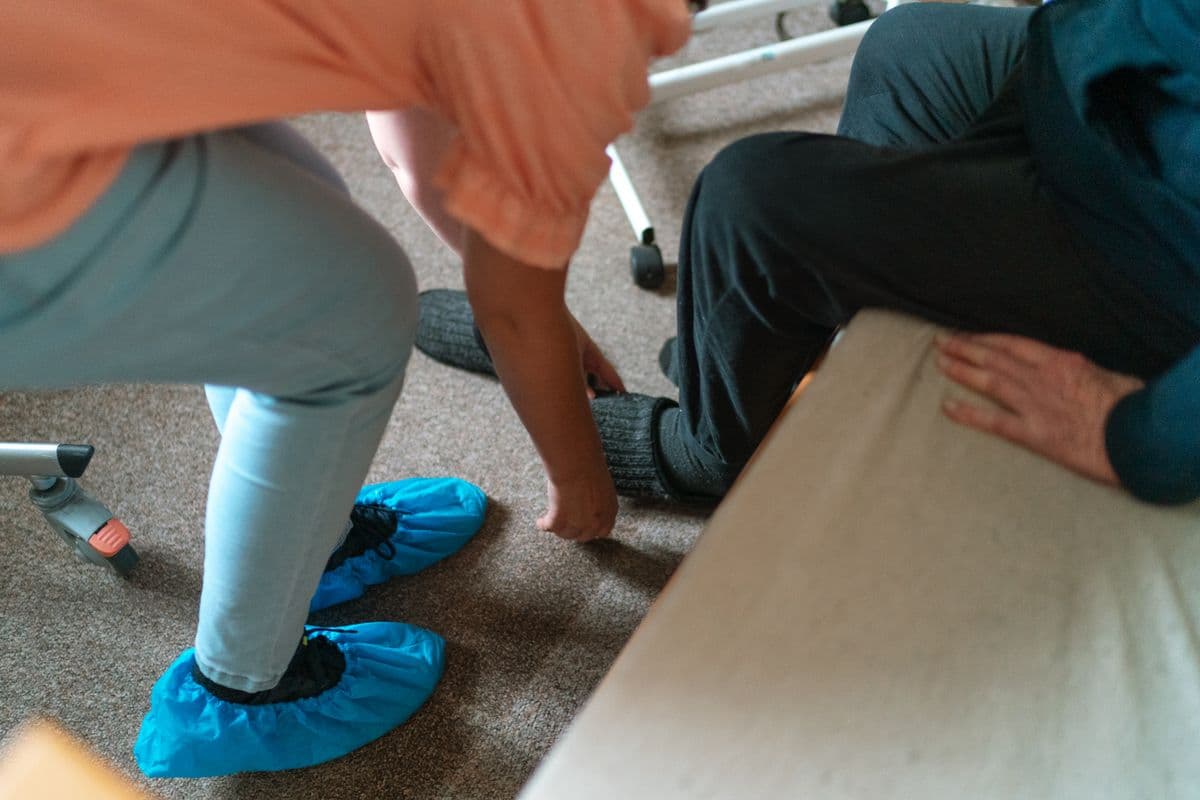
The easiest compression sock to put on is the mildest one that still does the job: JOBST SensiFoot at 8-15 mmHg pulls on close to the way a thick sports sock does, and for a lot of people that is the difference between wearing compression every day and wearing it twice. If a doctor has specified 15-20 mmHg or higher, the sock itself will not get easier - so the fix moves to an open toe and a donning aid instead.
This is the quiet failure in compression therapy. The garment is prescribed, it is bought, it is worn for a week, and then it moves to the back of a drawer, because getting it onto a leg at seven in the morning needs grip strength, shoulder reach and the ability to bend to the floor all at once. Arthritis takes the first, a stiff shoulder takes the second, and a sore back or a replaced hip takes the third.
Nobody writes about that half of the problem. Almost every buying guide ranks compression socks on fabric and color, as though the only question were which one to own rather than which one will still be on the leg by Thursday. We have ranked these the other way around: how much the sock asks of the hands and back comes first, and the compression class comes second.
Below are three socks ordered by how little they demand, then four donning aids ordered by which problem each one actually solves. We have not tested any of them on a leg and we are not going to imply otherwise - what follows is manufacturer specification, retailer listing detail and the published patient instructions, read with an eye for the thing those sources rarely state plainly, which is what the task requires of the person doing it.
This is general information about products, not medical advice. Talk to your doctor or occupational therapist about your own situation.
Some links on this page go to Amazon. If you buy something, we may earn a small commission at no extra cost to you — it never changes which products we pick or the order they appear in. Full disclosure.
Quick picks
Ranked for how little strength, eyesight or patience they need — not for how much they cost.
| # | Product | Best for | Score | Price |
|---|---|---|---|---|
| 1 | JOBST SensiFootAt 8-15 mmHg this goes on close to the way an ordinary thick sock does, which is why it gets worn every day instead of most days. | The mildest class that still counts as compression | 8.4 | Check price on Amazon #ad Prices change daily, so we send you to check today's. How we earn |
| 2 | JOBST Relief Knee High, Open ToeThe workhorse medical stocking in the one detail that matters for weak hands - an open toe, which is what every slip-on donning aid needs to work. | Prescribed strength that still has a way on | 8.0 | Check price on Amazon #ad Prices change daily, so we send you to check today's. How we earn |
| 3 |  Zipper Compression SocksWrap the sock around the leg and close a zipper instead of stretching it over a heel - the only design that removes the stretching step entirely. | Hands that cannot stretch fabric at all | 7.6 | Check price on Amazon #ad Prices change daily, so we send you to check today's. How we earn |
| 4 | 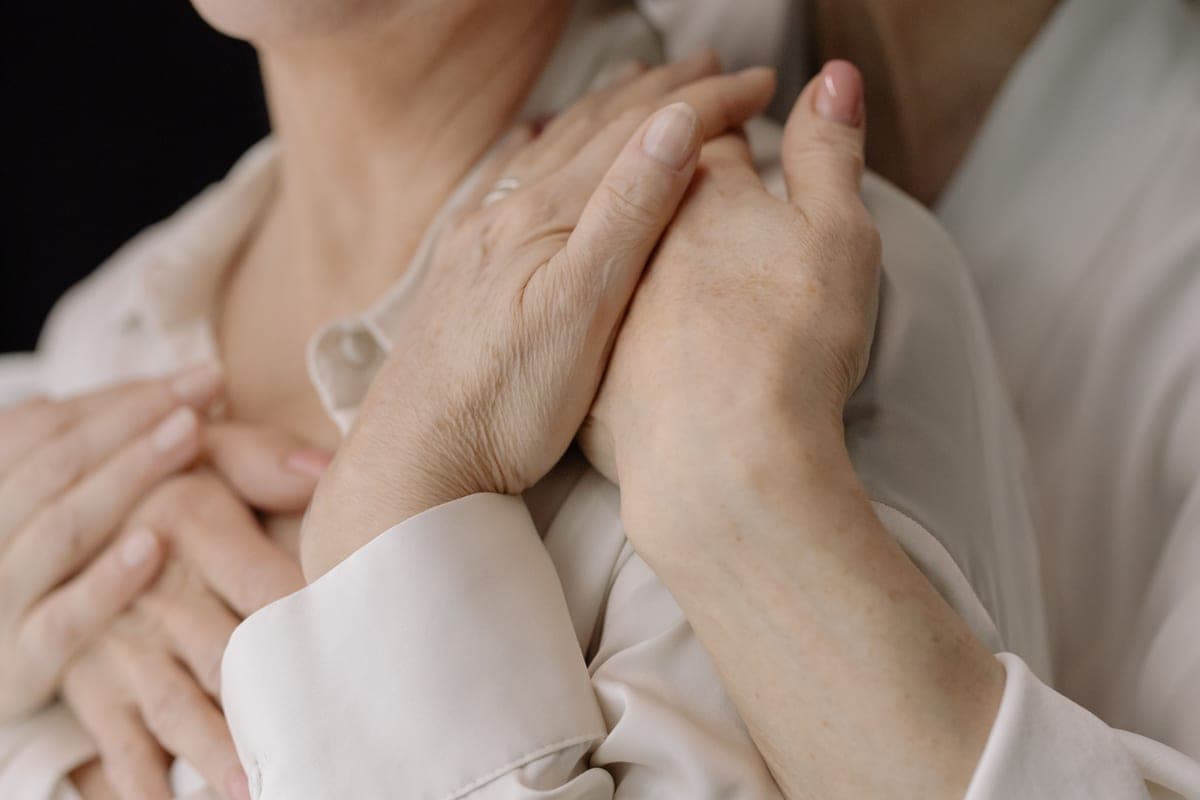 JOBST Stocking DonnerA metal frame that holds the stocking stretched open so the foot goes straight in - the aid that makes 20-30 mmHg possible without help. | Strong compression, weak hands, usable reach | 8.8 | Check price on Amazon #ad Prices change daily, so we send you to check today's. How we earn |
| 5 | medi ButlerThe same frame idea with long handles, so the stocking can be loaded and raised without bending to the floor. | A back or hip that will not bend | 8.2 | Check price on Amazon #ad Prices change daily, so we send you to check today's. How we earn |
| 6 | Arion Easy-SlideA very slippery fabric sleeve over the foot that the stocking glides across - no frame, no assembly, folds into a pocket. | Open-toe stockings, and traveling light | 8.0 | Check price on Amazon #ad Prices change daily, so we send you to check today's. How we earn |
| 7 | Compression Donning GlovesRubberized gloves that let fingers grip the fabric instead of sliding off it - try these before buying anything expensive. | The cheapest thing that actually helps | 7.4 | Check price on Amazon #ad Prices change daily, so we send you to check today's. How we earn |
Tap any row to jump to the full write-up. The price button goes to Amazon.
Pick by what’s hard
Most lists sort by price. That is not how this decision actually gets made, so here it is sorted by the thing that is getting in the way.
- Hands are weak but the back still bends
- JOBST Stocking Donner — a frame donner is the answer. It removes the stretching entirely and it works with closed-toe stockings, which the slip aids do not.
- Cannot reach the feet at all
- medi Butler — you need a long-handled frame, not a better sock. Load the stocking while the frame is on the floor and raise it sitting upright.
- Only one working hand
- Zipper Compression Socks — a side zipper is the only design here that one hand can manage end to end. Brace the leg on a low stool and work from the ankle up.
- The sock slips through the fingers
- Compression Donning Gloves — that is friction, not weakness. Try textured gloves before you spend anything on a frame.
- Compression was prescribed but is not being worn
- JOBST SensiFoot — go back to whoever prescribed it and ask whether a lower class worn daily beats a higher class worn twice a week. It often does, but that is their call and not ours.
- Traveling, with no room for a frame
- Arion Easy-Slide — a slip sleeve packs flat and weighs nothing. Order open-toe stockings to go with it.
How we picked
We don’t run a product lab. Every pick here is chosen by reading the things that actually tell you whether something works for weak hands, poor eyesight or shaky fingers: the manufacturer’s own specifications, the retailer listing, the measurements and weights, and what owners report in their reviews — especially the one-star ones. We read the complaints before the praise.
Prices change constantly, so we send you to Amazon to see today’s price rather than printing a number that goes stale. More about how we choose.
The picks in full
1. Best for the mildest class that still counts as compression
JOBST SensiFoot
JOBST · 8.4/10 on our rubric
#ad Prices change daily, so we send you to check today's. How we earn
At 8-15 mmHg this goes on close to the way an ordinary thick sock does, which is why it gets worn every day instead of most days.
SensiFoot sits at 8-15 mmHg, the mildest band sold as medical compression. That number is the whole reason it is first on this page. The force needed to stretch a sock over a heel rises steeply with the compression class, and at 8-15 mmHg most people with usable hands can still manage it seated, without an aid and without help.
It was designed for people with reduced sensation in the feet, so the knit is flat through the toe and sole to avoid the seam ridges that go unnoticed and turn into a sore. That makes it a sensible everyday sock for someone with diabetes or neuropathy, not only for swelling.
It comes in knee, crew and mini-crew lengths and in white, black, navy and brown, so it can be worn without announcing itself. Buy two or three pairs - compression fabric needs washing after every wear, and a single pair guarantees a day without it.
The honest caveat is in the number. If a doctor has specified 20-30 mmHg for a venous ulcer or significant swelling, 8-15 is not a substitute, and wearing it instead is not a compromise but a different treatment. Take the number you were given to whoever fits the garment.
Good
- Mildest medical compression class, so it can usually be managed without an aid
- Flat knit through the toe and sole to avoid seam pressure on numb feet
- Knee, crew and mini-crew lengths in four plain colors
- Sold through ordinary pharmacies and medical suppliers, no fitting appointment
Watch out for
- 8-15 mmHg is too light if a doctor has specified a higher class
- Closed toe, so the slip-style donning aids on this page will not work with it
- Acrylic-blend fabric runs warm in summer next to a cotton-rich sock
| Compression | 8-15 mmHg (mild) |
|---|---|
| Lengths | Knee high, crew, mini-crew |
| Toe | Closed |
| Colors | White, black, navy, brown |
| Fabric | Acrylic blend with nylon and spandex |
How it scores
- Gets on with less effort8.8
- Works without a helper8.4
- Suits a strong compression class3.0
- Cost and durability8.6
2. Best for prescribed strength that still has a way on
JOBST Relief Knee High, Open Toe
JOBST · 8.0/10 on our rubric
#ad Prices change daily, so we send you to check today's. How we earn
The workhorse medical stocking in the one detail that matters for weak hands - an open toe, which is what every slip-on donning aid needs to work.
Relief is JOBST's long-running basic line and it is sold in 15-20, 20-30 and 30-40 mmHg. Those are the classes doctors actually name, and at every one of them the stocking is genuinely hard to pull on by hand. That is physics rather than a design fault.
Choose the open-toe version anyway. An open toe does two things: it lets you use a slip aid such as the Arion Easy-Slide below, which is the single most effective trick in this whole category, and it gives a grip point at the foot that a closed toe does not. Most people assume the open toe is about comfort. It is mainly about getting the thing on.
Knee high is the length to start with unless you have been told otherwise. Thigh-high versions with a silicone band are sold alongside, and they add a second difficult task - getting the band to sit right - to a job that is already hard.
Plan on replacing them. Compression fabric loses elasticity with washing, and a stocking that has gone soft is no longer delivering the pressure on its label even though it still looks fine. Ask whoever fits you how long they expect a pair to last at your wear rate.
Good
- Sold in 15-20, 20-30 and 30-40 mmHg, so it covers what doctors prescribe
- Open-toe version works with slip-style donning aids
- Widely stocked by US pharmacies and medical suppliers
- Knee high, petite and thigh-high options in beige and black
Watch out for
- At 20-30 mmHg and above most people will need a donning aid - budget for one
- Sized by leg measurement, not shoe size; guessing produces a garment that does nothing or hurts
- Elasticity fades with washing long before the stocking looks worn out
| Compression | 15-20, 20-30 or 30-40 mmHg |
|---|---|
| Toe | Open (a closed-toe version is also sold) |
| Lengths | Knee high, petite knee high, thigh high |
| Fitting | By ankle and calf measurement |
| Colors | Beige, black |
How it scores
- Gets on with less effort5.4
- Works without a helper5.0
- Suits a strong compression class9.4
- Cost and durability7.6
3. Best for hands that cannot stretch fabric at all
Zipper Compression Socks
Various · 7.6/10 on our rubric
#ad Prices change daily, so we send you to check today's. How we earn
Wrap the sock around the leg and close a zipper instead of stretching it over a heel - the only design that removes the stretching step entirely.
This is a category rather than a brand, and nobody in it has the standing of JOBST or Sigvaris. We include it because the mechanism is right: the sock opens flat down the side, goes around the leg, and the zipper does the tightening. A hand that cannot grip and pull can often still pinch and slide a zipper, especially one with a loop or ring on the pull.
Two details separate the usable ones from the rest. First, there has to be a fabric flap behind the zipper. Without it the teeth sit against the shin and leave a red line, which is the complaint owners report most. Second, the zipper should be a known make - YKK is the one named most often - because a zipper that splits or seizes after a few washes turns the whole sock into trash.
Expect the delivered compression to be less exact than a fitted medical stocking. A zipper creates a vertical seam up the calf, and pressure around that seam is not the smooth gradient the label implies. For general swelling and tired legs that is a fair trade. For a prescribed class treating a venous ulcer it is not - ask the clinician who prescribed it before substituting.
Buy open toe if you can. It gives the foot somewhere to go while the zipper is being closed, and it makes the sock far easier to get off at the end of the day.
Good
- No stretching over the heel - the hardest step is removed, not reduced
- The zipper pull can be managed with a pinch rather than a grip
- Wide-calf versions are common in this category
- Cheap enough to try without much risk
Watch out for
- No established medical brand in the category, so quality varies sharply between sellers
- Needs a fabric flap behind the zipper or the teeth mark the skin
- The seam disrupts the pressure gradient - not a substitute for a prescribed fitted stocking
- Zipper failure after repeated washing is the usual way these die
| Closure | Side zipper, usually full length |
|---|---|
| Compression | Commonly labeled 15-20 or 20-30 mmHg |
| Toe | Open-toe versions widely sold |
| Check for | A fabric flap behind the zipper |
| Fit | Standard and wide calf |
How it scores
- Gets on with less effort9.0
- Works without a helper8.0
- Suits a strong compression class5.6
- Cost and durability6.0
4. Best for strong compression, weak hands, usable reach
JOBST Stocking Donner
JOBST · 8.8/10 on our rubric
#ad Prices change daily, so we send you to check today's. How we earn
A metal frame that holds the stocking stretched open so the foot goes straight in - the aid that makes 20-30 mmHg possible without help.
The donner is a hoop on two long handles. The stocking is loaded onto the frame, which holds it stretched wide; the foot goes in through the middle; then the handles are pulled up and the frame slides out from under the fabric. The hands never stretch anything. They only pull upward on two foam grips.
This is the aid that changes what a person can wear. The step that defeats most people is forcing a heel through a 20-30 mmHg cuff, and a frame removes it. It works with closed-toe stockings as well as open-toe ones, which none of the slip-style aids do.
It takes a calf up to roughly 40 cm around, so measure before ordering if legs are swollen. And it needs reach: you have to lean forward far enough to put a foot into a hoop resting on the floor. For someone who cannot bend at all this is the wrong aid, and the medi Butler below is the right one.
It is the most expensive item on this page by a wide margin, in the range of a decent kitchen appliance rather than a pack of socks. US suppliers often list it as HSA and FSA eligible with a letter of medical necessity, which is worth asking about before paying cash.
Good
- Removes the stretching step entirely, including at 20-30 mmHg
- Works with closed-toe stockings as well as open-toe
- Foam grip handles need a pull, not a squeeze
- Often HSA or FSA eligible with a letter of medical necessity
Watch out for
- Expensive - by a distance the priciest item here
- Still needs enough forward reach to place a foot in a frame on the floor
- Fits calves up to about 40 cm; measure first if legs swell
- Bulky to store next to a slip aid
| Type | Rigid frame donner |
|---|---|
| Works with | Open-toe and closed-toe stockings |
| Calf capacity | Up to about 40 cm |
| Handles | Foam grip, pull to raise |
| Needs | Enough reach to the floor |
How it scores
- Gets on with less effort9.4
- Works without a helper8.8
- Suits a strong compression class9.2
- Cost and durability5.4
5. Best for a back or hip that will not bend
medi Butler
medi · 8.2/10 on our rubric
#ad Prices change daily, so we send you to check today's. How we earn
The same frame idea with long handles, so the stocking can be loaded and raised without bending to the floor.
The Butler exists for the person whose hands are fine but whose back, hip or knee means reaching their own foot is simply not happening. The stocking is loaded onto the frame while it rests on the floor, the foot goes in, and long handles let the stocking be raised while sitting upright.
Several versions are sold - a shorter one for people who can bend somewhat, and a long-handled one for those who cannot. Buy for the problem you have. The long version is unnecessarily unwieldy if you can lean forward, and the short version is useless if you cannot.
Like the JOBST donner this is a frame, so it needs floor space in front of a stable chair and it is not something you pack for a weekend away. It also still needs two usable hands to steer the handles.
Availability through US retailers is patchier than JOBST's and listings go in and out of stock. If a supplier has it, check the return window before ordering, because frame aids are strongly size- and body-dependent and not everyone gets on with them.
Good
- Long-handled version removes the need to bend to the floor
- Same no-stretching mechanism as any frame donner
- Several handle lengths, so the aid can match the limitation
- Generally cheaper than the JOBST donner
Watch out for
- Needs two usable hands to steer
- US retail stock is inconsistent; check availability before counting on it
- Wants clear floor space in front of a firm chair
- The long-handled version is awkward to store
| Type | Frame donner with extended handles |
|---|---|
| Solves | Not being able to reach the foot |
| Versions | Standard and long-handled |
| Needs | Two usable hands |
How it scores
- Gets on with less effort8.6
- Works without a helper9.0
- Suits a strong compression class8.4
- Cost and durability6.6
6. Best for open-toe stockings, and traveling light
Arion Easy-Slide
Arion · 8.0/10 on our rubric
#ad Prices change daily, so we send you to check today's. How we earn
A very slippery fabric sleeve over the foot that the stocking glides across - no frame, no assembly, folds into a pocket.
The Easy-Slide is a cone of very low-friction fabric. It goes over the foot first, the stocking slides up over it with far less resistance than it would meet against skin, and then the sleeve is pulled out through the open toe. Friction, not strength, is what stops a stocking halfway up a heel - and this removes the friction.
Its advantages over a frame are simple: it costs a fraction as much, it weighs nothing, it packs flat, and there is nothing to assemble or store. For anyone who travels, or who has a small bathroom and no spare floor, it is the practical choice.
The catch is absolute. It only works with open-toe stockings, because the sleeve has to come out through the toe. If a closed-toe garment has been prescribed, this aid is not an option and a frame is. A separate version is made for arms.
It is sold in several sizes from extra small to extra large, matched to the leg rather than to the stocking. US distribution runs through medical suppliers rather than general retail, so expect to order it rather than find it on a shelf.
Good
- Cheap next to any frame aid
- Packs flat - the only aid here that travels well
- Nothing to assemble, nothing to store
- Sized from extra small to extra large
Watch out for
- Open-toe stockings only - it cannot be used with a closed toe
- Still needs enough reach to get the sleeve onto the foot
- Sold through medical suppliers rather than general retailers
- The low-friction surface wears with use; treat the sleeve as a consumable
| Type | Low-friction slip sleeve |
|---|---|
| Works with | Open-toe stockings and tights only |
| Sizes | XS to XL, matched to the leg |
| Packs | Flat - suits travel |
How it scores
- Gets on with less effort8.0
- Works without a helper7.4
- Suits a strong compression class8.0
- Cost and durability8.2
7. Best for the cheapest thing that actually helps
Compression Donning Gloves
Various · 7.4/10 on our rubric
#ad Prices change daily, so we send you to check today's. How we earn
Rubberized gloves that let fingers grip the fabric instead of sliding off it - try these before buying anything expensive.
Fitters hand these out for a reason. A large share of failed attempts are not a strength problem at all: fingertips slide across slick compression fabric, the force never reaches the sock, and the person concludes their hands are weaker than they are.
A textured glove fixes that for a few dollars. It also stops fingernails catching and laddering the fabric, which is the other way an expensive stocking dies early. Anyone who wears compression should own a pair whether or not they own any other aid.
They do not create leverage. If the sock genuinely will not move once you have a proper grip on it, the problem is strength or reach and you need a frame or a slip sleeve. Gloves make a borderline task possible; they do not make a 30-40 mmHg stocking easy.
Buy a size that fits snugly. A loose glove slides around on the hand and you are back to the original problem one layer removed.
Good
- Costs less than almost anything else on this page
- Protects the fabric from fingernail snags
- Works with every sock and every other aid here
- Washes, and lasts
Watch out for
- Adds grip, not leverage or reach
- Must fit snugly or they slide on the hand
- Not enough on their own much above 20-30 mmHg
| What it does | Adds friction between hand and fabric |
|---|---|
| Also protects | The fabric from fingernail snags |
| Use with | Any sock, and any other aid here |
| Fit | Snug - a loose glove slides |
How it scores
- Gets on with less effort6.8
- Works without a helper6.4
- Suits a strong compression class5.0
- Cost and durability9.6
How we ranked these
Compression class is the doctor's decision rather than ours, so we did not rank on it. What we ranked on is the part nobody measures: the physical demand of getting the garment onto a leg, and whether a given product reduces that demand or merely reshapes it.
Four criteria, applied in this order. First, what the task asks of the hands - a grip-and-stretch, a pull, or a pinch. Second, what it asks of the back and shoulders, because reaching a foot on the floor defeats more people than weak fingers do. Third, whether it can be done alone, since an aid that still needs a second person is a scheduling problem rather than a solution. Fourth, cost and durability, because a stocking that softens in six weeks is not cheaper than one that lasts a year.
Everything here is real and currently sold in the United States. We have not pulled any of it onto a leg - the judgments are read off manufacturer specifications, retailer listing detail and published patient instructions, with the mechanics reasoned through.
Match the aid to what is actually hard
If two of these are true at once - weak hands and no reach, say - it is worth asking for an occupational therapy referral rather than filling a shopping cart. An OT watches the actual attempt, and often solves it by changing the chair height before anything is bought.
Technique that helps before you buy anything
- Put them on first thing in the morning, before getting out of bed. Legs are at their least swollen then, and the same sock is measurably easier at 7am than at 7pm.
- Roll the stocking down to the heel first. Work the foot in, then unroll it up the leg rather than dragging the whole tube.
- Sit in a firm chair with the foot up on a low stool rather than on the floor. Raising the foot six inches removes most of the forward bend.
- Wear textured gloves. Fingertips slide on compression fabric, and most people blame their strength for what is really a friction problem.
- Smooth out every wrinkle. A bunched stocking concentrates pressure in a band and can do more harm than no stocking at all.
- A knee high should finish about two fingers below the crease behind the knee. Higher than that and it digs in behind the joint.
- Never fold the top down to shorten it. Folding doubles the compression at that point, which is the one thing a graduated stocking is designed to avoid.
These are the standard patient instructions for compression stockings rather than our invention. The morning rule and the no-wrinkles rule do more than any product on this page.
Open toe or closed toe is a donning decision
Most people choose a toe style on comfort grounds, and that is the wrong axis. The toe determines which aids you can use, and therefore which compression class you can realistically manage alone.
Open toe works with slip sleeves, gives a grip point at the foot, and runs cooler in summer. It is the default we would choose for anyone who expects to need an aid. It also lets a nurse or a family member check toe color and temperature without taking the stocking off, which matters where circulation is already a concern.
Closed toe covers the toes in cold weather and feels more like an ordinary sock, which plenty of people simply prefer. The trade is that a frame donner becomes the only aid that works. If grip is the problem and you want a closed toe, budget for the frame at the same time as the stockings rather than discovering the gap in week two.
What Medicare will and will not pay for
Medicare Part B covers lymphedema compression treatment items - gradient compression garments, both standard and custom-fitted, compression wraps with adjustable straps, and bandaging supplies. The conditions are that you have lymphedema and that a doctor or other health care provider orders the items. You pay 20 percent of the Medicare-approved amount after the Part B deductible.
That coverage is written around lymphedema. Compression bought for tired legs, long flights or mild swelling without that diagnosis is a retail purchase, and so are the donning aids on this page in most circumstances.
Ask anyway, and ask in writing. Suppliers list some donning aids as HSA and FSA eligible with a letter of medical necessity from a doctor, which is a different route to the same saving and is routinely not mentioned unless you raise it.
Coverage rules change and individual plans differ. Check your own plan or call Medicare rather than relying on this page for a decision about money.
Sizing, and the mistake that wastes the money
Compression stockings are sized by leg measurement, not by shoe size. The two that matter are the narrowest point above the ankle and the widest point of the calf, measured in the morning before swelling builds. Ordering by shoe size is the most common way people end up with a garment that does nothing.
Do not size up to make it easier to put on. A stocking that goes on easily because it is too big is not delivering its labeled pressure, and you have bought the inconvenience of compression without the benefit. The answer to a stocking that is too hard to don is an aid or a different closure, never a larger size.
If legs are very swollen or oddly shaped, or if there is an ulcer or any open skin, this stops being a shopping decision. A fitter or a wound care nurse measures properly, and the garment is often custom rather than off the shelf.
Questions people ask
▸What are the easiest compression socks to put on?
The mildest class that still treats the problem. JOBST SensiFoot at 8-15 mmHg can usually be pulled on seated without an aid. Above that, zipper socks remove the stretching step, and at 20-30 mmHg most people need a frame donner or a slip sleeve rather than a different sock.
▸How do you put on compression socks with weak hands?
Wear textured donning gloves, put them on first thing in the morning before swelling builds, roll the stocking down to the heel and work the foot in rather than dragging the whole tube, and raise the foot onto a low stool. If that still fails, the answer is a donning aid rather than more effort.
▸Are zipper compression socks as good as regular ones?
For tired legs and mild swelling they are a reasonable trade. For a prescribed compression class they are not equivalent, because the zipper seam disrupts the smooth pressure gradient a fitted stocking delivers. Ask the clinician who prescribed the garment before substituting.
▸What is a stocking donner and do I need one?
A frame that holds the stocking stretched open so the foot goes straight in, removing the hardest step. You need one if you cannot stretch the cuff over your own heel, which is most people at 20-30 mmHg and above.
▸Does Medicare pay for compression stockings?
Part B covers gradient compression garments, adjustable wraps and bandaging supplies for lymphedema when a provider orders them, with 20 percent coinsurance after the deductible. Compression bought without that diagnosis is generally a retail purchase. Check your own plan.
▸Should I buy open toe or closed toe?
Open toe if you expect to need a donning aid, because slip sleeves only work with an open toe and it gives you a grip point at the foot. Closed toe is warmer and feels more normal, but then a frame donner is the only aid that will help.
Sources
Read next
Best dressing aid
Best sock aids for seniors
Rigid and flexible sock aids, including the type that handles compression stockings.
Read the guide →
Best for swollen feet
Best shoes for seniors with swollen feet
Shoes ranked on how far they adjust, how deep they are, and whether you can put them on without bending.
Read the guide →
Best reacher
Best reacher grabbers for elderly adults
Reachers compared on grip strength required, jaw type and the right length for the job.
Read the guide →
Guide
Chair exercises for seniors
A ten-movement seated routine with safety notes and how to progress it.
Read the guide →
Best BP monitor
Best blood pressure monitors for seniors
Upper-arm monitors compared on display size, cuff fit and ease of use.
Read the guide →