Best walking pads for seniors
The two specifications that matter are the slowest speed it will do and whether there is anything to hold on to.
By Selena H. · Last checked October 17, 2026 · How we keep pages current
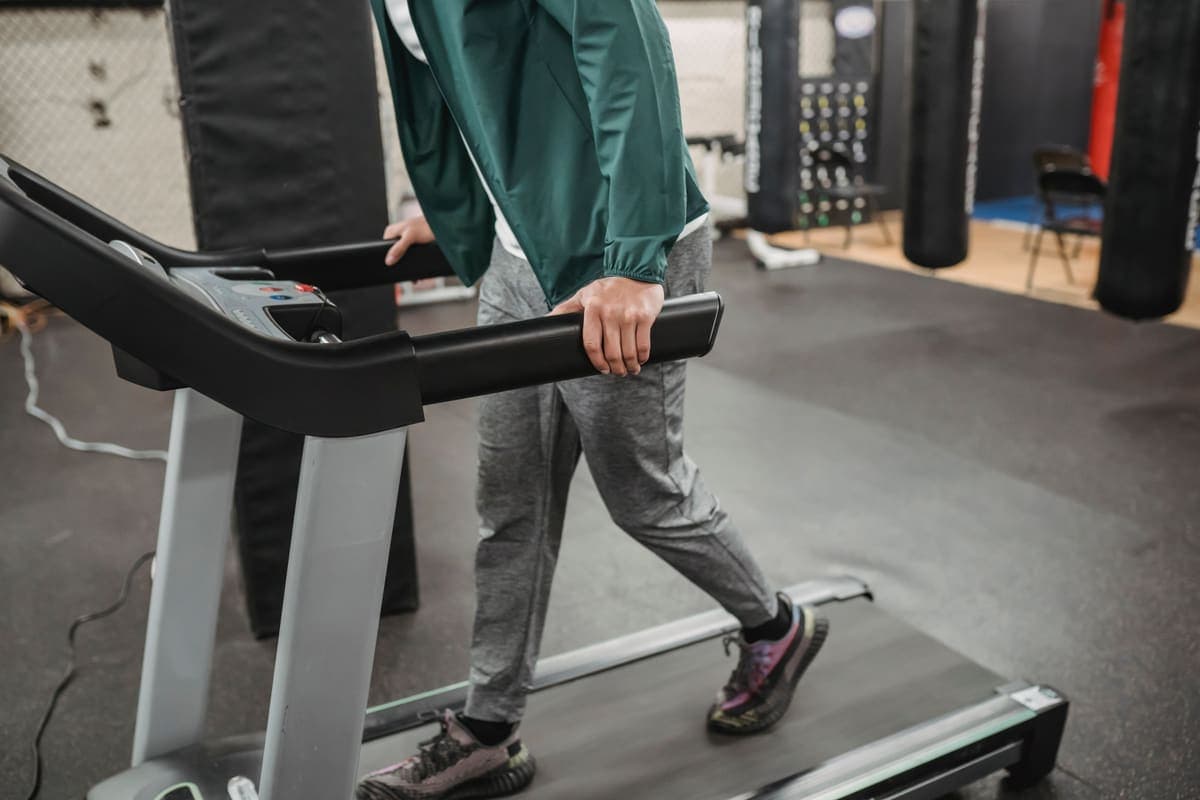
The best walking pad for most older adults is a model with full-length handrails and a minimum speed around 0.5 mph or lower - the Redliro walking treadmill is the clearest example. A handrail-free pad is fine for a steady 60-year-old and wrong for anyone who has ever grabbed a counter for balance.
A walking pad is a flat, low treadmill designed to slide under a bed or a sofa. For an older adult it solves one specific problem: on an icy sidewalk, a bad knee or a dark afternoon, the walk stops happening. Indoors, the weather stops getting a vote.
The category is dominated by models sold to desk workers, and those are the wrong ones. Office pads start at 1.0 mph, have nothing to hold, and assume you can step onto a belt that is already moving. The models worth considering here start slower, have a rail, and sit lower off the floor.
This is general information about products, not medical advice. Talk to your doctor or occupational therapist about your own situation.
Some links on this page go to Amazon. If you buy something, we may earn a small commission at no extra cost to you — it never changes which products we pick or the order they appear in. Full disclosure.
Quick picks
Ranked for how little strength, eyesight or patience they need — not for how much they cost.
| # | Product | Best for | Score | Price |
|---|---|---|---|---|
| 1 | Redliro Walking Treadmill with HandrailsFull-length handrails and a start speed slow enough to step on without rushing. | Something to hold on to | 8.9 | Check price on Amazon #ad Prices change daily, so we send you to check today's. How we earn |
| 2 | UREVO Walking PadA flat pad that stores out of sight, for someone steady enough not to need rails. | Sliding under the sofa | 7.6 | Check price on Amazon #ad Prices change daily, so we send you to check today's. How we earn |
| 3 | Egofit Walker ProThe most compact pad here, with a fixed incline that makes a slow walk count for more. | The smallest footprint | 7.6 | Check price on Amazon #ad Prices change daily, so we send you to check today's. How we earn |
Tap any row to jump to the full write-up. The price button goes to Amazon.
Pick by what’s hard
Most lists sort by price. That is not how this decision actually gets made, so here it is sorted by the thing that is getting in the way.
- Balance is unreliable
- Redliro Walking Treadmill with Handrails — handrails are not optional. Without them, stepping onto a moving belt is the single riskiest thing in the room.
- No room for equipment
- Egofit Walker Pro — the smallest deck here. Measure your own stride on the kitchen floor first - a short deck suits a short step.
- It has to disappear between uses
- UREVO Walking Pad — a flat pad slides under a bed or a sofa. Equipment that stays visible gets resented; equipment that hides gets kept.
- Knees complain on hard floors
- Redliro Walking Treadmill with Handrails — a cushioned deck absorbs more than a hallway does, and the handrails let you take weight through the arms on a bad day.
How we picked
We don’t run a product lab. Every pick here is chosen by reading the things that actually tell you whether something works for weak hands, poor eyesight or shaky fingers: the manufacturer’s own specifications, the retailer listing, the measurements and weights, and what owners report in their reviews — especially the one-star ones. We read the complaints before the praise.
Prices change constantly, so we send you to Amazon to see today’s price rather than printing a number that goes stale. More about how we choose.
The picks in full
1. Best for something to hold on to
Redliro Walking Treadmill with Handrails
Redliro · 8.9/10 on our rubric
#ad Prices change daily, so we send you to check today's. How we earn
Full-length handrails and a start speed slow enough to step on without rushing.
The handrails are the whole point. They run the length of the deck, so there is support at the moment of stepping on and the moment of stepping off, which is when almost every treadmill accident happens.
A minimum speed in the region of 0.3 to 0.5 mph means the belt is barely moving when you get on. Office walking pads that start at 1.0 mph ask you to match a walking pace from standing, which is exactly the wrong demand on unsteady legs.
It folds and has transport wheels, so it can live against a wall rather than permanently in the middle of a room. It is heavier than a bare pad - that is the price of the rails.
Good
- Full-length handrails on both sides
- Very slow minimum speed
- Folds, with wheels for moving it
Watch out for
- Heavier than a handrail-free pad
- Needs more floor space when set up
| Handrails | Full length, both sides |
|---|---|
| Minimum speed | About 0.3-0.5 mph |
| Capacity | Around 300 lb |
| Storage | Folds, transport wheels |
How it scores
- Support while walking9.4
- Slow-speed control9.2
- Step-up height8.2
- Storage7.4
2. Best for sliding under the sofa
UREVO Walking Pad
UREVO · 7.6/10 on our rubric
#ad Prices change daily, so we send you to check today's. How we earn
A flat pad that stores out of sight, for someone steady enough not to need rails.
This is the shape most people picture: a slab a few inches high that goes under a bed between walks. If the room is small, that is the difference between owning one and not.
There are no handrails, so it suits someone whose balance is sound and whose problem is simply getting outside. Anyone who holds furniture while crossing a room should buy the Redliro instead.
The remote control is small and easy to lose. Put it in a dish next to the pad on day one, or it will end up under the sofa with the pad.
Good
- Stores under furniture
- Quiet motor
- Simple remote with few buttons
Watch out for
- No handrails at all
- Small remote is easy to misplace
| Handrails | None |
|---|---|
| Minimum speed | Typically about 0.6 mph |
| Profile | Flat, slides under furniture |
| Controls | Handheld remote |
How it scores
- Support while walking4.0
- Slow-speed control7.8
- Step-up height9.2
- Storage9.6
3. Best for the smallest footprint
Egofit Walker Pro
Egofit · 7.6/10 on our rubric
#ad Prices change daily, so we send you to check today's. How we earn
The most compact pad here, with a fixed incline that makes a slow walk count for more.
It is short - noticeably shorter than a standard pad - which is what lets it fit in an apartment with no spare wall. A shorter deck suits a shorter stride, and a slow walk is a short stride, so for this audience the compromise mostly works.
The small built-in incline means a gentle pace still lifts the heart rate a little. That matters when 1.5 mph is the realistic top speed.
Check the deck length against your own stride before buying. If you walk with a long step, it will feel cramped.
Good
- Smallest footprint of the three
- Built-in incline
- Light enough for one person to move
Watch out for
- Short deck does not suit a long stride
- No handrails
| Handrails | None |
|---|---|
| Deck | Compact, shorter than standard |
| Incline | Fixed, small |
| Best for | Apartments and small rooms |
How it scores
- Support while walking4.0
- Slow-speed control8.4
- Step-up height8.8
- Storage9.2
Before you start
- Ask a doctor first if there is heart disease, uncontrolled blood pressure, recent surgery, or any dizziness on standing.
- Walk in shoes with backs and grippy soles. Never in socks.
- Start the belt before stepping on, at the slowest setting, holding the rail if there is one.
- Put it where a wall or a chair is within reach, not in the middle of an open floor.
- Keep the safety key clipped on if the model has one - it stops the belt if you step back.
- Stop for chest pain, breathlessness beyond mild effort, or dizziness, and tell a doctor.
This is general information about equipment, not an exercise prescription. A physical therapist can say whether a treadmill suits a particular person's balance and joints.
What to check before you buy
- Minimum speed, not maximum. Anything that will not go below 1.0 mph was built for an office, not for this.
- Whether there is a handrail, and whether it runs the full length of the deck.
- Step-up height from the floor to the belt - lower is safer.
- Deck length against the user's natural stride.
- Maximum user weight, which on compact pads is often lower than it looks.
- Whether the controls are on the frame or only on a remote that can be mislaid.
Walking pad or exercise bike?
A walking pad trains the thing you actually do all day: walking. It loads the bones, which cycling does not, and it rehearses balance in a controlled setting. Those are real advantages.
An exercise bike removes the balance demand entirely and supports the back. If getting onto a moving belt sounds frightening, that reaction is information - a recumbent bike is the safer starting point, and the pad can wait.
Plenty of households end up with both and use the bike on bad days. Our recumbent bike roundup covers the step-through height that decides whether one gets used.
Questions people ask
▸Are walking pads safe for seniors?
They can be, on two conditions: a minimum speed slow enough to step onto comfortably, and something to hold. A model with no handrail that starts at 1.0 mph is not a sensible first treadmill for an unsteady walker.
▸What speed should an older adult walk at on a treadmill?
Whatever still allows a conversation. For many people starting out that is between 1.0 and 2.0 mph. Start at the slowest setting the machine offers and raise it only when the current speed feels easy.
▸Do I need a walking pad with handrails?
If you ever steady yourself on furniture, use a cane, or have had a fall, yes. If your balance is sound and the only barrier is the weather, a flat pad is fine and stores better.
▸How long should a walk on a walking pad be?
Start with five to ten minutes once a day and build from there. Three short walks often suit an older adult better than one long one, and they are easier to keep going.
Sources
Read next
Best exercise bike
Best recumbent exercise bikes for seniors
Recumbent bikes ranked by step-through access, seat comfort and display readability.
Read the guide →
Guide
Balance exercises to prevent falls
A four-week counter-based progression, and the non-exercise changes that matter as much.
Read the guide →

Best fitness tracker
Best fitness trackers for seniors
Trackers ranked on display readability, battery life and how little setup they demand.
Read the guide →
Best for swollen feet
Best shoes for seniors with swollen feet
Shoes ranked on how far they adjust, how deep they are, and whether you can put them on without bending.
Read the guide →
Guide
Chair exercises for seniors
A ten-movement seated routine with safety notes and how to progress it.
Read the guide →