Compression socks vs compression wraps
The sock is cheaper and the wrap is wearable. When the hands have stopped being able to pull a stocking on, that is not a close contest.
By Selena H. · Last checked November 5, 2026 · How we keep pages current
Choose socks if the hands can still manage pulling one on, with a donning aid where they need help. Choose a wrap if they cannot, if the leg is too swollen or too odd a shape for a sock to fit, or if the leg changes size through the day. Wraps cost more and need fitting.
Both do the same medical job: they put graduated pressure on a leg so that fluid is pushed back up it rather than pooling in the ankle. Compression is one of the few treatments in this area that genuinely works, and almost all of its failures are failures of wearing it rather than failures of the pressure.
That is the whole reason this comparison exists. A 30-40 mmHg stocking in a drawer delivers nothing. A 20-30 mmHg wrap that goes on every morning delivers 20-30 mmHg. The right product is the strongest one the person will actually get onto the leg, and for a lot of people over seventy-five that is not a sock.
Nothing here is a prescription. Compression class, and whether compression is safe at all, is a clinical decision - there are circulation and heart conditions where it is the wrong treatment. What follows is about which format to ask for once somebody has told you what strength the leg needs.
This is general information about products, not medical advice. Talk to your doctor or occupational therapist about your own situation.
Some links on this page go to Amazon. If you buy something, we may earn a small commission at no extra cost to you — it never changes which products we pick or the order they appear in. Full disclosure.
The decision table
Quick picks
| # | Product | Best for | Score | Price |
|---|---|---|---|---|
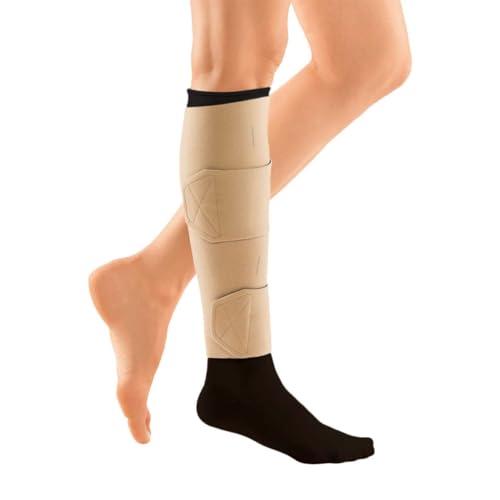
| 1 | circaid juxtalite Lower LegAn adjustable legging with a printed pressure card, so the person wearing it can see they have set it right. | The standard wrap, and the one most people are fitted with | 9.0 | $90.00 · View on Amazon #ad Price as of November 28, 2026. How we earn |
| 2 | 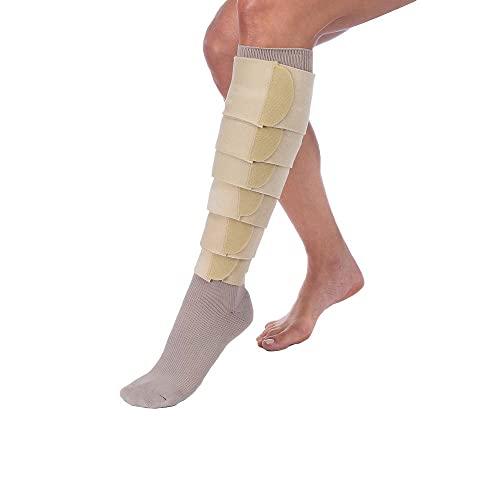 JOBST FarrowWrap LiteThe soft end of the FarrowWrap range, for skin or a leg that will not take a heavy wrap. | A leg that cannot tolerate the full strength | 8.4 | $124.79 · View on Amazon #ad Price as of November 28, 2026. How we earn |
| 3 | 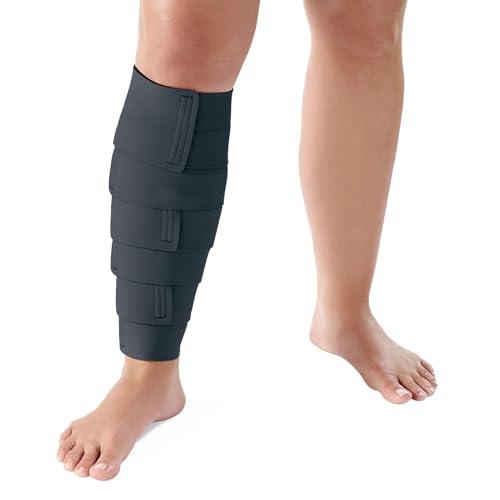 L&R ReadyWrap CalfThe ready-to-wear wrap, designed to be put on and adjusted by the person wearing it or by a family caregiver. | A wrap bought off the shelf rather than fitted | 8.0 | $77.64 · View on Amazon #ad Price as of November 28, 2026. How we earn |
| 4 | 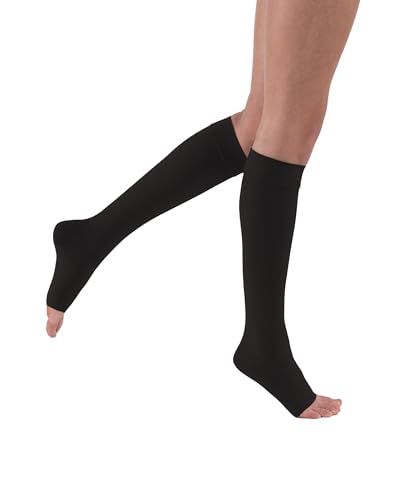 JOBST Relief Knee High, Open ToeA prescribed-strength stocking with an open toe, which is the version that can actually be got on. | The sock side, when the hands can still do it | 8.2 | $28.12 · View on Amazon$37.60(25% off) #ad Price as of November 28, 2026. How we earn |
| 5 | 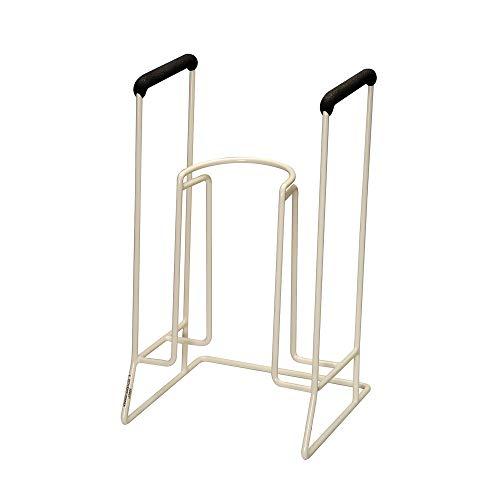 JOBST Stocking DonnerThe frame that holds the stocking open so the foot goes in - the cheapest way to avoid moving to a wrap. | Keeping socks viable for another year or two | 8.6 | $46.99 · View on Amazon #ad Price as of November 28, 2026. How we earn |
Tap any row to jump to the full write-up. The price button goes to Amazon.
How we picked
We don’t run a product lab. Every pick here is chosen by reading the things that actually tell you whether something works for weak hands, poor eyesight or shaky fingers: the manufacturer’s own specifications, the retailer listing, the measurements and weights, and what owners report in their reviews — especially the one-star ones. We read the complaints before the praise.
Prices change constantly, so we send you to Amazon to see today’s price rather than printing a number that goes stale. More about how we choose.
The picks in full
1. Best for the standard wrap, and the one most people are fitted with
circaid juxtalite Lower Leg
medi · 9.0/10 on our rubric
#ad Price as of November 28, 2026. How we earn
An adjustable legging with a printed pressure card, so the person wearing it can see they have set it right.
This is the wrap most clinics reach for, and the reason is the Built-In-Pressure System - a printed card used once at fitting to set the strap tension to the prescribed pressure, so that re-fastening it at home lands in the right place rather than being a guess. That single feature is what makes self-management realistic, because the usual failure of any adjustable device is that it ends up too loose to work or too tight to tolerate.
The juxtalock band system lets the straps be loosened or tightened without taking the garment off, which matters more than it sounds: a leg that is comfortable at eight in the morning is a different leg at four in the afternoon, and the sock format simply cannot respond to that.
Distributor listings describe three compression ranges - 20-30, 30-40 and 40-50 mmHg - across eight sizes and two lengths, with the kit supplied as the legging plus a pair of compressive undersocks and the pressure guide card. It is listed as latex free and machine washable, which matters for a garment worn daily.
Indications on those listings cover moderate lymphedema, chronic venous insufficiency, venous leg ulcers, post-thrombotic syndrome, dependent edema and varicose veins. That is a clinical list, and it is a reminder that this is a fitted medical garment rather than something to pick by eye - the sizing is detailed enough that getting it wrong is easy without help.
Good
- Printed pressure guide card, so correct tension is visible rather than guessed
- Straps adjust without removing the garment
- Listed in 20-30, 30-40 and 40-50 mmHg ranges
- Eight sizes and two lengths, so odd-shaped legs are catered for
- Latex free and machine washable, per distributor listings
Watch out for
- Several times the price of a pair of stockings
- Sizing is detailed - this is a measured fitting, not an eyeball
- Bulkier under clothes than any sock
- The lower leg garment does not cover the foot; a foot piece is separate
| Type | Adjustable inelastic wrap, lower leg |
|---|---|
| Compression | 20-30, 30-40 or 40-50 mmHg, per distributor listings |
| Setting the pressure | Built-In-Pressure System guide card |
| Sizes | Eight sizes, two lengths |
| In the kit | Legging, compressive undersocks, guide card |
2. Best for a leg that cannot tolerate the full strength
JOBST FarrowWrap Lite
JOBST · 8.4/10 on our rubric
#ad Price as of November 28, 2026. How we earn
The soft end of the FarrowWrap range, for skin or a leg that will not take a heavy wrap.
JOBST sells FarrowWrap in several strengths - Lite, Basic, Classic, Strong and the 4000 - and describes Lite on its own site simply as an adjustable, durable, soft wrap with a lower compression level than the rest of the range. JOBST does not publish a figure for it; retailer listings commonly quote 20-30 mmHg, so treat that as a seller's number rather than a specification.
The reason to want the soft end is rarely the pressure itself. It is skin. Fragile, papery skin over an elderly shin tears easily, and a heavy inelastic wrap over it is the kind of well-intentioned treatment that creates the wound it was meant to prevent. A softer wrap, over the liner JOBST also sells for the purpose, is the way that leg gets any compression at all.
It is also the honest choice for somebody who has refused compression outright. Light compression that is worn beats strong compression that is not, by an enormous margin, and starting someone at a tolerable level with the intention of stepping up is a legitimate plan rather than a compromise.
The reservation is that Lite genuinely is lighter, and if a clinician has specified 30-40 mmHg for a venous ulcer then Lite is not a substitute for it. Use the strength that was asked for, and if it cannot be tolerated, say so to the person who prescribed it rather than quietly buying down.
Good
- The softest option in a range that also covers Basic, Classic, Strong and 4000
- Arm, foot and thigh pieces sold alongside the leg piece
- A JOBST liner is sold to protect fragile skin underneath
- Velcro-style hook and loop straps across the range, per JOBST
Watch out for
- JOBST publishes no compression figure for Lite - the 20-30 mmHg number is a retailer claim
- Not a substitute for a prescribed stronger class
- Leg, foot and thigh are separate pieces, so a full-leg solution is several purchases
- Sold through medical suppliers rather than general retailers
| Type | Adjustable inelastic wrap |
|---|---|
| Compression | Lower than the rest of the FarrowWrap range, per JOBST; no figure published |
| Range | Lite, Basic, Classic, Strong, 4000 |
| Pieces | Leg, foot, thigh and arm sold separately |
| Fastening | Hook and loop straps |
3. Best for a wrap bought off the shelf rather than fitted
L&R ReadyWrap Calf
L&R USA · 8.0/10 on our rubric
#ad Price as of November 28, 2026. How we earn
The ready-to-wear wrap, designed to be put on and adjusted by the person wearing it or by a family caregiver.
L&R describes ReadyWrap as an adjustable compression wrap for patients and caregivers to apply and adjust, and that framing is the point of difference. It is built to be handled by the household rather than by a clinician, and it is the one most often bought without a fitting appointment first.
The Fusion Kit pairs the calf wrap with a liner that has a compressive foot and ankle section, covering from the toes to just below the knee - which closes the usual gap in wrap systems, where the calf is treated and the foot and ankle, where the swelling is often worst, are left to a separate purchase.
L&R lists indications of lymphedema, edema, leg ulcers and venous insufficiency, and gives materials of nylon, polyurethane and spandex for the calf wrap with a nylon and spandex liner. It is sold in beige and black and in several sizes.
One honest gap: we could not find a published mmHg figure for the ReadyWrap calf from L&R. The marketing describes clinically effective compression with high working and low resting pressure, which is a description of how an inelastic garment behaves rather than a number. If a specific class has been prescribed, confirm the figure with the supplier before ordering rather than assuming.
Good
- Designed for patients and caregivers to apply and adjust, per L&R
- A Fusion Kit covers toes to just below the knee in one purchase
- Sold individually, so one leg can be treated without buying a pair
- Available in two colors and several sizes
Watch out for
- No published mmHg figure found - confirm the class with the supplier
- Priced like a medical garment, not like socks
- Stock varies between online suppliers
- Still needs correct measurement, even bought off the shelf
| Type | Ready-to-wear adjustable wrap |
|---|---|
| Coverage | Calf; Fusion Kit adds a foot and ankle liner |
| Compression | Not published as a figure by L&R |
| Materials | Nylon, polyurethane and spandex; nylon and spandex liner |
| Indications | Lymphedema, edema, leg ulcers, venous insufficiency, per L&R |
4. Best for the sock side, when the hands can still do it
JOBST Relief Knee High, Open Toe
JOBST · 8.2/10 on our rubric
#ad Price as of November 28, 2026. How we earn
A prescribed-strength stocking with an open toe, which is the version that can actually be got on.
If a sock is still manageable, a sock is the better buy: it costs a fraction of a wrap, it looks like clothing, and it is less bulky under pants and shoes. The open-toe version is the one to ask for, because an open toe is what lets a slip aid be used and gives the fingers somewhere to pull from.
We rank this one on the sock side of our easiest compression socks page, where the ranking is done on the physical demand of getting the sock onto the leg rather than on the compression class. The short version is that the effort rises sharply with the class, and 20-30 mmHg and above is where most older hands stop being able to manage without help.
A sock also keeps its shape over the day in a way a wrap does not need to, because it was knitted to one size. That is its strength when the leg is a stable size and its weakness when the leg is not: a stocking that fits at breakfast can be painfully tight by evening on a leg that swells, and there is nothing to adjust.
The honest reservation is the thing nobody says out loud. A great many prescribed stockings are never worn more than a handful of times, and the reason is almost always the first five minutes of the day rather than the compression. If that is already the pattern in this house, buying a better sock will not change it.
Good
- A fraction of the price of any wrap
- Looks like ordinary clothing and fits under shoes
- Open toe allows a slip aid and gives the fingers purchase
- Keeps a consistent pressure on a leg that is a stable size
Watch out for
- Getting it on is the whole problem, and the effort rises with the class
- Nothing to adjust when the leg swells through the day
- Often will not fit a very swollen or misshapen leg
- Needs replacing every few months as the elastic tires
| Type | Knee-high compression stocking |
|---|---|
| Toe | Open |
| Adjustable | No |
| Best suited to | A leg that is a stable size |
5. Best for keeping socks viable for another year or two
JOBST Stocking Donner
JOBST · 8.6/10 on our rubric
#ad Price as of November 28, 2026. How we earn
The frame that holds the stocking open so the foot goes in - the cheapest way to avoid moving to a wrap.
Before concluding that socks are finished, try a donning aid. A frame holds the stocking stretched open on the floor; the foot goes in; the handles pull it up. It removes the two hardest parts of the job - stretching the opening wide enough with the fingers, and reaching down past the foot to do it.
For a lot of people this is the whole answer, and it costs a small fraction of what a wrap costs. It is the step to take between a sock that has become difficult and a wrap, and skipping it is the most common way households spend several hundred dollars they did not need to spend.
It is not a universal fix. A donner still needs two working hands and enough shoulder reach to work the handles, and it needs the person to be able to lean forward. One-handed users and anyone who cannot bend at all will not get on with it, and that is the point at which a wrap stops being an upgrade and starts being the only thing that works.
We compare the donning aids against each other on our easiest compression socks page, including the long-handled butler type for a back or hip that will not bend and the slip aids that work with open-toe stockings.
Good
- A small fraction of the cost of moving to a wrap
- Removes both of the hardest parts of putting a stocking on
- Works with the stockings already in the drawer
- Nothing to measure and nothing to fit
Watch out for
- Still needs two working hands
- Still needs enough reach to lean forward to the floor
- Does nothing about a leg that changes size through the day
- Bulky to store and not something to travel with
| Type | Stocking donning frame |
|---|---|
| Hands needed | Two |
| Works with | Open and closed toe stockings |
| Solves | Stretching the opening, and reaching the foot |
Choose compression socks if...
- The hands can still stretch the opening and pull, on their own or with a donning aid.
- The leg is roughly a stable size from morning to night, so a fixed garment stays comfortable.
- The compression class is at the lighter end - 15-20 mmHg is a different job from 30-40.
- Appearance matters, or the person wears shoes that will not take anything bulky.
- Cost matters and the condition is being managed rather than treated for a wound.
- They are going in a suitcase - a wrap is luggage and a pair of socks is not.
Choose an adjustable wrap if...
- Stockings have already been given up on. This is the most honest reason of all and the most common.
- The leg swells noticeably through the day, so a fixed garment is loose in the morning and painful by evening.
- The leg is too swollen, or too irregular in shape, for a knitted stocking to fit it properly.
- Only one hand works. A wrap can be fastened one-handed; almost no stocking can be pulled on that way.
- There is a wound or a healing ulcer, and the dressing underneath has to be changed without fighting a stocking back on afterwards.
- A caregiver is doing it. A wrap is far quicker and far less of a physical struggle for the person helping.
If a clinician has specified a compression class, the format can change but the class should not. Ask for the wrap at the strength that was prescribed rather than buying a lighter one because it is easier to handle.
What the research actually found
The honest summary is that wraps perform about as well as the bandaging they replace, and that the trials are small. That is a better result than it sounds, because the comparison is against a treatment applied by a trained person, and the wrap is applied by the patient.
In lymphedema, a 2024 randomized noninferiority trial of 24 people with bilateral leg lymphedema found adjustable wraps noninferior to inelastic multilayer bandaging for volume reduction during intensive decongestive therapy. The authors were explicit that superiority was not shown. An earlier Dutch randomized trial of 30 inpatients measured similar interface pressures from the two approaches after bandage renewal, at 52 and 53 mmHg.
In venous leg ulcers, a 2019 randomized trial of 66 patients found wraps cost less than inelastic bandaging and healed slightly more ulcers at twelve weeks, a difference that was not statistically significant. A multicentre Italian trial reported in Phlebology found 78.8 percent healing with wraps against 69.7 percent with bandages at twelve weeks - again not statistically significant, and again with lower cost on the wrap side.
Set against stockings rather than bandages the evidence is thinner, and a 2020 crossover study in the maintenance phase found wraps not inferior to custom flat-knit stockings over three days. Reviewers describe this evidence base as fragmented and small-sample, and none of it measures the thing this page is really about: whether the garment gets worn at all over a year.
These are small trials, several of them funded or conducted in settings with a commercial interest in the result. They support wraps as a reasonable alternative. They do not show wraps are better, and nobody should buy one expecting a clinical improvement over a stocking that was being worn properly.
Working pressure, resting pressure, and why the mmHg number misleads
A stocking is elastic. It stretches, and it pulls back against the leg all the time - including at night, when the leg is horizontal and does not need it. That constant squeeze is called resting pressure, and it is the part people find uncomfortable and the part that gets a stocking taken off in the evening.
A wrap is inelastic. It barely stretches, so it sits as a firm cuff that does almost nothing while the leg is still, and resists hard every time the calf muscle contracts during a step. That is high working pressure with low resting pressure, and it is why wraps are generally more comfortable to wear for long periods at a strength that would be hard to tolerate in a stocking.
The practical consequence is that the same number on the label does not describe the same experience. A 30-40 mmHg wrap and a 30-40 mmHg stocking are not interchangeable in comfort, in how they behave overnight, or in what they do for somebody who barely walks - and the last of those matters, because an inelastic garment relies on the calf muscle working. For a person who is mostly seated, that is worth raising with whoever prescribed it.
Cost, fitting and who pays
A wrap costs several times what a pair of stockings costs, and the gap is real rather than a markup: it is a measured, sized, adjustable medical garment rather than a knitted sock. Against that, a wrap generally lasts longer than a stocking before its compression tires, and a stocking that is never worn costs its full price for nothing.
Fitting is the part that catches people out. Both formats are sized from measurements of the ankle, calf and leg length, and both fail when those are guessed. Wraps in particular are sized in a grid of several sizes and two or more lengths, and the pressure has to be set once at fitting. Buying one online without measurements is the most common way to end up with an expensive garment that does not work.
On who pays: compression garments are sometimes covered under a durable medical equipment benefit when there is a documented diagnosis such as a venous leg ulcer or lymphedema, and the rules differ between Medicare, Medicare Advantage plans and state Medicaid programs. Coverage for lymphedema compression supplies specifically changed in recent years, so an answer somebody was given a few years ago may no longer be right. Ask the supplier to check current coverage before paying out of pocket.
Nothing on this page is medical advice. Compression is not safe for everyone - there are arterial circulation and heart conditions where it is actively harmful - so the decision that a leg needs compression, and at what strength, belongs to a clinician rather than to a shopping guide.
Questions people ask
▸Are compression wraps as good as compression stockings?
For the compression itself, the small trials available put adjustable wraps roughly level with the inelastic bandaging they replace, and one crossover study found them not inferior to custom flat-knit stockings in the maintenance phase. In daily life a wrap is often better, for the simple reason that it gets worn when a stocking does not.
▸Can you put a compression wrap on with one hand?
Usually yes, which is the main reason a wrap gets chosen. The garment is laid open around the leg and the straps are pulled across and pressed down, so one working hand can manage it. Pulling a compression stocking on one-handed is close to impossible at any useful strength.
▸Do compression wraps need a prescription?
Some are sold directly and some are supplied through a clinic, and the rules differ by product and by state. What matters more is the fitting: both the size and the pressure setting come from measurements, so even a wrap you can buy freely should be measured by somebody who does it regularly.
▸Which is better for lymphedema, socks or wraps?
Wraps are widely used in both the intensive and maintenance phases, and the 2024 noninferiority trial supports them against multilayer bandaging for volume reduction. A lymphedema therapist should make the call, because the leg shape, the stage and whether the foot needs covering all change the answer.
▸Should I try a donning aid before buying a wrap?
Yes, almost always. A donning frame costs a small fraction of a wrap and removes the two hardest parts of putting a stocking on. If two working hands and enough reach to lean forward are available, it is the cheaper answer and it works with the stockings already in the drawer.
▸Can you wear a compression wrap in bed?
That is a question for the person who prescribed it, not a general rule. Inelastic wraps exert low pressure at rest, which is why they are tolerated overnight more often than stockings - but whether a particular leg should be compressed at night depends on the diagnosis and on the circulation in that leg.
Sources
- JOBST - compression wraps and bandages product range
- circaid juxtalite lower leg - distributor product listing
- L&R USA - ReadyWrap product brochure
- Randomized noninferiority trial: adjustable compression wraps vs inelastic multilayer bandaging in leg lymphedema (2024)
- Phlebology - adjustable wraps vs inelastic bandages in venous leg ulcers (2019)
- Veins and Lymphatics - interface pressure of wraps and bandages
Read next
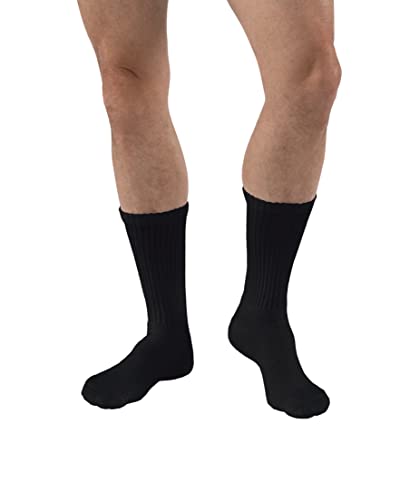
Easiest compression socks
The easiest compression socks to put on
Compression socks and donning aids ranked by how much grip, bend and reach each one actually demands.
Read the guide →
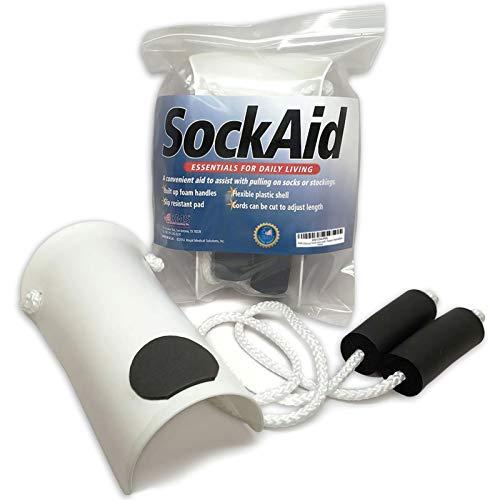
Best dressing aid
Best sock aids for seniors
Rigid and flexible sock aids, including the type that handles compression stockings.
Read the guide →
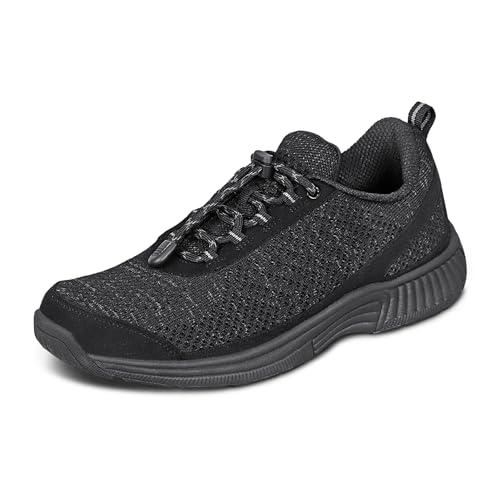
Best for swollen feet
Best shoes for seniors with swollen feet
Shoes ranked on how far they adjust, how deep they are, and whether you can put them on without bending.
Read the guide →
Guide
Chair exercises for seniors
A ten-movement seated routine with safety notes and how to progress it.
Read the guide →
Best reacher
Best reacher grabbers for elderly adults
Reachers compared on grip strength required, jaw type and the right length for the job.
Read the guide →
Best fitness tracker
Best fitness trackers for seniors
Trackers ranked on display readability, battery life and how little setup they demand.
Read the guide →