Best hearing aids under $500
Five hundred dollars now buys a real, FDA-regulated hearing aid. What it does not buy is a person to tune it, and that is the part to plan for.
By Selena H. · Last checked November 26, 2026 · How we keep pages current
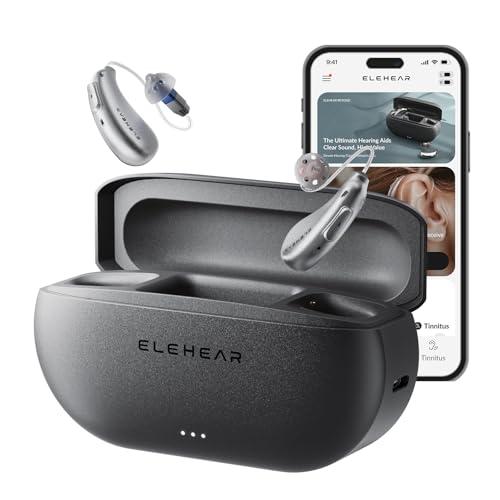
The one to buy for most people is the ELEHEAR Beyond: a receiver-in-canal aid that sits behind the ear like a clinic fitting, streams phone calls from either an iPhone or an Android, and runs a full day on a charge. If a smartphone is not part of this household, buy the MDHearing VOLT 4 instead, which is adjusted on the device and backed by a US support line. The budget pick is the LINNER Clarity, the cheapest purpose-built aid here, and if there is already an iPhone in the house the cheapest route of all is a pair of AirPods Pro 3 with Apple's hearing aid feature switched on.
Five hundred dollars is a meaningful line in this category rather than an arbitrary one. Below it you are buying hardware and nothing else. Above it, somewhere between roughly five hundred and a thousand dollars, the packages start bundling people: a licensed audiologist who reads your test, remote sessions to retune the aids as you get used to them, and years of warranty service. That is what the extra money buys, and it is worth knowing you are declining it rather than discovering it later.
So this page ranks these five on the question that decides whether a cheap hearing aid gets worn or abandoned in a drawer: when the first setting is wrong - and it usually is - what do you do next? An aid with named modes you can change yourself, or a support line that answers, survives that moment. An aid with a volume dial and nobody on the end of a phone does not.
We have not worn any of these. Every specification below comes from the manufacturer or the retailer listing and is attributed to it, availability was checked on Amazon before publishing, and where a figure is a marketing claim rather than a measurement we say so. For the independent lab measurements that sort this category properly, and for the full picture including the four-figure packages, read our main roundup of over-the-counter hearing aids.
This is general information about products, not medical advice. Talk to your doctor or occupational therapist about your own situation.
Some links on this page go to Amazon. If you buy something, we may earn a small commission at no extra cost to you — it never changes which products we pick or the order they appear in. Full disclosure.
Five aids, five different buyers
Behind-the-ear bodies are easier for arthritic fingers than anything that sits inside the canal. If getting a tiny bud in and out of an ear is going to be a daily fight, that decides this page on its own.
Quick picks
Ranked for how little strength, eyesight or patience they need — not for how much they cost.
| # | Product | Best for | Score | Price |
|---|---|---|---|---|
| 1 | ELEHEAR BeyondA receiver-in-canal aid with app control, Bluetooth streaming and a battery that covers a day - the best all-round buy under five hundred dollars. | Most people - the closest thing to a clinic shape at this price | 8.8 | $329.00 · View on Amazon$399.00(18% off) #ad Price as of November 28, 2026. How we earn |
| 2 | 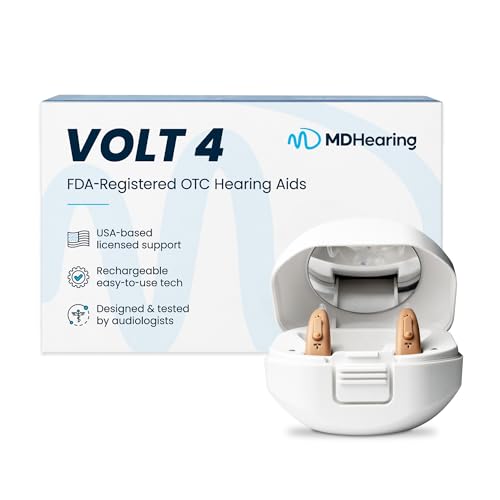 MDHearing VOLT 4Behind-the-ear aids set up out of the box with a US support team on the phone - the pick when an app is a non-starter. | A household with no smartphone in it | 8.4 | $297.00 · View on Amazon$397.00(25% off) #ad Price as of November 28, 2026. How we earn |
| 3 |  Apple AirPods Pro 3The FDA's first authorized over-the-counter hearing aid software, inside a product nobody reads as a hearing aid - for part of the day. | Someone who will not wear a hearing aid, in a house with an iPhone | 7.8 | $149.00 · View on Amazon$249.00(40% off) #ad Price as of November 28, 2026. How we earn |
| 4 | 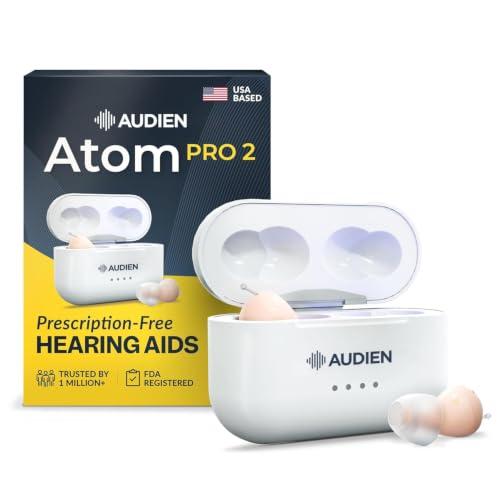 Audien Atom Pro 2An in-canal aid run entirely from one button, with four listening modes and a case that sanitizes it - discreet, and plainly a device rather than a service. | Wanting it invisible, with no app involved | 7.6 | $231.20 · View on Amazon$289.00(20% off) #ad Price as of November 28, 2026. How we earn |
| 5 | 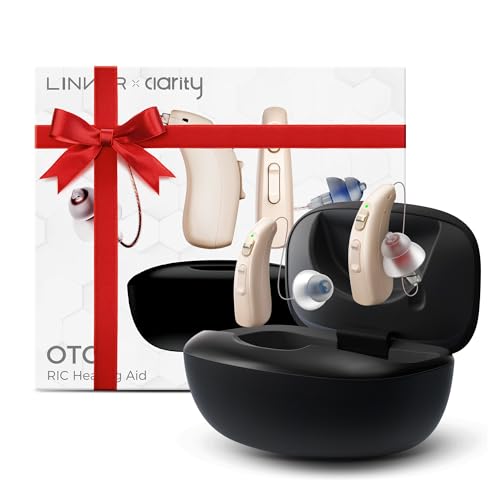 LINNER ClarityA behind-the-ear aid with nine volume levels and three modes on one button, at a fraction of the top pick - the honest cheap answer. | The budget pick - the cheapest purpose-built aid here | 7.4 | $169.39 · View on Amazon #ad Price as of November 28, 2026. How we earn |
Tap any row to jump to the full write-up. The price button goes to Amazon.
Pick by what’s hard
Most lists sort by price. That is not how this decision actually gets made, so here it is sorted by the thing that is getting in the way.
- There is no smartphone in the house
- MDHearing VOLT 4 — buy an aid adjusted on the device with a human being on a phone line behind it. Most of this category assumes an app, and an app nobody can open is the same as no adjustment at all.
- Stiff, arthritic or numb fingers
- ELEHEAR Beyond — choose a behind-the-ear body over anything that sits in the canal. The body is bigger to pick up, the charging dock is easier to hit, and you are not pinching a pea out of your own ear twice a day.
- They refuse to be seen wearing a hearing aid
- Apple AirPods Pro 3 — if there is an iPhone in the house, start with the earbuds and Apple's hearing aid feature. If there is not, the in-canal Audien is the discreet option that needs no phone at all.
- The budget is a hundred and fifty dollars, not five hundred
- LINNER Clarity — buy the cheapest real aid rather than the most expensive amplifier. A device with named listening modes and a stated hearing-loss range is a different class of thing from an earpiece whose only control is louder.
- Charging gets forgotten
- Audien Atom Pro 2 — pick on battery and on the dock rather than on features. An aid that powers itself off in its case and claims a day of use plus two more in reserve survives a household that does not do routines.
How we picked
We don’t run a product lab. Every pick here is chosen by reading the things that actually tell you whether something works for weak hands, poor eyesight or shaky fingers: the manufacturer’s own specifications, the retailer listing, the measurements and weights, and what owners report in their reviews — especially the one-star ones. We read the complaints before the praise.
Prices change constantly, so we send you to Amazon to see today’s price rather than printing a number that goes stale. More about how we choose.
The picks in full
1. Best for most people - the closest thing to a clinic shape at this price
ELEHEAR Beyond
ELEHEAR · 8.8/10 on our rubric
#ad Price as of November 28, 2026. How we earn
A receiver-in-canal aid with app control, Bluetooth streaming and a battery that covers a day - the best all-round buy under five hundred dollars.
This is the same physical arrangement a clinic would fit: a small body behind the ear with a thin wire carrying the speaker into the canal. That shape matters for two unglamorous reasons. The body is big enough to hold a real battery and to be picked up by stiff fingers, and the canal stays mostly open, so your own voice does not boom the way it does inside a sealed earbud.
It streams calls and audio from both iPhone and Android, which is unusual at this money and genuinely useful - a phone call routed straight into both ears is the easiest hearing win available to most people. There is tinnitus masking built in as well, a real feature rather than a bullet point for anyone whose evenings are spoiled by ringing.
Battery life runs to about twenty hours per charge with a case holding four more charges, so forgetting to dock them one night does not cost you the next day. That is the specification we would check first on any aid at this price, because a device that needs charging at lunchtime gets left out at lunchtime.
The honest limitation is fitting. There is no hearing test inside the app on this model, so getting the settings genuinely right means booking a remote session with ELEHEAR's support team rather than dragging a slider yourself. Their hours are business hours, so a Saturday problem waits. For a confident user that is a nuisance; for somebody who would rather be told what to do, it is arguably the better arrangement.
Good
- Receiver-in-canal shape - the same arrangement a clinic fits
- About twenty hours per charge, with four more charges in the case
- Streams calls and audio from both iPhone and Android
- Tinnitus masking included
- Body is large enough to handle with stiff fingers
Watch out for
- No hearing test inside the app, so real adjustment means a remote appointment
- Support keeps business hours
- IPX5 - splash resistant, not submersible
- The thin receiver wire is the part that eventually fails; keep the spare
| Style | Receiver-in-canal, behind the ear |
|---|---|
| Battery | Up to 20 hours, case holds 4 charges |
| Fitting | App plus a remote support session |
| Streaming | iPhone and Android, hands-free calling |
| Water resistance | IPX5 |
How it scores
- Speech in a quiet room8.6
- Easy to handle8.4
- Fixable when it is wrong7.6
- Battery you can forget9.2
2. Best for a household with no smartphone in it
MDHearing VOLT 4
MDHearing · 8.4/10 on our rubric
#ad Price as of November 28, 2026. How we earn
Behind-the-ear aids set up out of the box with a US support team on the phone - the pick when an app is a non-starter.
A surprising number of the people who need hearing aids most do not own a smartphone, and most of this category quietly assumes they do. The VOLT 4 does not. The listing describes it as ready to wear out of the box, adjusted on the device, with MDHearing's own support team available to walk somebody through the process - and that team is the reason to pay a little more here than for the cheapest aid on the page.
The body is a behind-the-ear shape MDHearing says is contoured to sit comfortably alongside glasses, which is worth more than it sounds: a large share of the people buying these wear spectacles all day, and an aid that fights the temple arm comes out within a week. The listing also claims dual directional microphones and automatic feedback and echo filtering, both standard phrasing in this category and both manufacturer claims rather than measurements.
The battery is rechargeable with a portable charging case that works without a wall outlet, and the listing promises a full day of reliable hearing per charge without publishing an hour figure. Treat it as a day's wear and plan to dock it nightly.
MDHearing is also unusually direct about the thing most sellers skip. Its own listing warns about the adjustment period - that the brain has to relearn filtering sound, and that the first days will not sound natural. That is honest, it is correct, and it is the single biggest reason first hearing aids end up in a drawer.
Good
- No app, no pairing and no smartphone required
- US-based support team included, which nothing cheaper here offers
- Behind-the-ear body contoured to sit alongside glasses, per the manufacturer
- Portable charging case works away from a wall outlet
- The listing is honest about the adjustment period
Watch out for
- No published hour figure for battery life - the claim is a full day
- No Bluetooth streaming, so phone calls still come out of the phone
- Noise canceling and microphone claims are the manufacturer's, not measured
- Costs more than the one-button aids below without adding streaming
| Style | Behind the ear |
|---|---|
| Battery | Rechargeable, portable case, a full day claimed |
| Fitting | On-device, with US phone support |
| Streaming | None |
| Intended for | Mild to moderate loss, per the manufacturer |
How it scores
- Speech in a quiet room7.8
- Easy to handle8.6
- Fixable when it is wrong8.6
- Battery you can forget8.0
3. Best for someone who will not wear a hearing aid, in a house with an iphone
Apple AirPods Pro 3
Apple · 7.8/10 on our rubric
#ad Price as of November 28, 2026. How we earn
The FDA's first authorized over-the-counter hearing aid software, inside a product nobody reads as a hearing aid - for part of the day.
In September 2024 the FDA authorized Apple's Hearing Aid Feature as the first over-the-counter hearing aid software device, for use with compatible versions of the AirPods Pro, and for adults 18 and over with perceived mild to moderate hearing impairment. That is the agency's own language, and it is why these belong on a page about hearing aids rather than a page about earbuds.
The practical appeal has nothing to do with specifications. There is no stigma: half the room is wearing the same thing, which gets a hearing aid into the ears of somebody who has refused one for five years. Setup is a short hearing test on an iPhone, the profile lives on the phone, and the same buds do noise canceling on a flight and in a waiting room.
Two conditions decide whether this works. There has to be an iPhone or iPad in the house to run the test and hold the settings - without one the feature does not exist. And the battery means these are an evening device rather than an all-day one, at roughly eight hours a charge by Apple's own figure against twenty-plus for every purpose-built aid here.
Treat them as a way in rather than a destination. Plenty of people who refuse an aid at 72 will accept earbuds, notice what they had been missing, and be ready for a real pair at 74.
Good
- The hearing aid function is FDA-authorized, not a wellness feature
- Self-fitted by a short hearing test on the iPhone
- No stigma at all - they look like everyone else's earbuds
- Doubles as noise canceling for flights and waiting rooms
- The cheapest route on this page if an iPhone is already in the house
Watch out for
- About eight hours a charge, so they cannot cover a full day
- Needs an iPhone or iPad to run the test and store the profile
- A sealed bud makes your own voice boom until you get used to it
- Nobody can see them, so people carry on talking to the back of your head
| Style | Sealed earbud, in ear |
|---|---|
| Battery | About 8 hours per charge (manufacturer) |
| Fitting | Self-test in the iPhone Health app |
| Regulatory | FDA-authorized OTC hearing aid software |
| Requires | iPhone or iPad for setup |
How it scores
- Speech in a quiet room7.0
- Easy to handle6.4
- Fixable when it is wrong8.8
- Battery you can forget4.0
4. Best for wanting it invisible, with no app involved
Audien Atom Pro 2
Audien · 7.6/10 on our rubric
#ad Price as of November 28, 2026. How we earn
An in-canal aid run entirely from one button, with four listening modes and a case that sanitizes it - discreet, and plainly a device rather than a service.
This is the pick for the person whose objection is being seen wearing one. The Atom Pro 2 sits inside the ear canal, which Audien calls nearly invisible, and it is run from a single button on the device: a quick press cycles five volume levels, a long press moves between four listening modes the listing names as Conversation, Restaurant, TV and Outdoor. Each ear adjusts independently. There is no app, no pairing and no phone.
The battery claim is the strongest on this page: up to twenty-four hours per charge with up to forty-eight hours more from the case, and the aids power off when docked and on when lifted out, so there is no switch to find. The case also runs a five-minute UV-C cycle on each dock, which is a hygiene feature rather than a hearing one but a reasonable answer to the earwax that eventually kills every in-canal device.
Audien describes it as an FDA-registered over-the-counter hearing aid and includes a guided setup call it calls Sound Check. Read that carefully: FDA-registered is not the same claim as the FDA-cleared self-fitting status the pricier aids carry, and a guided call is help with insertion and volume rather than a hearing test. Three sizes of silicone dome are in the box, with a wax guard kit and a one-year warranty.
The real cost of invisibility is handling. A device that disappears in the ear is also a device that has to be pinched out of it, and for arthritic or numb fingers that is a daily problem the behind-the-ear aids above do not have. There is a pull-wire for removal, which helps, but if dexterity is the issue this is the wrong shape at any price.
Good
- Sits inside the canal - genuinely discreet
- Up to 24 hours per charge and up to 48 more in the case, per the listing
- Four listening modes and five volume levels, all from one button
- No app, no phone and no pairing
- Charging case runs a UV-C cycle; wax guards and three dome sizes included
Watch out for
- In-canal shape is hard to handle with stiff or numb fingers
- FDA-registered, not FDA-cleared self-fitting - a different claim
- No hearing test anywhere in the process, so the fit is volume and mode only
- A sealed canal makes chewing and your own voice louder at first
| Style | In the ear canal |
|---|---|
| Battery | Up to 24 hours, case holds up to 48 more |
| Fitting | One button; guided setup call included |
| Controls | 5 volume levels, 4 listening modes |
| Regulatory | FDA-registered OTC, per the manufacturer |
How it scores
- Speech in a quiet room7.0
- Easy to handle5.6
- Fixable when it is wrong6.6
- Battery you can forget9.4
5. Best for the budget pick - the cheapest purpose-built aid here
LINNER Clarity
LINNER · 7.4/10 on our rubric
#ad Price as of November 28, 2026. How we earn
A behind-the-ear aid with nine volume levels and three modes on one button, at a fraction of the top pick - the honest cheap answer.
The cheapest thing on this page that is still a hearing aid rather than an amplifier. LINNER describes the Clarity as a behind-the-ear device for mild to moderate loss, FDA OTC compliant in its own wording, with three listening modes the listing names as Conversation, TV and Outdoor and nine volume levels, all reached through one button. It remembers the last setting, which sounds trivial and is not: an aid that resets every morning teaches somebody to stop bothering.
Battery is where it quietly beats much more expensive devices: up to twenty-four hours per charge and up to a hundred hours in total with the case, over USB-C, by the listing's figures. For a household where charging habits are the real obstacle, that is worth more than any sound feature.
What you give up is everything to do with fitting. There is no hearing test, no app, no remote session and no professional anywhere in the transaction - just louder, in nine steps, shaped by whichever of three modes you choose. For a mild loss in quiet rooms that is often enough. For a loss that is worse in one ear, or worse at particular frequencies, it is not, and no number of volume steps will fix that.
Buy it as the cheap way to find out whether hearing aids help at all. If the answer is yes and restaurants are still hard, you have learned something useful for a modest sum and can spend properly next time.
Good
- The cheapest purpose-built hearing aid on this page
- Up to 24 hours per charge, up to 100 hours with the case, per the listing
- Nine volume levels and three modes from one button - no app
- Behind-the-ear body, easier to handle than an in-canal bud
- Remembers the last setting between uses
Watch out for
- No hearing test and no app - the fit is volume and mode, nothing more
- No published water resistance rating
- Cannot shape sound to an uneven loss between the two ears
- The listing's own wording is FDA OTC compliant, which is not an FDA clearance
| Style | Behind the ear |
|---|---|
| Battery | Up to 24 hours; up to 100 hours with the case |
| Fitting | On-device only, no app |
| Controls | 9 volume levels, 3 listening modes |
| Charging | USB-C case |
How it scores
- Speech in a quiet room6.6
- Easy to handle8.2
- Fixable when it is wrong5.4
- Battery you can forget9.4
What the five-hundred-dollar line actually divides
It is not sound quality, or not mainly. The components in a three-hundred-dollar aid and an eight-hundred-dollar aid are closer than the price gap suggests, and the published lab measurements of the better cheap aids overlap with aids costing several times more. What changes above five hundred dollars is that you start buying people.
At the next tier up, the price includes a licensed audiologist who reads a hearing test and programs the aids to it, a series of remote appointments over the first months while the brain adapts, and multi-year warranty service with a loaner while yours is repaired. Those are services, they are labor-intensive, and that is why they cost what they cost.
Whether you need them depends almost entirely on one thing: how willing the person is to fiddle with a device. Somebody who will happily try four settings over two weeks and keep the one that works gets most of the value of a clinic fitting for a third of the money. Somebody who will put them in once, decide they sound wrong and never open the case again should spend the extra and have a professional set them up.
Original Medicare does not cover hearing aids or the exams used to fit them. Some Medicare Advantage plans include a hearing benefit, and veterans enrolled in VA health care should ask VA audiology first - hearing aids are a long-standing VA benefit and nothing like retail price.
Nobody is included at this price, so plan the fitting yourself
- Get the ears looked at before buying anything. Clinics see people every week who spent real money on hearing aids for a problem an earwax appointment would have solved.
- Order where you can send them back, and write the last day of the return window on the kitchen calendar the day they arrive.
- Start quiet. One room, one person, no television. Everything on this page sounds harsh in a kitchen with a radio on, and that is the brain rather than the aid.
- Build up over two weeks - three or four hours a day at first, then longer. An hour on day one and back in the box is how most first pairs fail.
- Keep a note each evening of what was hard: one ear or both, voices or background, a particular room. That note is what you use to pick the mode, change the volume step or book the support call.
- Only then judge them. If speech in a quiet room is still unclear with the aids in, that is the signal to see an audiologist rather than to buy a different cheap pair.
If the household has a smartphone and the person is willing, an aid with remote support or a self-test is worth the extra over a one-button device. The first fit is rarely the right fit, and being able to change it is the feature that matters most at this price.
Use HSA or FSA money if you have it
Hearing aids are an eligible expense for a health savings account or a flexible spending account, and several of the listings here say so explicitly. For anybody still working, or recently retired with a funded account, that is effectively a discount equal to your tax rate - the largest single saving available on this page, and one nobody advertises.
It is also worth one phone call to a Medicare Advantage plan before ordering, because hearing benefits vary enormously between plans and some cover a fixed dollar amount at specific suppliers. The call takes ten minutes and occasionally covers the entire cost.
Where the cheap end stops being a hearing aid
A search for hearing aids returns hundreds of results below a hundred dollars, and most of them are personal sound amplifiers rather than hearing aids. The difference is not marketing: an amplifier makes everything louder, including the refrigerator and the road outside, while a hearing aid is regulated as a device intended to compensate for impaired hearing and shapes sound around the frequencies a person has actually lost.
The tell is the controls. A device whose entire interface is a volume wheel is an amplifier whatever the listing title says. A device with named listening modes, a stated hearing-loss range and a regulatory claim it is willing to print is at least in the right category. Our comparison of hearing amplifiers and hearing aids sets out what the FDA treats as different between them, and the handful of situations - the television, one visitor, a hospital bedside - where the cheap amplifier genuinely is the right buy.
Two further cautions on this page's own category. A brand with no independent measurement anywhere should be assumed to be an amplifier until shown otherwise. And the OTC category is young, so models disappear: check that a bargain is still listed on the manufacturer's own website before buying, because domes, wax filters and warranty service all depend on a company that is still interested.
When over-the-counter is the wrong aisle entirely
- Hearing that dropped suddenly in the last six months, or that comes and goes
- One ear noticeably worse than the other, or ringing in one ear only
- Blood, pus or fluid from an ear in the last six months
- Ear pain or discomfort
- Heavy earwax, or the feeling that something is in the ear
- Severe dizziness or vertigo
- An ear injury or an unusual ear shape
- Not being able to follow speech even in a quiet room
The FDA allows OTC hearing aids for adults 18 and over with what it calls perceived mild to moderate hearing loss. They are explicitly not for severe or profound loss and not for children, and the agency publishes a list of signs that mean seeing an ear doctor before buying anything at all.
Nothing on this page is a substitute for an audiologist, and a five-hundred-dollar ceiling is not a reason to skip one. If the loss is uneven, sudden or severe, the cheapest correct answer is an appointment.
If restaurants are the whole complaint
Every aid under five hundred dollars measures far better in a quiet room than in noise, and that is not a flaw in these picks - it is where the category sits. Separating one voice from forty is the hardest problem in hearing technology and the thing professionally fitted aids still do measurably better.
Before upgrading, try three cheaper things. Sit with your back to the wall and the room in front of you, so the microphones face the person you came to hear. Ask for a booth, which is worth more than any feature on a spec sheet. And look at a remote microphone accessory, which puts a microphone on the table in front of one person - in a loud room that usually beats a more expensive pair of aids.
If the television is the real problem rather than restaurants, do not buy hearing aids for it at all. Our roundup of TV listening systems for one hard-of-hearing person covers four routes that cost a fraction of this page and work better for that one job.
Questions people ask
▸What is the best hearing aid under $500?
For most people the ELEHEAR Beyond: it uses the receiver-in-canal shape a clinic would fit, streams calls from an iPhone or an Android, runs about twenty hours per charge, and ELEHEAR's remote support team can retune it when the first setting is wrong. If there is no smartphone in the house, the MDHearing VOLT 4 is the better buy, because it is adjusted on the device and backed by a US phone line.
▸Are hearing aids under $500 any good, or are they all amplifiers?
Both exist on the same search page. Genuine over-the-counter hearing aids under five hundred dollars are now sold by companies that publish a hearing-loss range, name their listening modes and make a regulatory claim - and the better ones measure close to aids costing several times more in a quiet room. Devices whose only control is a volume wheel are almost always personal sound amplifiers, which make everything louder rather than compensating for the frequencies you have lost.
▸What do you give up compared with a $2,000 pair?
Mostly people rather than parts. The four-figure packages include a licensed audiologist who programs the aids to a real hearing test, remote appointments over the first months while you adapt, and multi-year service with a loaner during repairs. Prescription aids also go far louder, which matters for severe loss, and they are measurably better at separating one voice from a noisy room.
▸Does Medicare pay for hearing aids?
Original Medicare does not cover hearing aids or the exams used to fit them, which is a large part of why the over-the-counter category exists. Some Medicare Advantage plans include a hearing benefit worth a phone call before you order, and veterans enrolled in VA health care should ask VA audiology first, since hearing aids are a long-standing VA benefit.
▸Can I use HSA or FSA money on these?
Yes. Hearing aids are an eligible expense for a health savings account or a flexible spending account, and several of the listings on this page state it directly. For anyone with a funded account that is effectively a discount equal to your tax rate, and it is the largest saving available here.
▸Do AirPods really work as hearing aids?
For mild to moderate loss, within limits. In September 2024 the FDA authorized Apple's Hearing Aid Feature as the first over-the-counter hearing aid software device, for use with compatible versions of the AirPods Pro by adults 18 and over with perceived mild to moderate hearing impairment. You need an iPhone or iPad to run the hearing test, and the battery is about eight hours a charge, so treat them as a part-of-the-day device rather than a replacement for a purpose-built aid.
▸Behind the ear or in the ear - which should I buy?
Behind the ear, unless being seen wearing it is the obstacle. The body is larger and easier to pick up with stiff fingers, the battery is bigger, the canal stays more open so your own voice booms less, and docking it at night is a simpler movement. In-canal aids win on discretion and lose on handling, and handling is what decides whether a hearing aid is still being worn in six months.
Sources
Read next
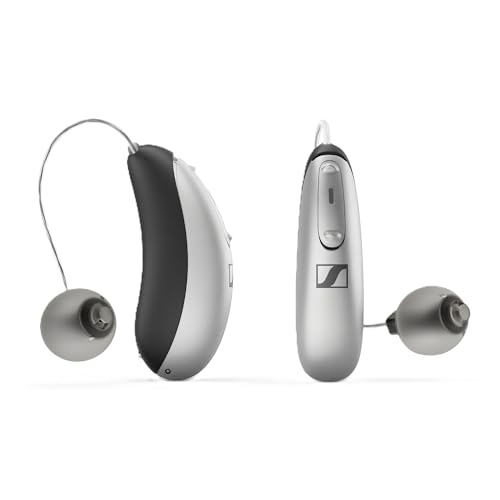
Best OTC hearing aids
Best over-the-counter hearing aids for seniors
OTC hearing aids compared on published lab measurements, fitting method and who helps when the settings are wrong.
Read the guide →
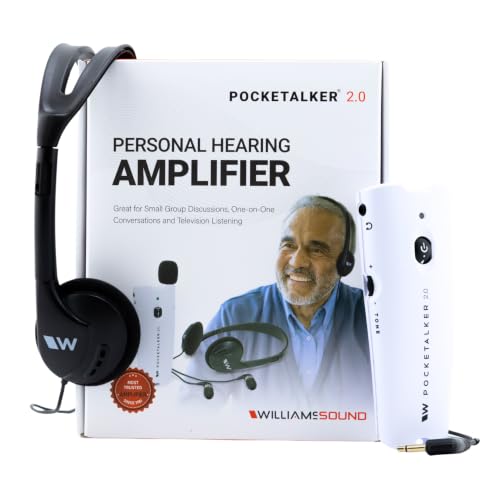
Head to head
Hearing amplifier vs hearing aid: which one do you need?
What separates a personal sound amplifier from an over-the-counter hearing aid, and the situations where the cheaper one is genuinely the right answer.
Read the guide →
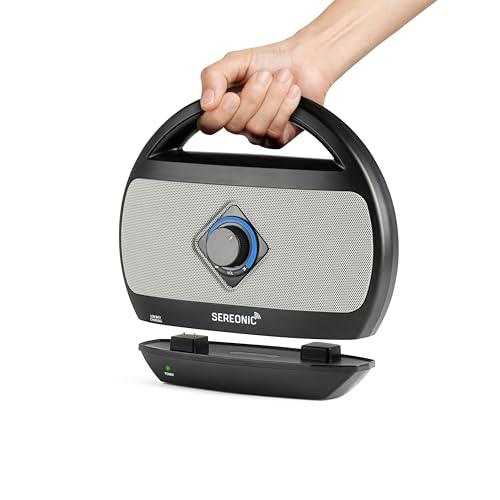
Best TV listening system
Best TV listening systems for one hard-of-hearing person
Four different ways to send TV sound to one person - a personal speaker, a neckloop, a room loop and a pocket amplifier - and how to pick between them.
Read the guide →
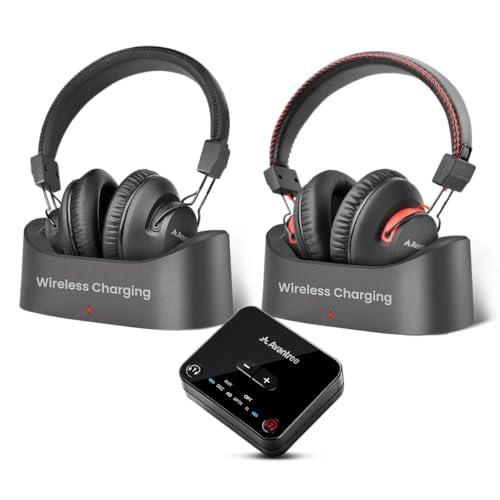
Best TV sound
Best TV headphones for hard of hearing seniors
TV listening systems picked for speech clarity, lip-sync delay and controls you can work by feel.
Read the guide →
Best amplified phone
Best amplified phones for hard of hearing seniors
Amplified home phones ranked by boost, ringer volume and how usable the keypad is.
Read the guide →