Hearing amplifier vs hearing aid: which one do you need?
They are sold on the same page, at prices ten times apart, and the FDA does not consider them the same kind of product at all.
By Selena H. · Last checked October 22, 2026 · How we keep pages current
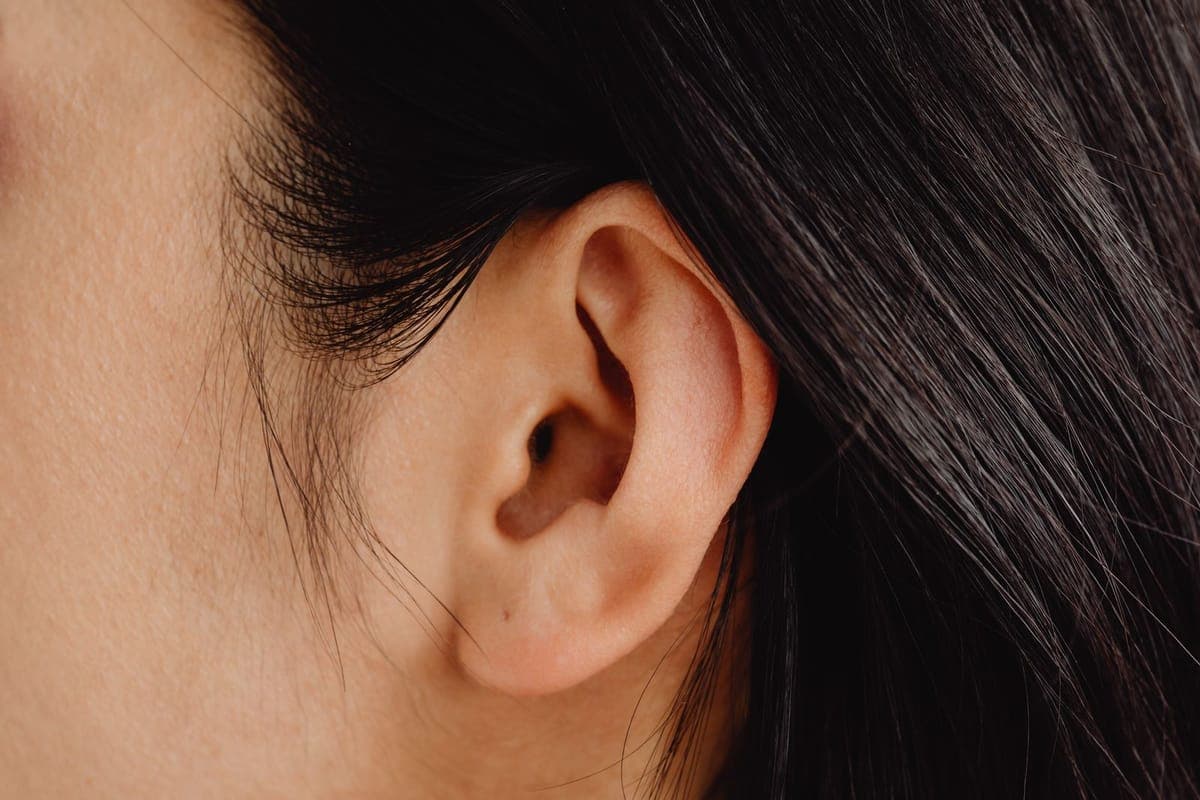
Buy a personal amplifier if hearing is broadly fine and one situation is hard - the television, one visitor, a car. Buy an over-the-counter hearing aid if conversation is hard everywhere. An amplifier makes everything louder in one place; a hearing aid is shaped to the hearing you have actually lost.
The confusion is built into the shopping experience. Search for help with hearing and one screen will show a $40 earpiece, a $90 pocket amplifier and an $800 pair of hearing aids, all photographed the same way, all promising clearer speech. Two of those three are not medical devices at all, and the labeling that would tell you so is in small print near the bottom of the listing.
The distinction is not marketing. The FDA writes that the technology in personal sound amplification products and hearing aids is similar and that both obviously affect what a user hears - but that they have different intended uses and different regulatory status. Hearing aids are intended to compensate for impaired hearing. Amplifiers are consumer products for people whose hearing is not impaired.
That sounds like a technicality until you see what follows from it. A hearing aid has to be shaped to a hearing loss, has output limits it may not exceed, and sits under FDA device requirements. An amplifier has none of that - which is exactly why it can be good value for the job it is actually built for, and a waste of money for the job people usually buy it for.
This is general information about products, not medical advice. Talk to your doctor or occupational therapist about your own situation.
Some links on this page go to Amazon. If you buy something, we may earn a small commission at no extra cost to you — it never changes which products we pick or the order they appear in. Full disclosure.
The decision table
Quick picks
| # | Product | Best for | Score | Price |
|---|---|---|---|---|
| 1 | Williams AV Pocketalker 2.0The amplifier that is honest about what it is - a pocket box with a microphone, a volume knob and a battery life measured in days. | One hard situation, not all day | 7.6 | Check price on Amazon #ad Prices change daily, so we send you to check today's. How we earn |
| 2 | ELEHEAR BeyondA real over-the-counter hearing aid at mid-tier money - shaped to a hearing loss, worn all day, charged every night. | Conversation that is hard everywhere | 8.6 | Check price on Amazon #ad Prices change daily, so we send you to check today's. How we earn |
Tap any row to jump to the full write-up. The price button goes to Amazon.
How we picked
We don’t run a product lab. Every pick here is chosen by reading the things that actually tell you whether something works for weak hands, poor eyesight or shaky fingers: the manufacturer’s own specifications, the retailer listing, the measurements and weights, and what owners report in their reviews — especially the one-star ones. We read the complaints before the praise.
Prices change constantly, so we send you to Amazon to see today’s price rather than printing a number that goes stale. More about how we choose.
The picks in full
1. Best for one hard situation, not all day
Williams AV Pocketalker 2.0
Williams AV · 7.6/10 on our rubric
#ad Prices change daily, so we send you to check today's. How we earn
The amplifier that is honest about what it is - a pocket box with a microphone, a volume knob and a battery life measured in days.
This is the device hospitals and care homes keep in a drawer for the visitor who cannot follow a conversation. It is a small box - about 4.9 by 2.0 by 1.0 inches and 88 grams with batteries in - with an internal omnidirectional microphone, a volume control, a tone control and a headphone jack. Point it at a person or set it by the television, put on the headphones, and the sound arrives louder.
Two AAA cells run it, and Williams rates it at up to 105 hours of typical use on alkalines. One independent reviewer measured 75 hours at a fairly high volume setting, which is the figure we would plan around. Either way, this is a device you change batteries in a few times a year rather than charge nightly - a real advantage for someone who will not reliably remember a charger.
It carries a T-coil with its own switch and indicator light, so it works with the hearing loop systems installed in many theaters, churches and ticket counters. The warranty is five years on the unit, which is unusual at any price.
Williams states plainly that the Pocketalker is not sold, advertised or intended for use as a personal hearing aid. Take them at their word. It does nothing to shape sound around a particular hearing loss, and if the room is noisy it will amplify the noise just as faithfully as the voice.
Good
- Battery measured in days, not hours - no nightly charging
- Volume and tone are physical controls, not app settings
- Built-in T-coil for hearing loop systems in public buildings
- Five year warranty on the unit
- Cheapest genuinely useful thing in hearing
Watch out for
- Not a hearing aid, and the manufacturer says so
- Amplifies background noise exactly as much as speech
- A visible box with a wire - some people will not use it in public
- Sold in several variants; the base model ships without earphones
| Type | Personal sound amplifier (PSAP) |
|---|---|
| Power | 2 x AAA, alkaline or NiMH |
| Battery life | Up to 105 hours typical (manufacturer) |
| Size and weight | About 4.9 x 2.0 x 1.0 in, 88 g with batteries |
| Microphone | Internal omnidirectional, optional external mic |
| T-coil | Built in, with switch and indicator |
| Warranty | 5 years parts and labor, 90 days on accessories |
How it scores
- Speech in a quiet room7.6
- Speech in noise3.4
- Wear it all day3.0
- Set up without help9.6
2. Best for conversation that is hard everywhere
ELEHEAR Beyond
ELEHEAR · 8.6/10 on our rubric
#ad Prices change daily, so we send you to check today's. How we earn
A real over-the-counter hearing aid at mid-tier money - shaped to a hearing loss, worn all day, charged every night.
If the problem is not one room but every room, this is the shape of the answer. It is a receiver-in-canal aid - a small body behind the ear with a thin wire to a speaker in the canal - and it is regulated as a medical device rather than sold as a consumer gadget.
The difference you hear is shaping. A hearing loss is almost never flat; most age-related loss takes the high frequencies first, which is why consonants blur while vowels stay clear and why people say others are mumbling. A hearing aid raises the frequencies you have lost and leaves alone the ones you have not. An amplifier raises everything, including the frequencies that were already loud enough.
Battery runs to about twenty hours with four more charges in the case, and it streams calls and audio from both iPhone and Android. There is no hearing test inside the app on this model, so getting the settings right means a remote session with the company's support team rather than dragging a slider yourself.
The limit it shares with every OTC aid is noise. A crowded restaurant is where prescription aids still earn their price, and no over-the-counter device closes that gap today. Quiet rooms, television and one-to-one conversation are where this money goes furthest.
Good
- Regulated as a medical device, with the output limits that implies
- Shaped to your hearing rather than raising everything equally
- About twenty hours per charge, with four more charges in the case
- Streams calls and audio from iPhone and Android
Watch out for
- Several times the price of any amplifier
- No hearing test in the app, so adjustments mean a support appointment
- Needs charging every night
- Speech in a noisy room is only fair, as it is across the OTC category
| Type | OTC hearing aid, receiver-in-canal |
|---|---|
| For | Adults 18+, perceived mild to moderate loss |
| Battery | Up to 20 hours, case holds 4 charges |
| Fitting | Remote support session |
| Streaming | iPhone and Android |
| Water resistance | IPX5 |
How it scores
- Speech in a quiet room8.6
- Speech in noise5.4
- Wear it all day9.0
- Set up without help7.0
What the FDA actually says
Over-the-counter hearing aids became a legal category in the United States in 2022. The rule lets adults aged 18 and over with perceived mild to moderate hearing impairment buy certain hearing aids with no medical examination, no prescription and no fitting by an audiologist. It also sets a maximum output: generally 111 dB SPL, or 117 dB SPL when input-controlled compression is active.
Personal sound amplification products sit outside that rule entirely. The FDA's guidance describes them as consumer products for people with normal hearing who want to amplify sound in particular situations - the stock examples are birdwatching and hunting. They are not intended to compensate for impaired hearing, and they are not regulated as hearing aids.
None of this means amplifiers are bad. It means the label on the box tells you which job the manufacturer built the thing for, and that buying one to treat a hearing loss is using a product outside its intended use. The output limits are the part worth taking seriously: a device with no ceiling, turned up by someone who cannot judge how loud is too loud, is a real risk rather than a theoretical one.
If hearing dropped suddenly, if one ear is much worse than the other, or if there is pain, drainage, dizziness or ringing in one ear only, the FDA's advice is to see a doctor rather than buy anything. Those signs can point to something treatable.
When the cheap option is genuinely the right one
We say on every page of this site that we will point at the cheaper option when it is the better one, and this is a case where it often is.
An amplifier is the right buy when the problem is situational rather than general: a parent who follows conversation fine but cannot hear the television at a volume the rest of the house can tolerate, a hospital bedside where a patient needs to hear a nurse for a week, a once-a-month meeting in a hard room. It is also the sensible first step for someone who flatly refuses to consider a hearing aid, because the cost of finding out is small.
It is the right buy in one more case that matters more than the others: when someone will not manage a charging routine. A device that runs for months on AAA batteries and has a knob on the front gets used. A device that has to be docked every night, paired to a phone and adjusted in an app sometimes does not, however much better it would sound.
What an amplifier will not do is fix hearing across a day. If someone is missing conversation at the table, on the phone and in the car, buying a louder box is treating the symptom in one room and leaving the other three alone.
The test that settles it
- Count the situations. One hard situation points to an amplifier. Three or more points to a hearing aid.
- Ask whether people sound like they are mumbling rather than quiet. Mumbling is a high-frequency loss, and shaping - not volume - is what fixes it.
- Ask who will charge it. If the answer is nobody reliable, a AAA-powered amplifier beats a better device that sits flat in a drawer.
- Check whether it will be worn in public. A behind-the-ear aid is nearly invisible; a box with a wire is not, and plenty of people will simply not use one outside the house.
- Price the honest version of the plan. A good amplifier plus a set of TV headphones often costs less than one OTC aid and solves two specific problems properly.
- If the answer is still unclear, get a hearing test. Many are free, they take twenty minutes, and they replace all of the above with a number.
A hearing test is not a commitment to buy anything. It tells you which frequencies you have lost, and that single piece of information makes every choice on this page obvious.
Where each one fits in a house
Most households that solve this well end up with more than one device, and that is sensible rather than wasteful. The television is its own problem and is best answered by a dedicated TV listening system or wireless TV headphones, which send sound straight from the set and let everyone else keep a normal volume.
A pocket amplifier then covers the situations the television solution does not: the doctor's appointment, the visitor in the kitchen, the passenger seat of a car. And hearing aids, if they are needed, cover everything else.
If you are buying for someone else, start with the television. It is the single biggest source of household friction around hearing loss, it is cheap to fix properly, and the fix does not require the person to accept that they have a hearing problem - which, in practice, is often the real obstacle.
What neither one can do
Neither device restores hearing. Both make sound louder; a hearing aid is simply cleverer about which parts of it to make louder. In a noisy restaurant, both struggle, because the microphone cannot tell which voice you are trying to follow.
Neither is a substitute for a doctor when something has changed quickly. Sudden hearing loss in one ear is treated as urgent by audiologists for good reason, and so are pain, discharge and one-sided ringing.
And neither fixes a room. Hard floors, bare walls and a television left on under a conversation defeat good hearing aids. Soft furnishings, a closed door and facing the person you are speaking to are free, and on a bad day they do more than the hardware.
Questions people ask
▸What is the difference between a hearing amplifier and a hearing aid?
A hearing aid is a regulated medical device shaped to a particular hearing loss, with a maximum output the rule caps at 111 dB SPL (117 with input compression). A personal sound amplifier is a consumer product intended for people with normal hearing who want one situation to be louder. It raises everything equally.
▸Can I use a personal sound amplifier instead of a hearing aid?
You can, and for one hard situation such as the television or a single visitor it is often the sensible buy. For hearing loss across a whole day it is the wrong tool - it amplifies background noise as faithfully as speech, and it is not shaped to the frequencies you have lost.
▸Are hearing amplifiers safe?
They are not covered by the output ceiling the FDA set for over-the-counter hearing aids, so the volume control is the only limit. Turn one up slowly, and if someone cannot judge for themselves how loud is too loud, a device with a regulated output limit is the safer purchase.
▸Do I need a hearing test before buying an over-the-counter hearing aid?
No. The rule allows adults 18 and over with perceived mild to moderate hearing loss to buy without a medical exam or a prescription. A test is still worth having, because it tells you which frequencies you have lost and that answers most of the shopping questions at once.
▸Does Medicare cover either of these?
Original Medicare does not cover hearing aids or the exams to fit them, and personal amplifiers are a retail purchase. Some Medicare Advantage plans include a hearing benefit. Check your own plan before assuming either way.
▸What is a T-coil and does it matter?
A telecoil picks up sound directly from the hearing loop systems installed in many theaters, churches and ticket counters, bypassing the room noise. The Pocketalker 2.0 has one built in with its own switch. If the person you are buying for goes to loop-equipped venues, it is a feature worth having.
Sources
Read next
Best OTC hearing aids
Best over-the-counter hearing aids for seniors
OTC hearing aids compared on published lab measurements, fitting method and who helps when the settings are wrong.
Read the guide →
Best TV sound
Best TV headphones for hard of hearing seniors
TV listening systems picked for speech clarity, lip-sync delay and controls you can work by feel.
Read the guide →
Guide
How to make the TV easier to hear
Free TV settings that help with dialogue, then the equipment worth buying if they are not enough.
Read the guide →
Best amplified phone
Best amplified phones for hard of hearing seniors
Amplified home phones ranked by boost, ringer volume and how usable the keypad is.
Read the guide →
Easiest TV remote
Easiest TV remotes for seniors
Simplified universal remotes, ranked by how few buttons they have and how hard they are to misprogram.
Read the guide →