Best TV listening systems for one hard-of-hearing person
The argument about the volume has a technical answer. Send the sound to the person who needs it and leave the room alone.
By Selena H. · Last checked November 5, 2026 · How we keep pages current
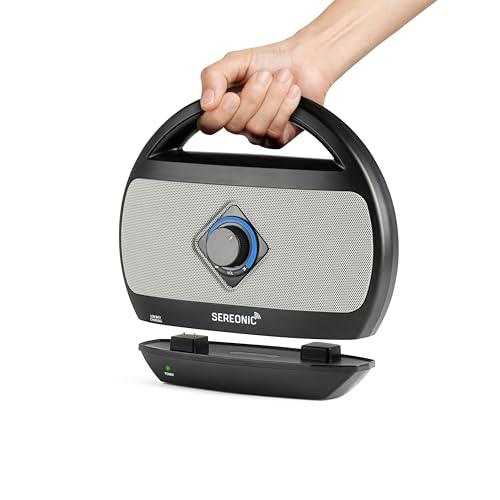
For most households the Sereonic TV Soundbox is the right first purchase: a small speaker that sits on the arm of one chair and carries the TV sound to it over radio, while the television's own speakers keep playing for everyone else. Nothing goes in or on the ears, there is one knob, and the argument about the volume stops.
If the person already wears hearing aids with a telecoil, the better answer is usually a loop rather than a speaker, because it puts the sound inside the aids that are already tuned to their hearing. That means either a neckloop worn under the collar, or a wire run once around the room.
This page is deliberately not about headphones. We have a separate roundup of TV headphones for the hard of hearing, and for a lot of people a headset is the right buy. But a headset is one of four routes, and it is the worst of the four for anybody who cannot manage a headband, wears hearing aids they will not take out, or simply refuses to put something on their head every evening.
Four systems are below, one for each route, chosen because each solves the problem in a way the others cannot. We have not used any of them; what follows comes from manufacturer and retailer specifications, with each figure attributed to the source that states it. Availability was checked before publishing, and one well-known system was left out because its US stock could not be confirmed.
This is general information about products, not medical advice. Talk to your doctor or occupational therapist about your own situation.
Some links on this page go to Amazon. If you buy something, we may earn a small commission at no extra cost to you — it never changes which products we pick or the order they appear in. Full disclosure.
The four routes, and who each one suits
Quick picks
Ranked for how little strength, eyesight or patience they need — not for how much they cost.
| # | Product | Best for | Score | Price |
|---|---|---|---|---|
| 1 | Sereonic TV SoundboxA rechargeable speaker that sits beside one chair and takes the TV sound to it, while the room carries on as normal. | Most households, and anyone who will not wear anything | 9.0 | $139.95 · View on Amazon #ad Price as of November 28, 2026. How we earn |
| 2 | 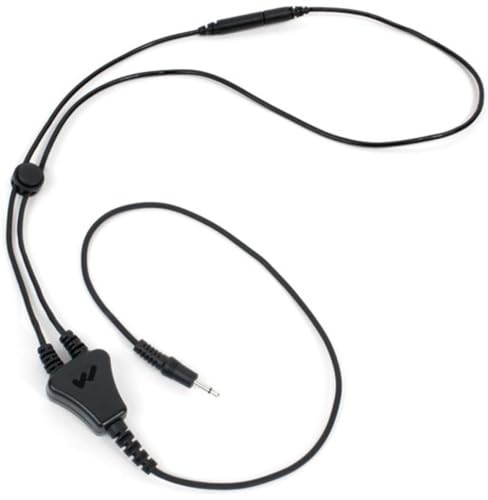 Williams Sound NKL 001 neckloopAn eighteen-inch wire worn under the collar that puts TV sound straight into telecoil hearing aids. | Hearing aids with a telecoil, at the lowest possible cost | 8.6 | $62.69 · View on Amazon #ad Price as of November 28, 2026. How we earn |
| 3 | 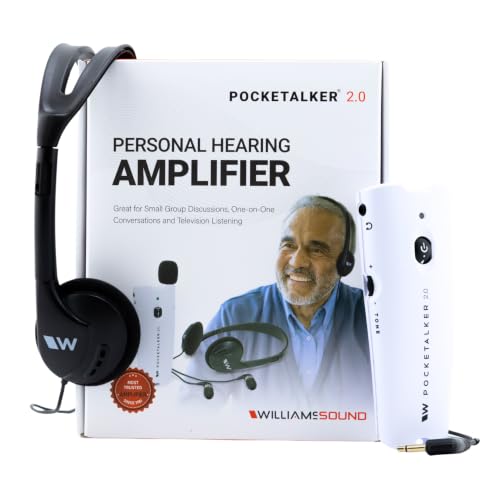 Williams Sound Pocketalker 2.0A pocket amplifier that ships with a long TV cable, so the same box solves the television and the conversation. | The television and everything else - one visitor, the car, the clinic | 8.4 | $250.00 · View on Amazon #ad Price as of November 28, 2026. How we earn |
| 4 |  Contacta LA-240 small room hearing loopA wire run once around the room that turns the whole living room into a hearing aid signal - and then is never thought about again. | Telecoil hearing aids, with nothing worn and nothing carried | 8.2 | Check price on Amazon #ad Prices change daily, so we send you to check today's. How we earn |
Tap any row to jump to the full write-up. The price button goes to Amazon.
Pick by what’s hard
Most lists sort by price. That is not how this decision actually gets made, so here it is sorted by the thing that is getting in the way.
- Will not wear anything on or in the ears
- Sereonic TV Soundbox — a speaker beside the chair is the only route that asks nothing of the person. It is usually the difference between a device that gets used and one that stays in a drawer.
- Already wears hearing aids and will not take them out
- Williams Sound NKL 001 neckloop — do not buy anything that goes over the aids. Find out whether they have a telecoil, and if they do, feed it.
- Hands cannot manage a headband or small controls
- Sereonic TV Soundbox — one knob on a box beside the chair is the least demanding control on this page.
- Hearing is the problem everywhere, not just at the television
- Williams Sound Pocketalker 2.0 — buy the device that also works at the kitchen table and in the car. A TV-only system solves two hours of the day.
- Gets up and moves around while the TV is on
- Contacta LA-240 small room hearing loop — a room loop is the only option where the sound follows the person. Everything else stops at the end of a cable or a chair.
- Two people in the room and only one needs help
- Sereonic TV Soundbox — every system here leaves the room volume alone. That is the point of all of them, and it is what a soundbar cannot do.
How we picked
We don’t run a product lab. Every pick here is chosen by reading the things that actually tell you whether something works for weak hands, poor eyesight or shaky fingers: the manufacturer’s own specifications, the retailer listing, the measurements and weights, and what owners report in their reviews — especially the one-star ones. We read the complaints before the praise.
Prices change constantly, so we send you to Amazon to see today’s price rather than printing a number that goes stale. More about how we choose.
The picks in full
1. Best for most households, and anyone who will not wear anything
Sereonic TV Soundbox
Sereonic · 9.0/10 on our rubric
#ad Price as of November 28, 2026. How we earn
A rechargeable speaker that sits beside one chair and takes the TV sound to it, while the room carries on as normal.
This is the one to buy first in most houses, because it asks nothing of the person who needs it. There is no headband, nothing in the ear, no pairing and no app. A transmitter stays by the television and the speaker lives on the arm of the chair, close enough that a modest volume at two feet does the work that a painful volume at twelve feet was doing before.
That distance is the whole physics of the thing. Sound falls away quickly as it travels, so moving the speaker from across the room to beside the ear is worth far more than turning anything up, and it is the reason a small speaker on a side table beats a large soundbar for one hard-of-hearing listener.
The listing gives a range of up to 125 feet, a rechargeable lithium-ion battery rated at up to 8 hours that the owner can replace rather than send away, and a transmitter that doubles as the charging dock - so the speaker is put back on its base at bedtime and is simply charged in the morning. There is a tone control as well as volume, which matters because most age-related hearing loss is worst at the high frequencies where consonants live.
Two honest limits. The retailer listing describes the connection as radio frequency rather than Bluetooth, and does not confirm whether the television's own speakers keep playing - that depends on which output you use and on the television, so check it on the set before assuming. And a speaker, unlike a headset, is still audible to the room: it is quieter than turning the television up, but it is not private.
Good
- Nothing worn at all - no headband, nothing in the ears
- Transmitter doubles as a charging dock, so there is one habit to learn
- Up to 125 ft range and up to 8 hours per charge, per the retailer listing
- User-replaceable battery, so a worn-out cell is not the end of the product
- Tone control as well as volume, which is where speech clarity lives
Watch out for
- Not private - the room can still hear it, just less than before
- Whether the TV speakers keep playing depends on the output used and the set
- The retailer listing describes radio frequency, not Bluetooth
- Model names vary between sellers - check you are ordering the current one
| Type | Wireless personal TV speaker |
|---|---|
| Connection | Optical, headphone or analog audio from the TV |
| Range | Up to 125 ft, per the retailer listing |
| Battery | Up to 8 hours, user-replaceable lithium-ion |
| Controls | Volume and tone |
| Charging | Transmitter doubles as the dock |
How it scores
- Nothing to wear9.8
- Speech clarity for one listener8.4
- Leaves the room volume alone8.2
- Simple to live with9.4
2. Best for hearing aids with a telecoil, at the lowest possible cost
Williams Sound NKL 001 neckloop
Williams Sound · 8.6/10 on our rubric
#ad Price as of November 28, 2026. How we earn
An eighteen-inch wire worn under the collar that puts TV sound straight into telecoil hearing aids.
If the person wears hearing aids and those aids have a telecoil, this unremarkable loop of wire is the cheapest big improvement available anywhere on this page. It plugs into a 3.5 mm headphone jack - on a TV listening transmitter, on a pocket amplifier, or on the television itself where the jack is reachable - and broadcasts a magnetic signal a few inches to the aids.
What makes it better than any speaker or headset is that the sound arrives inside hearing aids that have already been programmed for that person's specific hearing loss. Nothing else on this page does that. A speaker makes everything louder; a telecoil feed lets the aid do the shaping it was fitted to do.
Williams Sound lists an 18 inch cord with a 3.5 mm mono plug, an impedance of 8 to 16 ohms and a breakaway safety feature in the neck cord, which matters for anyone at risk of catching it on a chair arm. A separate stereo version, the NKL 001-S, exists and is a different product with different compatibility - check which one a seller is actually listing.
The catch is not the hardware, it is the program. A telecoil almost always has to be switched on and given a program by an audiologist before it does anything, and a great many people own aids with a telecoil they have never been told about. Ask at the next appointment before buying - the question is free and the answer decides whether this route is open at all.
Good
- Puts sound inside hearing aids already tuned to that person's loss
- By far the cheapest route on this page
- Breakaway neck cord, per Williams Sound
- Plugs into any 3.5 mm headphone output - TV, transmitter or amplifier
- Nothing to charge and nothing to pair
Watch out for
- Useless unless the hearing aids have a telecoil and it has been activated
- Mono on the standard NKL 001; the stereo NKL 001-S is a separate product
- Still a cable from the loop to whatever is driving it
- Some televisions and older sets can interfere - a few feet of separation usually fixes it
- Sold mainly through assistive listening suppliers rather than general retailers
| Type | Induction neckloop |
|---|---|
| Cord | 18 inches, per Williams Sound |
| Plug | 3.5 mm mono |
| Impedance | 8 to 16 ohms, per Williams Sound |
| Safety | Breakaway neck cord |
How it scores
- Nothing to wear6.0
- Speech clarity for one listener9.4
- Leaves the room volume alone9.8
- Simple to live with7.6
3. Best for the television and everything else - one visitor, the car, the clinic
Williams Sound Pocketalker 2.0
Williams Sound · 8.4/10 on our rubric
#ad Price as of November 28, 2026. How we earn
A pocket amplifier that ships with a long TV cable, so the same box solves the television and the conversation.
The Pocketalker is the one device here that does not stop working when the television goes off. It is a pocket-sized amplifier with a built-in microphone, and the listed package includes a plug-in microphone, folding headphones, isolation earphones, a lanyard and a 12 foot TV cable - which is what turns it from a conversation aid into a TV listening system.
That dual use is the argument for it. The same box that carries the evening news to one chair also carries one visitor's voice across a kitchen table, a doctor in a consulting room, or a passenger in the front of a car - the three situations where people with hearing loss most often stop taking part. For somebody who is not ready for hearing aids, or waiting for them, it covers a lot of ground cheaply.
It is also the most flexible on output. Listings describe up to 63 dB of amplification and telecoil loop compatibility, and the 3.5 mm jack takes the supplied earphones, the supplied headphones, or the neckloop above. If the person already has telecoil hearing aids, the Pocketalker plus a neckloop is a complete system for less than most headsets cost.
Two honest points. Retailers are explicit that it is not a hearing aid and is not sold as one, and Williams Sound recommends that anybody with hearing loss be examined by a physician or audiologist first - which is not a formality, because amplifying a hearing loss that has an underlying cause is the wrong answer. And a 12 foot cable physically tethers the chair to the television, which is fine for a fixed armchair and no use at all for someone who moves around.
Good
- Works for the TV, conversation, the car and the clinic - not just the television
- 12 ft TV cable included in the listed package
- Takes earphones, headphones or a telecoil neckloop from the same jack
- Runs on two AAA cells, with rechargeable use listed as an option
- Up to 63 dB amplification and loop compatibility, per retailer listings
Watch out for
- Explicitly not a hearing aid, and not a substitute for being assessed
- The TV cable tethers the listener to one spot
- Amplifies background noise along with speech - a quiet room is doing half the work
- Earphones in the ears are not what everyone wants
| Type | Personal amplifier with TV cable |
|---|---|
| In the box | Amplifier, plug-in microphone, headphones, isolation earphones, 12 ft TV cable, lanyard |
| Amplification | Up to 63 dB, per retailer listings |
| Power | Two AAA cells |
| Loop | Telecoil compatible; neckloop sold separately |
How it scores
- Nothing to wear4.5
- Speech clarity for one listener8.0
- Leaves the room volume alone9.6
- Simple to live with7.8
4. Best for telecoil hearing aids, with nothing worn and nothing carried
Contacta LA-240 small room hearing loop
Contacta · 8.2/10 on our rubric
#ad Prices change daily, so we send you to check today's. How we earn
A wire run once around the room that turns the whole living room into a hearing aid signal - and then is never thought about again.
This is the route almost nobody is told about, and for a telecoil hearing aid wearer who sits in that room every evening it is the best experience of the four by a distance. A thin wire is run around the perimeter of the room - under the carpet edge, behind the baseboard or along the ceiling line - and driven by a small amplifier connected to the television. Anywhere inside that loop, switching the hearing aids to their telecoil program picks the sound up.
The difference in daily life is that there is nothing to put on, nothing to charge, nothing to remember and nothing to lose. The person stands up to make tea and the sound follows them. That is a genuinely different quality of independence from a system that has to be worn, and it is why loops are what public buildings install rather than handing out headsets.
The listed kit includes the LA-240 amplifier, a power supply, a digital optical cable, 130 feet of loop wire, a direct connection lead kit and a microphone with a 4 foot lead, with a two year warranty. The supplied wire covers up to 750 square feet, and the amplifier takes two digital inputs, three line inputs and two microphone inputs - so the television, a radio and a doorbell microphone can all feed it.
The reservations are cost and installation. It is several times the price of anything else here, and running the wire is a real job: a confident DIY afternoon with a carpet edge, or an installer. It also only works where the loop is, so a bedroom television needs its own answer. And as with every telecoil route, it does nothing at all unless the hearing aids have a telecoil that an audiologist has switched on.
Good
- Nothing worn, nothing carried, nothing charged
- Sound follows the person anywhere inside the loop
- 130 ft of loop wire covering up to 750 sq ft, per the retailer listing
- Two digital, three line and two microphone inputs - the doorbell can feed it too
- Two year warranty, per the retailer listing
Watch out for
- Several times the cost of every other route here
- Running the wire around the room is a real installation job
- Useless without telecoil hearing aids that have been activated
- Works only in the room that has the loop
- Sold through assistive listening specialists, not general retailers
| Type | Room induction loop system |
|---|---|
| Coverage | Up to 750 sq ft with the supplied wire |
| Loop wire | 130 ft included |
| Inputs | Two digital, three line, two microphone |
| Also included | Optical cable, direct connection lead kit, microphone |
| Warranty | Two years, per the retailer listing |
How it scores
- Nothing to wear10.0
- Speech clarity for one listener9.4
- Leaves the room volume alone9.8
- Simple to live with6.2
How we ranked these
- Is anything worn? This decides whether the thing gets used. A device that works perfectly and is refused every evening scores zero in the only test that matters, and refusal is extremely common with anything that goes on the head.
- How much clearer is speech for the one person? A route that feeds hearing aids already programmed for that person's loss beats one that simply makes everything louder, which is why the telecoil routes score highest here.
- Does the rest of the room get left alone? This is the reason any of these exist. Every system on this page passes, which is exactly what a soundbar cannot do.
- How simple is it to live with? Charging, pairing, batteries, cables and installation all count. A system with one habit - put it back on the dock at bedtime - beats one with four.
A TV listening system is not judged the way a speaker is. Frequency response and wattage tell you almost nothing about whether a specific person will understand the news. We ranked on four things, and they are the four scores on each pick above.
What we did not rank on: audio quality in the hi-fi sense. These are speech devices. A system that makes music sound richer but dialogue no clearer has solved the wrong problem.
Check the TV's audio output before you order anything
Every system here has to get sound out of the television, and that is where most returns come from. Look at the back of the set and find which of three things it has.
A digital optical output, sometimes marked TOSLINK or Optical Audio Out, is a small square door with a red light behind it. This is the best connection and the one most modern systems prefer. A headphone jack is a 3.5 mm round hole; it is the simplest connection, but on many televisions plugging into it mutes the internal speakers, which defeats the whole point when two people are watching. Analog audio outputs are a pair of red and white RCA jacks, common on older sets and on cable boxes.
The headphone-jack problem is worth checking before you buy rather than after. Many televisions have a setting that keeps the internal speakers on while something is plugged into the headphone jack, often buried under audio output or speaker settings. If yours does not, use the optical or analog output instead - which is one practical reason to prefer a system that offers all three inputs.
On a cable or satellite box, the same jacks are usually on the box as well as the television. Connecting to the box rather than the set sometimes solves an output problem in one move.
The route this page cannot sell you: a hearing aid TV streamer
If the person wears modern hearing aids, there is a fifth route, and in a lot of cases it is the best one. Most manufacturers sell a small transmitter that plugs into the television and streams directly to their own aids - Phonak's TV Connector, and the equivalent adapters from Oticon, ReSound, Starkey, Widex and Signia.
Sound arrives in both aids, shaped by the person's own prescription, with no neckloop and nothing extra worn. Where it applies it is hard to beat, and we are naming it even though we earn nothing from it, because leaving it out would be dishonest.
The reason it is a section and not a pick is that you cannot choose it. It is decided entirely by which hearing aids are already in the ears, each brand's box works only with that brand's aids and only with recent models, and they are usually bought through the audiologist who fitted them. The right move is to ask at the next appointment whether a TV adapter exists for that exact model before spending anything from this page.
Worth knowing for the next few years: Bluetooth LE Audio and Auracast are beginning to appear in hearing aids and televisions, and are designed to do the same job without a brand-specific box. It is not yet a reason to wait - the hardware in most living rooms today cannot use it - but it is a reason not to spend heavily on a system you expect to keep for a decade.
Find out whether the telecoil is switched on first
Two of the four routes above depend entirely on a telecoil, and this is the single most common wasted purchase in the category. A telecoil is a tiny coil inside a hearing aid that picks up a magnetic signal rather than sound, and it is fitted to a large share of behind-the-ear aids - but it very often arrives switched off, with no program assigned to it, and nobody mentions it.
The question to ask is exactly this: does this aid have a telecoil, and is there a program for it I can switch to? If the answer is yes, a neckloop or a room loop becomes the best-value route on this page. If the answer is no, both are off the table and the choice is between a speaker, a headset and a pocket amplifier.
Smaller completely-in-canal aids frequently have no telecoil at all, because there is no room for one. That is not a fault; it is a trade-off made when the aid was chosen, and it simply means the loop routes do not apply.
Nothing on this page is medical advice, and none of these devices is a hearing aid. If speech has become hard to follow in more than one setting, the first step is a hearing test rather than a purchase - an untreated hearing loss has consequences well beyond the television.
When the television is not actually the problem
Before spending anything, try two free things, because a surprising share of complaints about the television are not about hearing at all.
Turn off every sound-processing mode on the set. Televisions ship with surround, bass boost, dynamic range and virtual modes switched on, and all of them push speech backwards behind music and effects. Finding the audio menu and setting the mode to Standard, Clear Voice, Dialogue or Speech - the name varies by maker - is free and often changes more than a hundred dollars of equipment would.
Then turn on subtitles for a week. Many people discover they were struggling with one particular drama's sound mix rather than with hearing in general, and many more find that captions plus the existing volume is enough. Neither of these replaces a listening system where there is a real hearing loss, but both tell you what is left to solve.
What to check before you order
- Which output does your television actually have - optical, headphone or analog? Buy a system that matches it, and prefer one that accepts all three.
- Does plugging in mute the TV speakers, and can that be turned off in the settings? If not, avoid the headphone jack entirely.
- Do the hearing aids have an activated telecoil? This decides whether half the options on this page are even available.
- Is the battery replaceable, and is the charger a dock rather than a cable? A dock is one habit; a cable to plug in is a nightly task that gets forgotten.
- How far is the chair from the television, and are there walls in between? Published ranges assume an open room.
- Is there a return window? Hearing is personal, and the only real test is a week in the room where it will be used.
Questions people ask
▸What is the best TV listening system for someone who is hard of hearing?
For most households a personal speaker such as the Sereonic TV Soundbox, because nothing has to be worn and the room's volume is left alone. If the person wears hearing aids with an activated telecoil, a neckloop or a room loop is better still, because the sound arrives inside aids already programmed for their hearing.
▸How is this different from TV headphones?
Headphones are one of four routes, and they ask the most of the listener - a headband, something on or in the ears, and usually taking hearing aids out. A speaker asks nothing; a loop feeds the hearing aids directly. We cover the headset route separately in our TV headphones roundup.
▸Can I use a TV listening system with hearing aids?
Yes, by one of three routes. A neckloop or a room loop feeds the aids through their telecoil. A manufacturer's own TV adapter streams straight to recent aids from that brand. A personal speaker simply plays into the room and works with aids in place. What does not work well is wearing headphones over hearing aids.
▸Will a soundbar fix the problem instead?
Usually not, for the situation this page is about. A soundbar makes the whole room louder, so the person who was already comfortable is now too loud, and the argument continues. A dialogue mode on a soundbar can help a little; sending the sound to one listener helps far more.
▸Do I need a telecoil for a hearing loop to work?
Yes, and it has to be switched on with a program assigned. A great many people own aids with a dormant telecoil and have never been told. Ask the audiologist before buying any loop product, because without it both loop routes do nothing at all.
▸Will the TV speakers still work while the system is on?
It depends which output you use. Optical and analog outputs usually leave the internal speakers playing. A headphone jack mutes them on many televisions, although some sets have a setting to keep both on. Check that on your own television before ordering, because sharing the room is the point.
Sources
- Williams AV - Pocketalker 2.0 personal amplifier
- Williams Sound - NKL 001 neckloop specification listing
- Contacta LA-240 small room hearing loop system listing
- Sereonic TV Soundbox wireless TV speaker listing
- Phonak - connecting a TV to Phonak hearing aids
- NIDCD - assistive devices for people with hearing loss
Read next
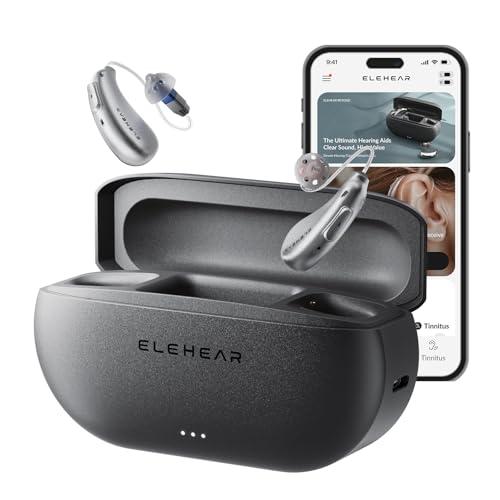
Best hearing aid under $500
Best hearing aids under $500
OTC hearing aids under five hundred dollars, ranked on fitting method, battery life and who helps when the first settings are wrong.
Read the guide →
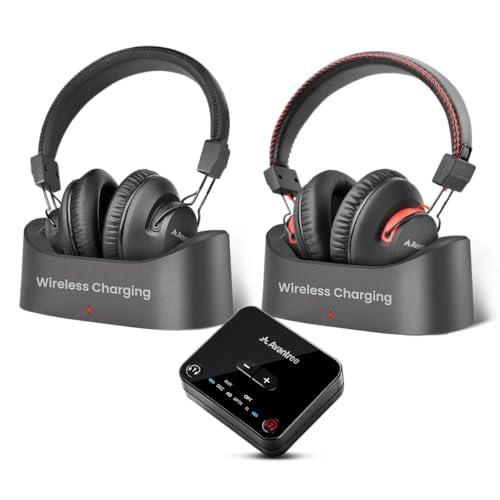
Best TV sound
Best TV headphones for hard of hearing seniors
TV listening systems picked for speech clarity, lip-sync delay and controls you can work by feel.
Read the guide →
Guide
How to make the TV easier to hear
Free TV settings that help with dialogue, then the equipment worth buying if they are not enough.
Read the guide →
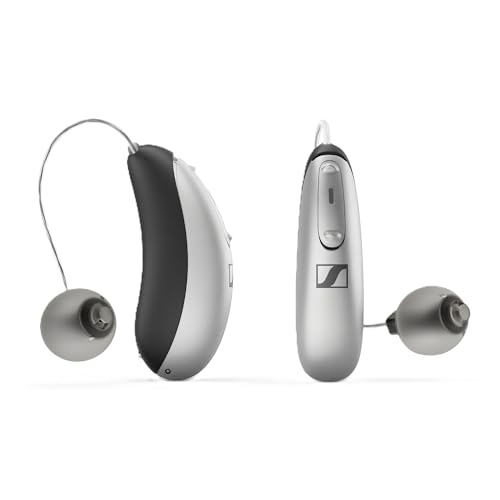
Best OTC hearing aids
Best over-the-counter hearing aids for seniors
OTC hearing aids compared on published lab measurements, fitting method and who helps when the settings are wrong.
Read the guide →
Head to head
Hearing amplifier vs hearing aid: which one do you need?
What separates a personal sound amplifier from an over-the-counter hearing aid, and the situations where the cheaper one is genuinely the right answer.
Read the guide →
Easiest TV remote
Easiest TV remotes for seniors
Simplified universal remotes, ranked by how few buttons they have and how hard they are to misprogram.
Read the guide →